Friday, February 8, 2013

King of The Hill

Felix Hernandez
Yesterday USA Today reported that the Seattle Mariners and ace pitcher Felix Hernandez have agreed to a 7-year $175 million contact. Felix's previous contract wasn't set to expire for two more seasons, but his new contract doesn't extend on top of those two years, instead it modifies the next two seasons and adds 5 more. The aspect of this news that stands out the most is that Felix Hernandez, at 26 years old, is now the highest paid pitcher of all time. The previous high for AAV for a pitcher was the recently signed Zack Greinke. His contract with the Dodgers was set to pay him $24.5 million annually, but after 2 years of Hernandez's deal, Felix will be receiving $25 million annually.

So, did Felix Hernandez deserve this contract, and if so, why did he sign it, and why did the Mariners offer it? First, Felix deserves to be paid like a top 5 pitcher because his numbers prove it. Felix has played 8 seasons in the Majors, all for the Mariners, coming up as a 19 year old, and immediately began throwing 190+ innings in only his second season in the Majors. Hernandez, like many young ace pitchers, came in throwing in the mid 90's with his fastball, showing sharp breaking balls including a slider with velocities peaking above 90 mph. Comparing heat maps of Hernandez's pitches from early in his career to his most recent seasons shows a move from pitches near the middle of the plate to the corners. Hernandez's does a great job of keeping his pitches low and away to righties and on the inside corner to lefties, the perfect combination for pitching success. This maturity on the mound has shown in King Felix's numbers as well. Due to his improved precision and strategy, Felix's BB/9 has been getting steadily less and less since peaking in 2008. While Hernandez's ground ball percentage has been seeing some attrition, Felix has countered it with an increase in strikeouts while his swing percentage (the total percentage of pitches a batter swings at) has remained constant, showing better control and precisions despite drops in velocity and number of ground balls induced.

Hernandez's statistics have been following the typical age curve for a starting pitcher as constructed by the good people at Fangraphs.com. As you can see, velocity should begin to trend down around age 27, but FIP, BB/9, and K/9 should all remain constant until age 29 or so when the edges begin to fray. This graph is meant to generalize the production of starting pitchers over time, it doesn't take into account that Hernandez, who has huge amounts of talent, may age better than the average or even above-average pitcher. The Mariners weren't completely trusting in Hernandez's ability to age like Greg Maddux, not giving him a 7-year extension, but adding 5 years onto the already guaranteed 2 years from his previous contract. This decision shows that the Mariners understand that even the best pitchers reach stumbling blocks after they turn 31 years old. On the other hand, if there was a pitcher or two I would be counting on performing at a high level will into his thirties, Felix Hernandez is near or at the top of my list. In his career Hernandez has shown an ability to stay healthy and stay on the field. He's thrown over 200 innings 5 of his 8 MLB seasons, from 2008-2012. Hernandez has reaching the disabled list twice in his career, in 2007 and 2008, which isn't unreasonable as his innings work load had just increased dramatically, a change that commonly leads to some arm issues.

Now that I've answered whether Felix Hernandez was worth the money and years in this deal, now let's talk about why King Felix would sign this contract. First, the money is on the table now. Hernandez, like all other athletes know that once their careers in professional sports end their income will fall drastically, so they go for the most money and for financial security whenever they can during their careers. Hernandez had two years remaining on the 5-year $78 million contract he signed in 2010, taking him through his arbitration eligible years. He could have played out those seasons in Seattle and then explored his options, and there would be many, on the free agent market as a 28 year old, but instead Felix resigned with the team that scouting him, drafted him, developed him, and has treated him as well as a team that has won recently can. Seattle has been a team never lacking a franchise player, loved in the city, no matter the Mariners winning percentage. In the 90's the team had Ken Griffey Jr., between 2000 and 2012 it was Ichiro Suzuki, and with this new contract, the torch has officially been passed to Felix Hernandez. Hernandez is loved by the city of Seattle, when he starts at home; Mariners fans in right field count his strikeouts, calling themselves the King's Court. In addition, Seattle, while not New York or Boston, is a fairly metropolitan city, ranking 22nd in population according to the most recent census data.

Another reason for hope in Seattle, and thus another justification for Felix resigning in the Emerald City, is Seattle's incredible group of young talent. ESPN's Keith Law recently ranked Seattle as having the 8th best farm system in the league with a solid core of young starting pitchers like Taijaun Walker, James Paxton, and Danny Hultzen. In addition, they sport a top infield prospect in Nick Franklin, young catching prospect Mike Zunino, and young players already with the big club like Jesus Montero, Michael Saunders, Kyle Seager, and Dustin Ackley. So, maybe the Mariners won't be a winning team this season or even next season, but just around the time Hernandez's AAV goes from $20 to $25 million the Mariners should have the type of team ready to compete for the playoffs. This shows that Hernandez has faith in the Mariners system, and when the face of the franchise shows confidence in the team, the fans won't be far behind.

So, while Felix may have given up a chance to make maybe more money in a bigger city like Boston or Chicago, and might have lessened his chances of winning a World Sereis, there were numerous solid justifications for resigning with the Mariners. So, the only question left to answer is the simplest, why the Mariners would offer Felix a contract of this length and magnitude. The Mariners aren't a big time franchise, but the team has never had a problem spending money on free agents, a la Chone Figgins. In addition, Hernandez will now make up 20% or more of Seattles overall payroll. We've recently seen how big contracts can still force the hands of the richest teams as with the Alex Rodriguez situation with the Yankees. The Mariners may be extending a lot of money to Felix, but as we've already proven, he's worth the money. The Mariners have most of their future success tied up in youth, and you is inexpensive. This paradigm is conducive to having a large portion of the payroll going to one or two players because young players are cheap. Signing Hernandez allows the Mariners to now change their marketing strategy to make King Felix a brand, a name that every citizen of Seattle knows. Given Seattles solid history of rabid fandom and passion for the Mariners, the team will have little trouble anointing Felix Hernandez the next Sultan of Seattle.

Justin Verlander
So, this deal looks good, it benefits the player, the team, and the fans, but what does it mean for the rest of the league? Baseball is a business and in Hernandez's contract changes the landscape of the market just like Zack Greinke's did before this and Cole Hamel's deal did before that. Two of the top 3 pitchers in the league have contracts ending in two years, and without a doubt King Felix's new deal will affect both of their next contracts. Clayton Kershaw, currently 24 years old, and Justin Verlander, currently 29 years old. Verlander has been the best pitcher in Baseball since 2009; he won an MVP and Cy Young award with the Tigers, and has brought them to two World Series. He may get similar AAV to Felix Hernandez, in fact he may get a little more, but he won't get a 7-year deal. At his age a 5-year contract would be the most I would go.

Name Team IP K/9 BB/9 HR/9 ERA FIP WAR
Justin Verlander Tigers 953.2 9.22 2.37 0.73 2.95 2.93 28.6
Felix Hernandez Mariners 954 8.43 2.49 0.61 2.81 3.03 24.2
Zack Greinke - - - 833.1 8.9 2.21 0.71 3.37 2.93 23.5
Clayton Kershaw Dodgers 836.1 9.41 3.11 0.55 2.6 2.87 20.8

Clayton Kershaw
As for Kershaw, Hernandez's contract impacts him greatly. If Kershaw wants an extension now, he could get a deal similar to Hernandez due to his youth and his already stellar career. On the other hand, if Kershaw plays through his current deal becomes a free agent at age 26, Kershaw could sign a contract of similar length to Hernandez but for even more AAV. That would seem like the most lucrative path for Kershaw, but if the native Texan wants to stay with the Dodgers, and like Jared Weaver with the Angels, not want to deal with contract speculation, he could sign an extension now and still get a second huge deal around his age 30 season. Overall, the Dodgers have a lot of money, holes burning in their pockets, and so one way or the other, Kershaw will make a lot of money, most likely in Los Angeles.
So, while $175 million sounds like a huge amount of money, and it is, we now see that the money is justified, for all parties involved. Felix Hernandez and the Seattle Mariners now go hand-in-hand; Felix represents the city, similar to the Mariners greats before him. In 2011 he won the AL Cy Young award, in 2012 he threw a perfect game, now he's the highest paid pitcher of all time, and, as all Mariners fans hope, he will be a World Champion down the road. If there was ever a more perfect road to Cooperstown, I haven't heard of it yet. Now comes the hard part, everything just has to work out. 

Thursday, February 7, 2013

Who Get's The Big Fish?

Prince Fielder
Baseball fans rejoice. We've almost made of through the long, difficult, and trying winter with little to no live Baseball to watch. Free agency merely gives the most dedicated and starving Baseball fan a bit of respite, but it only satisfies us enough to bridge the gap of the offseason until Spring Training facilities open and Baseball is officially deemed "open for business". 4 days remain until pitchers and catcher's report to either Florida or Arizona, and another few weeks until their teammates join them. While most players have had their plane reservations booked for weeks, some players' destinations continue to remain unknown. Free agency doesn't stop just because Baseball fans, players, coaches, and executives can see the Promised Land from across the Jordan River. No, instead agents, front offices, and owners work diligently to find the last missing piece to the puzzle.

Recently the Oakland Athletics deal Chris Carter, Brad Peacock, and Max Stassi to the Astros in exchange for Jed Lowrie an a bullpen pitcher. So, not only does Free Agency continue up to the start of the season, but team's will always be looking to improve by exchange. While predicting a trade is virtually impossible without, and sometimes even with inside information, speculating on the possible destinations for the remaining free agents becomes more and more fascinating every minute we move closer and closer to the promised land that is Opening Day.

Michael Bourn:
Michael Bourn
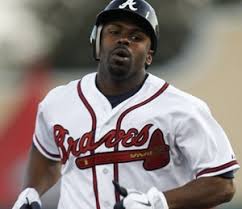
Since the October, numerous pundits have predicted that Bourn would be the Prince Fielder of the 2013 offseason. Last year, Fielder, one of the top 3 free agents of 2012, remained unsigned until January 26th, when the Detroit Tigers and Dave Dombrowski moved their chips, $214 million worth to be exact, into the pot. The Tigers landed Fielder, which not only helped Miguel Cabrera become the first player to win the Triple Crown since 1967, but made Detroit a power house team. The Tigers reached the World Series, and while they lost, few Baseball people would bash that massive contract due to Fielder's predicted value, current value, and the huge push he gave the franchise as a whole.

Is Michael Bourn Prince Fielder? No, I think we can all categorically say the two are quite different. Fielder is a bull of a man with incredible power to all fields while Bourn is a small scrappy contact hitter with lightning fast speed. Power doesn't diminish into a player's 30's as quickly as speed does, making teams even more wary in the face of a long-term high price tag deal with Bourn. In addition, the market this offseason was stocked with talented outfielders making negotiations for a contract difficult, and causing teams to use prospect instead of cash to attain outfield help. The Nationals traded for Denard Span, the Phillies for Ben Revere, and the Braves for Justin Upton. So, where does that leave Michael Bourn? Bourn is a player completely built around his speed and ability to get on base. In addition he brings superb defense in the outfield, closing on balls with great speed, combined with a very good first step, solid leaping ability, and an above average arm.

OBP SB SB % DRS UZR
2009 0.354 61 83.5% 11 9.9
2010 0.341 52 81.3% 30 19.4
2011 0.349 61 81.3% -3 -6.4
2012 0.348 42 76.4% 24 22.4

As you can see from this chart, Bourn gets on base with regularity, consistently putting up numbers above the league average (.315 in 2012). Bourn recently turned 30 years old, generally a harbinger of an attrition of production, which accelerates if built on speed rather than power.

It's possible that Bourn could still attain the type of contract that he and mega agent Scott Boras wanted in November, something in the neighborhood of 5+ seasons and $100 million, that possibility dwindles every second we get closer to Spring Training. More reasonable figures being reported recently have put Bourn in a 3-year deal with an AAV of $15 million or so. Most sabermetricians and pundits would tell you that, for example, a contract of 3-years $46 million with a vesting option for a 4th year that would be worth $16 Million, and a buyout of $3 million would be reasonable to acquire Michael Bourn. So, in essence, the player, in this case Bourn, overvalued himself in a saturated market, and now that there is a definite time frame established, the player is adapting to the market in order to come to a conclusion. This is market economics, it's one reason of having no salary cap enhances Baseball's image as opposed to making the players look greedy and overpaid. Bourn turned down the Braves' qualifying offer in November, making him less appealing to teams that would be forced to lose a draft pick as part of acquiring the speedy outfielder. It also makes teams more likely to want to negotiate a multi-year deal with Bourn, so as to get more out of him, making up for the future of a lost 1st-round draft pick. So, while some reports have team's looking to sign Bourn to a 1-year deal, I don't see it as likely unless said team wouldn't be forced to give up a draft pick.

Team's that could still be fits for Bourn include the New York Mets, Philadelphia Phillies, Texas Rangers, Baltimore Orioles, and Seattle Mariners. The Mets have no legitimate outfielders currently on the roster. While the team has worked hard to build up depth in the infield and starting rotation, the outfield has been untended to, unless you count Jason Bay, but that attempt officially failed when the Mets dropped Bay from their roster. While Bourn fits a big need for the Mets, he would likely not boost them into a playoff spot, so spending a high AAV even for 2-3 seasons may not be worth it for Sandy Alderson and his bunch. There is still a slight possibility the Mets will be allowed to retain their first round pick even if they were to ink Bourn to a deal, but MLB has yet to rule on the situation. Most likely, the Mets would have to forfeit that pick, making them even less likely to go after Bourn.

 The Phillies have many more reasons to like Bourn. Ruben Amaro finds himself with a high payroll, older team, and 2 platoons at the corner outfield spot. He also sees a division that just got tougher, due to recent acquisitions made by the Nationals and Braves, and a team on the cusp of the playoffs in the Phillies. The Phillies already have a leadoff type hitter in Ben Revere, as well as an aging but still viable Jimmy Rollins, so, you might be asking yourself, why the Phillies would want another speedy player. Adding Bourn would give the Phillies the "2003 Juan Pierre/Luis Castillo" look at the top of their lineup, essentially providing the muscle in the lineup with more and more opportunities to hit with runners on base and in scoring position. In addition, Bourn's defense would make playing inept defenders like Delmon Young and Darin Ruf in the outfield. Bourn came up with the Phillies, knows the organization well and would be a valuable asset to the Phillies. The question all comes down to money. If Ruben Amaro is willing to pay a higher AAV in order to get Bourn to agree to a shorter deal, it would be worth signing him, giving up their first round pick, but if Bourn demands more than 3 years, the Phillies should continue to use restraint.

The Rangers lost Josh Hamilton this offseason to rival LA. Hamilton may not have played much longer in centerfield had he stayed in Texas, meaning that the team was always willing to go with the combination of Craig Gentry and Leonys Martin in centerfield. If Jon Daniels signed Bourn, he would most likely play the majority in center field in 2013, and even 2014, but moved to a corner spot not long after the All-Star break in 2014. Bourn doesn't have power, so he won't benefit from Arlington's home run tendencies, but the combination of Bourn, Elvis Andrus and, eventually Jurickson Profar in the 9-1-2 spots would be incredibly difficult to stop, and would neutralize ground ball innings eaters like the ones recently signed by the Angels. The Rangers have money to spend, and given the state of their farm system, losing a draft pick wouldn't cause too much strife. In the end here, it comes down to the price tag. If Bourn is willing to lessen some standards the Rangers could be on board, but otherwise I wouldn't bet on Daniels blinking first.

The Orioles have the ability to benefit greatly from an acquisition involving Michael Bourn. While the Orioles already have a talented young center fielder in Adam Jones, Bourn would buttress Baltimore's defensive outfield by playing in right, moving Nick Markakis to platoon with Nolan Reimold in left field. For a team many think will regress in 2013, adding Bourn could keep them in contention for longer, possibly long enough to return to the playoffs. Fangraphs recently released the Steamer projections for 2013. An outfield with Bourn, Jones, and a platoon of Markakis and Reimold is project to look like this:
HR SB wOBA
Bourn 6 35 0.309
Jones 28 9 0.347
Markakis 17 4 0.351
Reimold 16 6 0.332
Total 67 54 0.335
While the platoon in left would cause both Markakis' and Reimold's numbers to decrease a little due to less playing time, the DH spot allows for manager Buck Showalter to keep them in the lineup even if they don't have a spot in the field. The combination of a full year in the majors for Manny Machado, the prospect of Dylan Bundy coming up to the big club mid-season, and the addition of Bourn to the outfield would be the perfect counter punch to the Rays' trade for Will Myers, and Red Sox flurry of signings, and the Blue Jays Miami buying extravaganza.

The Mariners are a fit for Bourn because they are without a good lineup, and Bourn might put some more fans butts in seats. GM Jack Zduriencik had made some questionable decisions of recent, but no one would blame him for trying to sign Bourn. Seattle can spend some money, and Bourn might provide the young Mariners hitters with a runner on base more often when they hit. Bourn might only consider a long-term deal with the Mariners since so much of their success is tied up in their core young players. The Mariners aren't winning anything in 2013 with or without Bourn, so signing him all comes down to pressure from ownership, and to a much lesser extent to look active and not portray an air of dejection. 

Kyle Lohse:

Kyle Lohse
Then there's Kyle Lohse. Lohse is the best starting pitcher left on the market, but unlike Bourn, many predicted Lohse would have trouble finding a team. For more on why teams might be wary to sign Lohse read Glenn DuPaul's editorial on the issue here. Lohse looks to regress heavily in 2013, is asking for a hefty sized AAV, and will cost the team that signs him a draft pick having turned down the Cardinals qualifying offer. He's a solid pitcher, with a solid track record, but he's already undergone serious arm surgery in his career, is in his 30's, and doesn't have a power arm. Lohse constitutes the definition of a player who is the "last piece" to a team. Raphael Soriano, recently signed by the Nats constituted he same. Both are expensive cars that a guy would never buy until he's older, rich, and already enjoying life. He's the "cherry on top", not the foundational ice cream. So, where could he land? 

According to multiple projections systems, Lohse's 2013 numbers should look in the neighborhood of these numbers: 
IP K/9 BB/9 HR/9 ERA FIP
2013 194 5.67 2.04 0.91 3.85 3.86

While those numbers may not be worth $10 million AAV and the loss of a draft pick, to a playoff team hoping to put themselves in the preseason conversation of World Series possibility, Lohse could very well be worth it. Teams like that include the Rangers and Cardinals with the Pirates and Brewers also in the conversation. 

The Rangers are a team that many thought would be active this offseason, but have continued to lie in wait until they pounce. Still, Lohse could make sense for the Rangers. Signing Lohse would allow the team to trade prospect Martin Perez, a player many teams would be interested in acquiring. If the Rangers could use Perez to get an outfielder like Dexter Fowler, or with a better set of prospects, Carlos Gonzalez, the Rangers could move back into a better position in the AL West. Lohse might not fair incredibly well in Arlington, but half a team's games are played on the road, and Lohse would be the 4th starter, a veteran presence, but not an ace. 

The Cardinals recently found out that they have lost Chris Carpenter for the season, and he still may retire. The cardinals have the best farm system in the Majors, and have no need to fill Carp's spot with a free agent. Trevor Rosenthal, Joe Kelly, Shelby Miller, and Lance Lynn would compete for the 4th and 5th spots with Carpenter gone. In addition, Jaime Garcia may not be ready for Opening Day, so those four pitchers could compete for 3 Opening Day rotation slots. The Cardinals have a lot of internal and cheap options, but re-signing Lohse could work for them. Lohse liked playing in St. Louis, which most consider to be a desirable place to play. The Cardinals don't need him, but adding Lohse could better their odds of winning the NL Central. 

The Pirates don't need Kyle Lohse, but his addition could prove fruitful. The Pirates have been on the cusp of making the playoffs for the last 2 seasons. They have the talent to play like a playoff team for 3/4 of the season, but not all of it, causing the Buccos to be on the outside looking in in October. With Gerrit Cole expected to make his debut this season, and the possible addition of Lohse, the Pirates could put themselves squarely ahead of the Brewers and right in the wheelhouse of the Reds/Cardinals for 2013 and more likely 2014. The Pirates probably don't want to increase payroll, especially after recently adding Francisco Liriano and Jonathan Sanchez, but If Neal Huntington wanted to take a risk it might be worth it here. I wouldn't count on this happening, but it is good to see the Buccos in a position to possibly win something.

The Brewers recently lost Cory Hart, due to injury, for the first part of the 2013 season. They have almost the least amount of pitching depth in the starting rotation of any NL team, and they have had a quiet offseason. In addition, the team is in danger of falling into 4th in the Central this season, and that is without the awful Astros to make them look better. Lohse would provide them with someone to go behind Yovani Gallardo, but it would be a patch up job with potential issues all over the place. Doug Melvin isn't a GM to sign a guy just to sign him; the Brewers only go after Lohse if they make an ancillary move. This team needs their 1st round draft pick too much to make a serious contract to Kyle Lohse. 

Both Bourn and Lohse come with more risk attached to them than any other free agent, making GM's circumspect when evaluating them as possible acquisitions. Boras found Prince Fielder $200+ million on January 26th, but neither Bourn nor Lohse have the value that Prince Fielder did. Given their lesser status, I predict Bourn to sign within the next next 2 weeks at 3-4 years and a contract between $50-65 million. Lohse a few days after Bourn for 3 years and $24 million. Recently I've been having an inner conflict between my hear and my brain concerning free agent signings, so to appease both body parts I'll report both outcomes. My brain says Bourn goes to Texas while my heart says he fits best in Baltimore. As for Mr. Lohse, my brain says the Cardinals re-sign him, but my heart thinks he fits best in Pittsburgh. These are the two top players left on the market, they represent the scraps of Baseball we continue to cling to until very soon, Baseball officially returns, and all Baseball fans can emerge from their torpor. Opening Day is coming; we just have to have a little more patience. 

Saturday, January 26, 2013

Taming the Wild

George Kottaras
Today the Kansas City Royals announced that they had claimed catcher George Kottaras off of waivers. Kottaras isn't a household name, but the move made me look into whether this was a good fit, or whether the Royals had another motive. Kottaras has played at least part-time in the Majors since 2009, playing in a career high 85 games last season. In his limited role, Kottaras has faced mostly right-handed pitching. He bats from the left-side, and has the typical platoon splits of a hitter with tools at the plate, but who has difficulty hitting MLB breaking balls off of lefties. Kottaras began the 2012 season in Milwaukee, but half way through the season, the Brewers traded him to the Oakland Athletics. The Athletics recently participated in a three-way trade that sent Michael Morse to Seattle and John Jaso to Oakland. Jaso's value has been written about extensively, but lost in that deal was Kottaras.

 Kottaras is an average hitter, with a career wOBA of .322. On the other hand, over the last two seasons, as Kottaras has played more games, his OPS+ has been above average, 107 in 2011 and 108 in 2012. He hasn't hit many home runs, but his isolated power split is vast. Kottaras has posted a .209 ISO against right-handed pitching but only a .129 ISO vs. lefties. While this fact isn't dissimilar from many left-handed hitters, a closer look using pitch F/X data shows that Kottaras has an affinity to hit pitches in the upper portion of the strike zone against right-handed pitching for power. In fact, despite the adage that left-handed hitters are good low-ball hitters, Kottaras seems to be a better hitter against balls that are up in the strike zone against both righties and lefties. Overall, Kottaras looks like a hitter who is beginning to figure some things out at the plate. He is able to get on base against both righties and lefties, but shows impressive power numbers against only righties. This combination is enough to get him a back-up catching job, but I think something else caused the Royals to snag the former Athletic off of waivers.

Kottaras isn't a great defensive catcher, posting a slightly negative defensive rating according to Fangraphs in 2012. In fact, he has never posting a positive defensive rating. Fangraphs calculates their defensive for catchers based on two major statistics, rSB and RPP, with rSB accounting for a catcher's need to throw out base runners well and RPP accounting for a catcher's ability to block balls in the dirt. Teams that have pitchers who don't have good pick-off moves or are slow to the plate need catchers with good rSB's in order to counteract their pitchers' deficiencies. If a team's pitching staff has pitchers with erratic control and propensities for throwing breaking balls with lots of movement, said team would want a catcher with good RPP numbers. While Kottaras hasn't posted very good rSB numbers, his RPP numbers have been positive since 2010. In fact, since 2010, Kottaras ranks 13th amongst all MLB catchers in RPP, ahead of names like Jonathan Lucroy, John Buck, and Kurt Suzuki, and just behind Ivan Rodriguez, Buster Posey, and Jason Kendall. Given these numbers, a team whose pitchers have a proclivity for being wild would benefit far more from Kottaras's services as opposed to a pitching staff with pinpoint control.

Given Kottaras' talents for blocking balls in the dirt, it stands to reason that the Brewers wouldn't want to let him leave, especially since the Brewers' pitching staff was 9th in the league in wild pitches in 2012 and 3rd in the league in wild pitches since 2010. On the other hand, in 2012, both other catchers on the Brewers' roster, Jonathan Lucroy and Martin Maldonado also posted positive RPP's, making Kottaras expendable, but not worthless. In fact, it's that value that the Kansas City Royals may have picked up on. This offseason, the Royals made a significant trade, acquiring Wade Davis and James Shields from the Rays in exchange for a dynamic package of prospects. Both Davis and Shields will make immediate impacts, Shields as their ace pitcher, and Davis as either a back of the rotation starter or right-handed reliever out of the pen. In addition, the Royals also added righty Ervin Santana to their rotation. Santana is a strikeout pitcher with a hard fastball and knee-buckling slider that often ends up in the dirt. Shields and Santana both ranked in the 21 pitchers in the Majors since 2010 in wild pitches, and since 2008 Shields, Santana, and fellow Royals pitcher Luke Hochevar have ranked in the top 30 in wild pitches. Overall, it seems as the Royals would disproportionately benefit from a catcher who is above average at blocking balls in the dirt, especially since if Kansas City is going to make the playoffs for the first time since 1985 every positive addition, no matter how small, will make a difference.

Salvador Perez
Kansas City now has a dynamic duo of backstops, with both Kottaras and young stud Salvador Perez on the roster. Perez is the better hitter of the two, and has better overall defensive numbers. In fact, Perez excels defensively in areas at which Kottaras is lacking, and visa versa. Perez has a very strong arm, and very good mechanics behind the plate, but is just below average in blocking balls in the dirt. Since overall defensive ratings for catchers weight throwing out base runners as more important than blocking balls in the dirt, Perez looks like the better of the two, but by adding Kottaras into the mix, it gives the Royals affordable and talented defense behind the plate. Kottaras also adds some more veteran experience, a left-handed bat with good power, and allows the Royals not to stress Perez too much without giving up too much production. Look to see Kottaras play predominantly against right-handed pitching, but more importantly, look for him to catch when James Shields and Ervin Santana take the mound. I'm in no way saying that it is absolute, especially given that Salvador Perez's RPP numbers aren't awful, and given his age, there is the possibility that his RPP numbers can improve. For the time being, the Royals see Kottaras' skills as solid value added, especially since his 2013 salary is only $1 million and he isn't a free agent until the 2016 season.

Don't overlook signings or pickups like this one. Numerous other teams could have benefited from even 80 games worth of George Kottaras. One specific team that comes to mind is the Chicago White Sox. White Sox pitchers have thrown the 3rd most wild pitches in the Majors since 2010, and the team recently lost veteran catcher A.J. Pierzynski to free agency. Moreover, given Pierzynski's absence, the team is considering using youngster Tyler Flowers as their dominant catcher in 2013. Adding a more veteran left-handed hitting catcher who can handle erratic pitching would seem prudent. The White Sox play in the same division as the Royals, the Sox finished one spot ahead of KC in 2012, and they haven't undergone nearly as many positive renovations to their roster as the Royals have done. So, picking up Kottaras not only benefits the Royals directly, but also indirectly benefits them by not allowing the White Sox to pick him up. Who's to say the Sox would have picked up Kottaras, but he does fit their team incredibly well. Look for pitchers like James Shields and Ervin Santana to have slightly better strikeout numbers than they did in 2012. Some of that will be due to moving to a less talented division, but some may also come from their ability to throw any pitcher to get a hitter out without worrying that the ball may get away from their catcher. While trading for Shields and Santana were sexier and more productive moves, both come with risks, which the Royals are lessening by adding Kottaras to the mix. It's possible that the Royals will make the playoffs for the first time since the 1980's in 2013, but the odds are against them, so it's a good thing that George Kottaras, the forgotten catcher, now dons a royal and white uniform.

Thursday, January 24, 2013

Upton, Upton and Away

Justin Upton
Since June 2012, www.mlbtraderumors.com has put out 30+ articles with the words Justin Upton rumors in the title. This isn't just a blind fasciation with a specific player; the Diamondbacks have done everything but see Upton on the plane out of Phoenix. Arizona hasn't offered Upton an extension or publicly supported him; instead the team has shopped him all over the league hoping to get the best package in return. Upton still has three affordable years left on his current contract, is the ripe young age of 25 years old, and has compiled 17.1 fWins in his 6 MLB seasons, a combination usually destined for stardom. Upton has numerous skills and few deficiencies, and he's entering the most productive years of his career, and now he has a new team.

Justin Upton the Player:

Who is Justin Upton? Over the last few months we've taken to see him as a commodity, and not a player. Maybe familiarizing ourselves with him will give us greater insight into the Diamondbacks' decision to trade him and the Braves' desire to acquire him.

First of all, Upton is 6 foot 2 inches tall and weighs 205 pounds, a prototypical athlete's build. This is something a scout would say, but many well skilled in analytics would say that it isn't indicative of success. Both the scout and the numbers guy are correct. Not all athletic players are great and not all great players are athletic, but players with the combination of athleticism and the numbers to back it up generally make cases for Cooperstown. Upton's build aids in his ability to stay healthy and his raw combination of speed, power, and agility.

Offensively, Upton has had ups and downs in his career, but never a bad season, so we can safely assume that he won't drop off, and that the numbers we have are reliable. From a power hitting perspective, Upton fits the bill as a middle-of-the-order hitter. While Upton's home run totals have ranged from 17 to 31, he has a total of 2 more home runs in his career than fellow young talented outfielder Adam Jones, signifying a high probability that he will continue to pump out somewhere between 20 and 30 home runs per season for the duration of his prime years.
HR ISO SLG
2007 2 0.143 0.364
2008 15 0.213 0.463
2009 26 0.232 0.532
2010 17 0.17 0.442
2011 31 0.24 0.529
2012 17 0.15 0.43


Upton is a right-handed batter, meaning he might have a problem with right-handed pitching, but as you can see from his platoon splits, Upton hits both righty and lefty pitchers fairly equally.  
PLATOON AVG OBP SLG TAv
vs L (Multi) 0.278 0.387 0.480 0.294
vs R (Multi) 0.283 0.349 0.460 0.285
Split (Multi) 0.005 -0.038 -0.02 -0.009
Upton's platoon split numbers show an ability to hit righties and lefties, but it also shows a lack of patience or an inability to see right-handed pitching as opposed to left-handed pitching well. Looking at his BB/K ratio splits, 1.04 vs. LHP and 0.37 vs. RHP, further proves this point. So, Upton goes from being a good hitter against righties to a very good hitter against lefties, typical for right-handed hitters.

Defensively, Upton is suited for his position, corner outfield. Using defensive runs saved and ultimate zone rating, it's fairly obvious that Upton is just above average in right field, to the point that he is a defensive asset in comparison to an average right fielder. Given that the Braves have stud right fielder Jason Heyward patrolling right field, Upton will be moved to left-field, a least demanding outfield position, where his defensive numbers will most-likely improve even more. While defense does begin a descent as players age, Upton is only 25, so moving him to left field won't allow any defensive deficiencies to pop up for the near future. 

Upton also presents as an above average baserunner. He has posted a positive, if not above average UBR in each of his 6 seasons in the league, showing both speed and base running acumen. 
2007BsR
20081.1
20091.5
20103.5
20110.7
20124.5
Justin Upton the Acquisition:
Martin Prado
So, it turns out to be true, Justin Upton is worth the price of a trade, but what about this specific deal with the Braves? The Braves sent 3B/OF Martin Prado, RHP Randall Delgado, SS Nick Ahmed, RHP Zeke Spruill, and 1B/3B and Brandon Drury. Prado has been a great player, in that he is above average defensively at third base, left field, and previously at 2nd base, while posting career .341 wOBA, 111 wRC+, and .345 OBP. Prado makes his living by swinging. He doesn't walk often, career 7.0 BB%, swings a lot, career 90.1 contact percentage, but still produces 11% more offense than a replacement level player. 

Randall Delgado is the swing player in this deal. I say "swing player" because Delgado is on the cusp of becoming a full-time Major League pitcher. Delgado has a great deal of talent and upside given the impressive comments from scouts, but he hasn't replicated his Minor League success in the big leagues just yet. Delgado is 23, so if he is destined to blossom, it should happen within the next 3 seasons. He's cheap, under team control, and has a mid-90's fastball, sinker/change up combination that induces ground balls. On the other hand, he also has issues with his control, posting a 3.95 BB/9 rate in his career. In addition to his high walk rate, Delgado, despite his power four-seamer, posted a 50.2 GB% last season showing a pitcher who isn't going to post high strikeout numbers, but has a power sinker that has serious movement. That serious movement probably causes some of his wildness, so if Diamondbacks pitching coach Charles Nagy can work on keeping Delgado calm on the mound, and confident in his abilities, his walk numbers should come down a bit as the velocity on his fastball comes down. Fausto Carmona went through a similar situation when pitching in Cleveland.

As for the other three players in this deal, all three are prospects. Nick Ahmed is a polished shortstop that does everything well, but isn't exceptional in any category. He plays solid defense, has good speed, makes good contact, but doesn't project as more than a replacement level shortstop. Given most teams' lack of depth in up-the-middle position prospects, Ahmed becomes more valuable than his numbers/skills indicate. Look for the Diamondbacks to either move Ahmed for another pitcher, the rumor mill seems to think the Tigers' Rick Porcello, or to keep him to compete with Didi Gregorius as the future shortstop in Arizona. Spruill is an interesting prospect. He's similar to Delgado, but has no MLB experience under his belt. He's a righty with speed and multiple useable pitches, and has received positive scouting reports noting him as a future #3 type starter. This gives the Diamondbacks 4 young near MLB-ready or MLB-ready pitchers, one more than they had going into the offseason. While Trevor Bauer has the possibility to be a top-15 starting pitcher in the Majors for the next 10 years, Spruill isn't too far off, and he represents only 1/5 of the package the Dbacks received for Upton. 

Who Got the Best Deal:
GM Frank Wren
In this case, I'm going to say that it's a tie. In the short term, the Braves won. In fact, I think the Braves won this deal for the next 3 seasons. Once Upton's current contract expires and he is looking at a contract worth approximately $150 million, the Braves won't be able to afford him. Sure, his brother B.J. is signed on with Atlanta for 5 seasons, but that won't be enough to persuade brother Justin from leaving for the big money.  Upton is a stud, but not a star. Stardom comes with consistency, so when Justin Upton shows true consistency, we can dub him a star, but for now he is just a stud. On the other hand, I would say fellow Braves outfielders Jason Heyward and B.J. Upton are also studs. The Braves look like they traded a lot for Upton, but given his age, and previous experience, Justin is worth it. Oh, and there's the added bonus that the Diamondbacks also sent third baseman Chris Johnson to Atlanta. This is a downgrade from Prado, but when you add Johnson's projected numbers to Upton's projections, then subtract Prado's projections, the Braves have made a serious offensive upgrade. The Braves had to make a move like this if they wanted to have a chance to win the NL East since the Nationals, at least on paper, look to be the favorites to win the east for a second consecutive season. 
Braves Grade: A- (The Braves should continue to draft well, so replenishing the farm system won't be difficult. Given that they made a significant upgrade at a time when they had to in order to compete for the playoffs, makes me like this trade a lot.)

GM Kevin Towers
The Diamondbacks might regret this move for a season or two, but in the long run I expect them to be declared the winners of this deal. Every player they acquired other than Martin Prado is under team control at a cheap price for a minimum of 5 years. That being said, the Diamondbacks are reportedly looking to finalize a contract extension with Prado. In addition, if Kevin Towers moves Ahmed and another piece to Detroit for Rick Porcello, the Diamondbacks will have incredible pitching and outfield depth as well as great young hitters at catcher, 2nd base, and 1st base. The Diamondbacks are a middle market team, meaning they aren't usually blessed with options, yet this franchise is full of them. Towers has given himself flexibility where it counts. Outfielders can switch positions and lend themselves easily to platoon splitting while pitchers are oft-injured, so having a stock piling of players at both positions gives the Diamondbacks enough backup options to keep them contending with the newly strengthen NL West for years to come. The one possible move that some say will happen and some say shouldn't is a trade of Jason Kubel. Kubel provides a great power bat against right-handed pitching as well as a propensity to hit lots of home runs and doubles in the big alleys at Chase Field. In my opinion, the Diamondbacks should keep Kubel, since even the acquisition of Martin Prado doesn't make up for the offense lost with Upton's relocation. 
Diamondbacks Grade: A (They have everything they want, and more importantly, the options to further improve. If Upton becomes the next Hank Aaron Towers will be pissed, but this trade allows the Dbacks to compete in 2013 as well as 2014-2018.

My Grade: A

Friday, January 18, 2013

Patience

Chris Perez
Today, the Cleveland Indians announced that they had avoided arbitration with closer Chris Perez, settling on a 1-year $7.3 million contract. This was Perez's second year of arbitration, having qualified as a "super 2" player. MLB players with 3 years of service in the big leagues become eligible for arbitration. Arbitration lasts for 3 seasons, unless the player in question has almost three years of service (say 2 year 200 days) at the end of a season. In this case, MLB awards them "super 2" status, which allows the player to be eligible for arbitration for 4 years instead of the usual 3. Some teams have tried to use this to keep young players under team control for extra time, but the league recently changed the necessary dates of service time to make it more difficult for teams to exploit the apparent loophole.

Perez, a right-handed bullpen pitcher has served as the Indians closer since 2010. Ever since conforming Perez to the ninth inning role combined with his "super 2" status, has made Perez ever-increasingly expensive. Relievers are overvalued in the current MLB market; sometimes more often by arbitrators who weight saves as more important than true markers of success for bullpen pitchers. This combination has led to Perez's new 1-year contract of $7.3 million, which equates to about 1.33 fWins. Perez is young, and entering what can be the most fruitful years of a pitcher's career, meaning that he should be able to pitch up to, or at least close to, his annual average value. Since becoming the closer, Perez has accrued 1.6 fWins in 3 seasons for an average Fwins/season of 0.5 fWins. 0.5 Fwins is worth only $2.75 million, which is 38% of what he will be paid this year. Well, if it's so obvious that Perez won't be worth his 2013 contract based on his past performance, so is he set to improve to the point that he will?

As you can see from the graph to the left, Perez's strikeout numbers have fluctuated ending in a K/9 that ranked 51st amongst all 2012 qualified relievers. On a different note, Perez has consistently lowered his BB/9 numbers to end the season 39th amongst all relief pitchers. Essentially, Perez has been a decent bullpen pitcher, one that has improved in some areas, but not enough to make him one of the 20 best relief pitchers in Baseball. His numbers might cause some to wonder why he has been dubbed as the pitcher to throw in supposedly the most crucial situation for the Indians late in games. Maybe if he performed exceptionally well in the clutch, it might justify his AAV as well as his standing in the Cleveland bullpen. Unfortunately for Perez, his WPA/LI, which measures how well a player performs in high leverage situations in comparison to an average leverage situation, and Perez hasn't performed exceptionally well. His WPA/LI has been below 1.0 every year of his career, not a good sign, seeing as the top echelon of relievers (30 best), has a WPA/LI over 1.0 with names like Rodney, Chapman, and Kimbrel all hovering around 2.0 or greater WPA/LI.

Given that we have now proven that Perez's $7.3 million salary is quite inflated, even assuming some improvement, the next question to ask is why have the Indians not considered trading Perez. The Indians, while improving their status this offseason, haven't made significant enough improvements to put them in the discussion for possible playoff team. This fact only adds to my confusion as to why Indians GM Chris Antonetti didn't make a deal to move Perez before coming to a 1-year deal. Now, it is completely possible that the Indians decide to trade Perez now, after setting a definite price tag to him, but that possibility is logically outweighed by the chance that that the Indians go into 2013 with Perez in their bullpen. Given Perez's soft numbers, it's possible that Antonetti wants to wait and see if Perez's stock rises before flipping him so as to receive the best possible package in return.

League
Hanrahan
According to Paul Hoynes of the Cleveland Plain Dealer, as of January 6th, the Indians were still considering trade offers for Perez, but wouldn't budge unless they could receive a similar package to the one the team swindled for outfielder Shin-Soo Choo. Choo brought back outfielder Drew Stubbs and pitcher Trevor Bauer. Given that the Indians have set an asking price, maybe we should take a look at recent trades for relievers of similar or better caliber to get a sense of what the Indians might expect in return for Perez. So far this offseason two comparable relievers were moved. The Red Sox traded Jerry Sands, Stolmy Pimentel, and Mark Melancon to the Pirates in exchange for Joel Hanrahan and Brock Holt. Hanrahan represents the comparable reliever. Most thought that this trade broke down to Hanrahan for Melancon, which pundits quickly dubbed a victory for the Pirates. Hanrahan had a very lucky season last year given his peripherals while Melancon fought off a tough start to put together solidly underrated numbers. Melancon is younger and under team control for more years, making him slightly more valuable than Hanrahan. The other trade this offseason was between the Astros and Rockies. The Astros dealt reliever Wilton Lopez to the Rockies for minor league pitchers Alex White and Alex Gillingham. Both prospects are starting pitchers, each with enough deficiencies to label them both as projects. So, so far we have one reliever exchanged for another reliever of slightly better standing and the 2nd acquired for 2 project prospects. These aren't lofty hauls.

During the 2012 season 2 other "big time" relievers swapped teams, Jonathan Broxton and Brandon League. League went to LA for 2 prospects, one an outfielder with some upside and the other a relief pitcher who made double A last season, but struggles with his control. Broxton was moved in exchange for Donnie Joseph and J.C. Sulbaran. Josepth is a lefty specialist out of the bullpen who has put up very good numbers in AA and AAA, leading the Royals to put him on their 40-man roster heading into 2013. Sulbaran projects as a 4 or 5 starter who has the build to be an innings eater and the numbers to back it up. Both Broxton and League were under less team control than Perez, but both performed better than Perez prior to being traded. In 2011, 3 comparable relievers were traded midseason and 2 in the offseason, all yielding similar packages in return with the exception of the swap between the Rangers and the Blue Jays. In that deal, which was made in the offseason, the Blue Jays sent catcher Mike Napoli to the Rangers in exchange for reliever Frank Francisco. This was just prior to Napoli's power surge, making the deal very skewed in Texas' favor.

Overall, this analysis of previous trades gives us a sense of Perez's realistic trade value. Teams that are in the market for Perez's services include the San Francisco Giants, Detroit Tigers, Toronto Blue Jays, and possibly the Cincinnati Reds. On the other hand, by the time the 2013 trade deadline roles around, that list may have grown to almost twice the size. Simple economics teach us that it is best to buy low and sell high. So, the Indians want to wait until Perez is at his highest demand before flipping him, which might be now, or could be in 6 months. At the moment I'd be surprised if the Indians could get more than a similar deal to the one that Astros got for Wilton Lopez. Lopez was a far better reliever than Perez in 2012, but he comes with some injury concerns (Just ask the Phillies), so his stock was about the same as Perez's is now. I expect the Indians would much rather receive one top 6 prospect than 2 high ceiling/low floor prospects like the Astros got for Lopez. This leads me to believe that Perez, if moved, won't call a new city home until June or July. Recently, with the Nationals' signing of Rafael Soriano, the pattern of NL teams polishing their rosters by stacking their bullpens has emerged. This advent has made Perez look more and more like a very likely future trade candidate, so watch out for teams like the Pirates, Phillies, and Reds to come calling looking for relief help midseason.

In the offseason, MLB lovers grasp onto anything to quell their desire for Baseball given the lack of games being played. This includes looking for a trade wherever possible, and over-analyzing every move made from the flashiest to the most diminutive. Anyone who works in an MLB front office has to be immune to such temptations because oftentimes it is not skill, guile, or competitiveness that leads to the best results, but good timing. MLB General Managers and their staff's have to act as stock traders, timing the market at the precise time so as to cash in for the best possible return. Antonetti and the Indians seem to be waiting patiently, asking for too much and fending off lesser offers for Perez now, hoping to time the market perfectly later to and get the high caliber prospect they are looking for in return for Perez. Such patience should be admired, as some GM's due to pressure from all sorts of sources often jump the gun and make a hasty trade that backfires with ease. The Mariners recent trade for Michael Morse marks a good example of such a move. The Indians know Perez is not worth the money they are paying him right now, but in due time, he may reap benefits they hadn't even though possible.