Showing posts with label Ichiro. Show all posts

Friday, February 8, 2013

King of The Hill

Felix Hernandez
Yesterday USA Today reported that the Seattle Mariners and ace pitcher Felix Hernandez have agreed to a 7-year $175 million contact. Felix's previous contract wasn't set to expire for two more seasons, but his new contract doesn't extend on top of those two years, instead it modifies the next two seasons and adds 5 more. The aspect of this news that stands out the most is that Felix Hernandez, at 26 years old, is now the highest paid pitcher of all time. The previous high for AAV for a pitcher was the recently signed Zack Greinke. His contract with the Dodgers was set to pay him $24.5 million annually, but after 2 years of Hernandez's deal, Felix will be receiving $25 million annually.

So, did Felix Hernandez deserve this contract, and if so, why did he sign it, and why did the Mariners offer it? First, Felix deserves to be paid like a top 5 pitcher because his numbers prove it. Felix has played 8 seasons in the Majors, all for the Mariners, coming up as a 19 year old, and immediately began throwing 190+ innings in only his second season in the Majors. Hernandez, like many young ace pitchers, came in throwing in the mid 90's with his fastball, showing sharp breaking balls including a slider with velocities peaking above 90 mph. Comparing heat maps of Hernandez's pitches from early in his career to his most recent seasons shows a move from pitches near the middle of the plate to the corners. Hernandez's does a great job of keeping his pitches low and away to righties and on the inside corner to lefties, the perfect combination for pitching success. This maturity on the mound has shown in King Felix's numbers as well. Due to his improved precision and strategy, Felix's BB/9 has been getting steadily less and less since peaking in 2008. While Hernandez's ground ball percentage has been seeing some attrition, Felix has countered it with an increase in strikeouts while his swing percentage (the total percentage of pitches a batter swings at) has remained constant, showing better control and precisions despite drops in velocity and number of ground balls induced.

Hernandez's statistics have been following the typical age curve for a starting pitcher as constructed by the good people at Fangraphs.com. As you can see, velocity should begin to trend down around age 27, but FIP, BB/9, and K/9 should all remain constant until age 29 or so when the edges begin to fray. This graph is meant to generalize the production of starting pitchers over time, it doesn't take into account that Hernandez, who has huge amounts of talent, may age better than the average or even above-average pitcher. The Mariners weren't completely trusting in Hernandez's ability to age like Greg Maddux, not giving him a 7-year extension, but adding 5 years onto the already guaranteed 2 years from his previous contract. This decision shows that the Mariners understand that even the best pitchers reach stumbling blocks after they turn 31 years old. On the other hand, if there was a pitcher or two I would be counting on performing at a high level will into his thirties, Felix Hernandez is near or at the top of my list. In his career Hernandez has shown an ability to stay healthy and stay on the field. He's thrown over 200 innings 5 of his 8 MLB seasons, from 2008-2012. Hernandez has reaching the disabled list twice in his career, in 2007 and 2008, which isn't unreasonable as his innings work load had just increased dramatically, a change that commonly leads to some arm issues.

Now that I've answered whether Felix Hernandez was worth the money and years in this deal, now let's talk about why King Felix would sign this contract. First, the money is on the table now. Hernandez, like all other athletes know that once their careers in professional sports end their income will fall drastically, so they go for the most money and for financial security whenever they can during their careers. Hernandez had two years remaining on the 5-year $78 million contract he signed in 2010, taking him through his arbitration eligible years. He could have played out those seasons in Seattle and then explored his options, and there would be many, on the free agent market as a 28 year old, but instead Felix resigned with the team that scouting him, drafted him, developed him, and has treated him as well as a team that has won recently can. Seattle has been a team never lacking a franchise player, loved in the city, no matter the Mariners winning percentage. In the 90's the team had Ken Griffey Jr., between 2000 and 2012 it was Ichiro Suzuki, and with this new contract, the torch has officially been passed to Felix Hernandez. Hernandez is loved by the city of Seattle, when he starts at home; Mariners fans in right field count his strikeouts, calling themselves the King's Court. In addition, Seattle, while not New York or Boston, is a fairly metropolitan city, ranking 22nd in population according to the most recent census data.

Another reason for hope in Seattle, and thus another justification for Felix resigning in the Emerald City, is Seattle's incredible group of young talent. ESPN's Keith Law recently ranked Seattle as having the 8th best farm system in the league with a solid core of young starting pitchers like Taijaun Walker, James Paxton, and Danny Hultzen. In addition, they sport a top infield prospect in Nick Franklin, young catching prospect Mike Zunino, and young players already with the big club like Jesus Montero, Michael Saunders, Kyle Seager, and Dustin Ackley. So, maybe the Mariners won't be a winning team this season or even next season, but just around the time Hernandez's AAV goes from $20 to $25 million the Mariners should have the type of team ready to compete for the playoffs. This shows that Hernandez has faith in the Mariners system, and when the face of the franchise shows confidence in the team, the fans won't be far behind.

So, while Felix may have given up a chance to make maybe more money in a bigger city like Boston or Chicago, and might have lessened his chances of winning a World Sereis, there were numerous solid justifications for resigning with the Mariners. So, the only question left to answer is the simplest, why the Mariners would offer Felix a contract of this length and magnitude. The Mariners aren't a big time franchise, but the team has never had a problem spending money on free agents, a la Chone Figgins. In addition, Hernandez will now make up 20% or more of Seattles overall payroll. We've recently seen how big contracts can still force the hands of the richest teams as with the Alex Rodriguez situation with the Yankees. The Mariners may be extending a lot of money to Felix, but as we've already proven, he's worth the money. The Mariners have most of their future success tied up in youth, and you is inexpensive. This paradigm is conducive to having a large portion of the payroll going to one or two players because young players are cheap. Signing Hernandez allows the Mariners to now change their marketing strategy to make King Felix a brand, a name that every citizen of Seattle knows. Given Seattles solid history of rabid fandom and passion for the Mariners, the team will have little trouble anointing Felix Hernandez the next Sultan of Seattle.

Justin Verlander
So, this deal looks good, it benefits the player, the team, and the fans, but what does it mean for the rest of the league? Baseball is a business and in Hernandez's contract changes the landscape of the market just like Zack Greinke's did before this and Cole Hamel's deal did before that. Two of the top 3 pitchers in the league have contracts ending in two years, and without a doubt King Felix's new deal will affect both of their next contracts. Clayton Kershaw, currently 24 years old, and Justin Verlander, currently 29 years old. Verlander has been the best pitcher in Baseball since 2009; he won an MVP and Cy Young award with the Tigers, and has brought them to two World Series. He may get similar AAV to Felix Hernandez, in fact he may get a little more, but he won't get a 7-year deal. At his age a 5-year contract would be the most I would go.

Name Team IP K/9 BB/9 HR/9 ERA FIP WAR
Justin Verlander Tigers 953.2 9.22 2.37 0.73 2.95 2.93 28.6
Felix Hernandez Mariners 954 8.43 2.49 0.61 2.81 3.03 24.2
Zack Greinke - - - 833.1 8.9 2.21 0.71 3.37 2.93 23.5
Clayton Kershaw Dodgers 836.1 9.41 3.11 0.55 2.6 2.87 20.8

Clayton Kershaw
As for Kershaw, Hernandez's contract impacts him greatly. If Kershaw wants an extension now, he could get a deal similar to Hernandez due to his youth and his already stellar career. On the other hand, if Kershaw plays through his current deal becomes a free agent at age 26, Kershaw could sign a contract of similar length to Hernandez but for even more AAV. That would seem like the most lucrative path for Kershaw, but if the native Texan wants to stay with the Dodgers, and like Jared Weaver with the Angels, not want to deal with contract speculation, he could sign an extension now and still get a second huge deal around his age 30 season. Overall, the Dodgers have a lot of money, holes burning in their pockets, and so one way or the other, Kershaw will make a lot of money, most likely in Los Angeles.
So, while $175 million sounds like a huge amount of money, and it is, we now see that the money is justified, for all parties involved. Felix Hernandez and the Seattle Mariners now go hand-in-hand; Felix represents the city, similar to the Mariners greats before him. In 2011 he won the AL Cy Young award, in 2012 he threw a perfect game, now he's the highest paid pitcher of all time, and, as all Mariners fans hope, he will be a World Champion down the road. If there was ever a more perfect road to Cooperstown, I haven't heard of it yet. Now comes the hard part, everything just has to work out. 

Saturday, December 15, 2012

Recent Movement: Part 1

Baseball's Winter Meetings may be over, but it doesn't mean the shopping has stopped. We are only a few weeks away from the biggest gift giving time of the year, and it seems like Baseball's general managers have gotten the message. Recently, a number of big names have found new homes, and I have taken it upon myself to evaluate these deals. So, let's get started.
Greinke In Dodger Blue
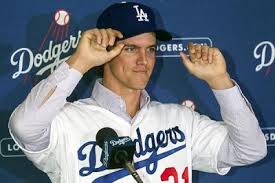
Dodgers sign Zack Greinke to a 6-year $147 million contract: Yes, the moment we were all waiting for. Greinke represented the largest domino out there; once he signed, we would see every other pitcher on the market begin signing contracts. Greinke's contract makes him the highest paid right-handed pitcher ever, and the contract's average annual value of $24.5 million surpasses the C.C. Sabathia's $24.4 million AAV as the record for a pitcher on a multiyear contract. The Dodgers had money to spend, and they went for the gold. Greinke joins Josh Beckett and Clayton Kershaw atop the Dodgers rotation, giving them a solid 1-2-3- punch that every playoff team needs. Greinke's contract will take him through his age 34 season, which means the Dodgers will get Greinke's production before it begins to seriously slip due to age. PECOTA forecasts Greinke's future value as such:
WARP
2013 3.5
2014 3.5
2015 3.4
2016 3.1
2017 2.9
2018 2.6
Average 3.17
Median 3.25
If we extrapolate those forecasts to value in dollars, this deal should benefit both Greinke and the Dodgers. Greinke has proven he can pitch in both the American League (Kansas City Royals and LA Angels) and the National League (Milwaukee Brewers). There is little to say about Greinke's production or this contract, as it seems as though both sides accomplished their respective goals. Greinke becomes a very very rich man who will be in annual contention to make the playoffs, and the Dodgers acquired the top-tier starting pitcher they needed to complement fellow ace Clayton Kershaw, making a big splash with their newfound deep pockets. The Dodgers and Rangers were both vying for Greinke's services, but the Dodgers came out on top. Choosing LA over Texas makes sense for Greinke given that Dodger Stadium ranks tied for the 25th least hitter friendly park in the majors (Park factor of 0.867) while the Ballpark in Arlington ranks as the 4th most hitter friendly park in the league (Park factor of 1.183).
My Grade: A (Greinke and the Dodgers both wanted this union. The Dodgers look to have paid a reasonable amount, while Greinke made a solid career choice, choosing a more hitter friendly home park over the exact opposite.)

Pirates sign RHP Jason Grilli to a 2-year $6.75 million contract: The most fascinating part of this deal is that former MLB outfielder Gary Sheffield represents Jason Grilli. Apart from that aesthetic aspect of this deal, the Pirates sured up their bullpen by bringing back the 33rd best reliever in MLB in 2012 according to Fangraphs calculation of Wins Above Replacement. For comparison's sake, let's look at both Jonathan Broxton and Raphael Soriano, who ranked just better than Grilli last season. Soriano remains a free agent, but he did turn down a qualifying offer ($13.5 million/1 season) to test the waters for more money, showing that he thinks his services are worth more than $13.5 million per season. Broxton recently signed a 3-year $21 million contract with the Reds, which puts his worth at about $7 million per season. Grilli's new contract will net him about $7 million over two years. See the difference? The Pirates made out great here.

IP K/9 BB/9 LOB% FIP WAR
Jonathan Broxton 58 6.98 2.64 79.2% 3.03 1.3
Rafael Soriano 67.2 9.18 3.19 88.0% 3.32 1.2
Jason Grilli 58.2 13.81 3.38 82.8% 2.8 1.1
The pirates retain a veteran back end of the bullpen pitcher who strikes out hitters at a great rate, and does a good job of keeping base runners from scoring. Grilli is durable, putting up the same number of innings pitched as Broxton who is 8 years Grilli's junior.
My Grade: A- (The Pirates are taking a chance on an older reliever who has never posted K/9 numbers like he did in 2012. It probably points toward some regression, but even still, this is a very team friendly contract. Given the Pirates young arms in the rotation, giving Clint Hurdle a reliable righty in the pen is a solid move.)

Twins sign RHP Kevin Correia to a 2-year $10 million contract: This deal isn't a blockbuster, but I'm sure we can find something interesting here. Correia is a replacement level pitcher who has the ability to "eat innings". Correia was lucky to get a 2-year contract given his less than stellar production over the last few years, but if any team were to sign the veteran, the Twins make some sense. While many of us think of Target Field as a pitcher's park, in reality it is the 10 best hitter's park in the Majors. This means that Correia's numbers could take even a greater turn for the worse in Minnesota. He'll be pitching in a hitter friendly park while simultaneously moving from the NL to the AL. This deal heavily favors Correia since he'll be getting paid an AAV of $5 million, which equates to about 0.9 wins per season, a number, that given his recent production, will prove difficult for Correia to achieve.  On the other hand, if Correia puts up solid first half numbers in 2013, he could be a perfect trade deadline candidate as he has a team friendly deal with a full year of control for 2014. If his production continues to decline, the Twins have essentially signed a place holder until recently acquired young pitchers like Trevor May and Alex Meyer are ready to play big-league ball.
My Grade: C- (A lot of ifs are involved here. He could turn out to be a valuable asset, but too much of the evidence points towards the opposite. Correia is making way more money than he's likely to be worth, so from his side, this deal is an A.)

Kevin Youkilis
Yankees sign 3B Kevin Youkilis to a 1-year $12 million contract: It was no surprise to anyone when the rumors came in about the Yankees being in hot pursuit of Kevin Youkilis. Youkilis represented the best free agent option at third base, and with Yankees 3B Alex Rodriguez out for at least the first half of 2013, the Yankees would settle for nothing less than the best available option. Last season the Red Sox replaced Youkilis with a younger model, but shipped him off to the Windy City. In Chicago, Youkilis got back on track, returning from an injury to post solid numbers (109 wRC+, .339 wOBA, and .188 ISO). PECOTA projects Youkilis to return to his former self, 3.9 WARP, .303 TAv, and .374 OBP. Youk, known as the "Greek God of Walks", has always provided value by getting on base at well above average rates, while providing enough power to compensate for his utter lack of speed. The Yankees gain a versatile veteran who gets on base, and might produce more value than a healthy A-rod would. Youkilis is looking to show the league that he hasn't lost a step despite a down year in 2012, hoping to net himself a multi-year contract beginning in 2014. 
My Grade: B+ (This deal works for both sides. Honestly, the Yankees should have made a longer commitment to Youkilis. A-rod is as close to a sunk cost as a player can get, and if Youkilis can replace Rodriguez for the next 3 seasons, it might seriously benefit the Yanks. This deal gives the Bronx Bombers some options, as Cashman and company can let Youkilis go after 2013 and either make a deal for another third baseman, or risk going with A-Rod in the future. Youkilis gets a healthy contract, looking to justify a multi-year deal going into 2014.)
Ichiro Suzuki
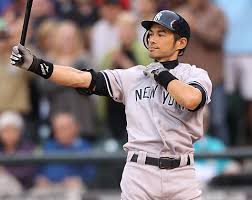
Yankees sign OF Ichiro Suzuki to 2-year $13 million contract: At 39 years old, Ichiro is not the superstar he once was, but he's still a viable MLB outfielder. After performing miserably at the plate in Seattle last year, Ichiro resurrected his hitting production in NYC, going from a .261/.288/.353 slash line as a Mariner to a .322/.340/.454 slash line in pinstripes. The biggest difference in Ichiro's approach to the plate between his time in Seattle and New York in 2012 was that in NYC, Ichiro became more selective. His swing percentage dropped from 49.8% to 46.6%, which caused an increase in hitter's counts. By becoming more selective, Ichiro saw more fastballs, and thus began to put the ball in play in places that allowed him to reach base safely. He his more home runs in New York (thank you short porch), and hit the ball on the ground more often, causing his infield hit percentage to double. The biggest drop off between his play on the west coast and his play on the east was Ichiro's defense. He posted a +13 DRS in Seattle while compiling a well below average -7 DRS playing in the New York outfield. This is a wild swing in defensive abilities, but given the difference in total plays made between Ichiro in Seattle and in New York, the difference in defensive efficiency can be explained by a massive difference in sample size. In the few plays Ichiro made in New York, he didn't perform well, but had he made 4 times as many plays, his top-notch defense would have shown through. The Yankees don't have a proven lead off hitter, but the combination of Brett Gardner, Derek Jeter, and now Ichiro Suzuki should serve as suitable fill-ins. The most surprising part of the deal is that Ichiro found a contract offer for more than 1-year, but after rumors surfaced that the Phillies has offered Ichiro a similar contract, the Yankees were forced to pony up an extra year in order to retain Ichiro's services.
My Grade: B (The Yankees get a cheap option to play the outfield well who uses his speed and savvy to get on base and create runs. Ichiro got the ever illusive 2nd year despite being 29 years old. This isn't a perfect deal since Ichiro's age points towards a decrease in future production, and the Yankees have other needs to fill.)

Reds sign 3B Jack Hannahan to a 2-year $4 million contract: This isn't a biggie, but it is worth noting. The Reds recently acquired Shin-Soo Choo from the Indians via trade, but with the likelihood of the Indians bringing back Scott Rolen decreasing by the second, Hannahan makes a find replacement. Hannahan is a solid defender at third base, putting up a positive DRS in all 5 of his MLB seasons. On the other hand, FRAA, used by Baseball Prospectus, shows that Hannahan has always been a top defender, posting a 16.1 and 10.9 FRAA in 2011 and 2012 respectively. As far as back-up infielders go, Hannahan will serve the Reds well. Hannahan's splits show a huge disparity between his ability to hit right-handed pitching over left-handed pitching. Hannahan posted a 100 wRC+ vs. RHP last season, but an abysmal 40 wRC+ against left-handers. Look for the Reds to put Hannahan in the starting lineup when the Reds run up against right-handers. 
My Grade: B+ (I like this deal for both sides. Hannahan was essentially left out to dry by the Indians, but Cleveland is all about rebuilding at the moment, and a solid platoon third baseman would only take up a roster spot for the Indians. For the Reds, Hannahan represents half the answer at the hot corner. Hannahan will platoon with Todd Frazier, an up and comer for the Reds on the left-side of the infield.)

That's all for this edition of free-agent frenzy, join us next time when we discuss the Josh Hamilton signing, as well as others. 

Saturday, July 28, 2012

It's All In Your Head

Do the dates July 24th - July 31st mean anything to you?  They may signify a long needed vacation, an upcoming heat wave, or an important business trip to a foreign destination.  For those in Major League Baseball, this is the week leading up to the trade deadline.  July 31st marks the official non-waiver trade deadline in Major League baseball.  Once August begins, 2 months remain in the regular season, thus the league decides to restrict the trading of players at a specific point in the second half of the season.  This deadline allows teams to improve prior to the deadline and focus on playing instead or wondering if they may lose of gain a teammate.

During this frenzy of rumors, proposals, and deals, pundits, commentators, and especially fans forget about the affects trades have on the players.  During this part of the summer, front offices play the part of CIA analysts dissecting mountains of information, scouts perform necessary reconnaissance of prospects, and general managers play the role of, well, general.  If these groups execute their jobs properly trades are made, teams looking for playoff berths make improvements, and those wistfully far from the post-season build for the future.

In my opinion, the most recent successful and crafty teams have been the Tampa Bay Rays, Toronto Blue Jays, Atlanta Braves, San Francisco Giants, and Texas Rangers.  These teams usually find themselves as serious buyers and sellers around the trade deadline as opposed to the off-season when free-agency is the main focus.  Mid-level or poorer teams usually relinquish players to free-agency, but during the week leading up to the trade deadline, they make more noise due to their ability to afford players received in trades even if they cannot pony up enough money to sign them to long-term contracts.  To put it a better way, the week leading up to July 31st is a free-for-all.

Instead of focusing on who may be dealt and which prospect will be moved, I want to discuss a less touched upon but vital issue embedded within the cacophony of chatter.  How do trades affect players? Physically nothing changes but their uniforms, but mentally and strategically, everything changes.

Michael Bourn
Strategically, a player traded usually moves from a bad team to a good team.  Take Michael Bourn as an example from 2011.  Bourn played most of the 2011 season with the Houston Astros, but as the deadline approached the pathetic Astros traded their speedy center fielder to the Atlanta Braves in exchange for some major league ready young players and other prospects.  Bourn's preparation for every game shouldn't change too much, except that he will face more National League East pitching instead of Central division pitching.  Instead of the meager 2011 Pirates, Cubs, and Reds pitching staffs, Bourn needed to get ready for the likes of Roy Halladay, Cliff Lee, Cole Hamels, Jordan Zimmerman, and Anibal Sanchez.  This represents a minor strategic shift.

C.C. Sabathia
An example of a greater change in strategy due to trade is typified in a trade made between the Cleveland Indians and Milwaukee Brewers in 2008.  The Indians, in no way bound for the playoffs, traded ace lefty C.C. Sabathia to the Brewers in exchange for Matt LaPorta and other prospects.  Sabathia went from the AL Central to the NL Central.  He would now prepare for many hitters he had never faced in his career, in addition to needing to prepare to hit with no designated hitter rule in the NL.  Sabathia, like Bourn in 2011, both showed their professionalism and talent by producing very well after switching teams.

Bourn
Sabathia
Team
Astros
Braves
Team
Indians
Brewers
Avg.
0.30
0.28
rWAR
1.70
4.70
OPS
0.77
0.67
ERA
3.83
1.65
rWAR
2.10
0.90
WHIP
1.23
1.00
Stolen Bases
39
22
FIP
3.41
2.44


So, the strategic differences involved in trades do not affect players performance to a significant extent.  That leaves the psychological challenges involved in the switching of teams.  A player's team is an affiliation.  Each player has a contract that states that in exchange for services of playing baseball the player is given an annual salary.  This contract goes beyond a piece of paper, and provides a player with camaraderie and allegiance.  Each player's fellow teammates represent their second family.  According to two sports psychology studies,

The effects of changing teams on the performance of major league baseball players
Nicholson, Craig; McTeer, William;White, Philip
Journal of Sport Behavior; Mar 1998; 21, 1; ProQuest  


AND

Pers Soc Psychol Bull 1988 14: 46
Jeffrey M. Jackson, Stephen A. Buglione and David S. Glenwick
A Drive Theory Analysis
Major League Baseball Performance as a Function of Being Traded

players traded mid-season find it difficult to cope with the idea that their former team did not want them anymore.  Often times players who feel this loss will compare themselves to the bounty corralled by their former team, a mistake because often these players are prospects who are unknown commodities.  

While some players find it difficult to leave their former teams, others find psychological issues in attempting to meet or exceed the expectations placed on them by their new squad.  Fans often see a new acquisition as the key to winning and thus place lots of pressure on these new members of their team. In doing so, player will find it difficult in acclimating to their new team.  According to these articles, this is usually not the case.  More often than not players use the stress or expectations placed upon them as a challenge.  Increases in batting average and slugging percentage were seen amongst hitters after switching teams mid-season, while pitchers saw a slight decrease in productivity, but not a to a significant extent.  

So, overall, the psychological effects of mid-season trades are positive, not negative.  Players tend to outperform their statistics from the first half of the season in an attempt to exceed the expectations placed on them and sometimes because they needed a change of scenery.  Sometimes a player's family plays a part in trades.  Cubs pitcher Ryan Dempster, who has the right to reject any trade in which he is involved, recently rejected a trade to the Atlanta Braves.  He did so not because he wishes to remain in Chicago, but due to his desire to be traded to the Los Angeles Dodgers because Los Angeles is closer to his family's home in Vancouver, Canada.  Most players do not have no-trade clauses in their contracts, and thus teams freely trade them to which ever team offers the best package in return.  


Ichiro, Playing Against His Former Team
Trading is risky business, not only for the organizations involved, but for the players psyches and performance.  For team's giving up solid prospects to attain a player they think will propel their squad to the playoffs, it is important to make the transition as smooth as possible.  For example, Ichiro Suzuki recently left Seattle for the Yankees after 11 and a half season with the Mariners.  This transition is not easy, but I'm sure the Yankees made sure to have all of the necessary accommodations to make the transition as easy as a spicy tuna roll (or is it pie?).  Overall, make sure, as a fan, to remember that MLB players are people, and just like being transferred from one part of a company to another affects your life, so do trades affect Major Leaguers.  

Monday, June 20, 2011

Setting The Table

What do Jose Reyes, Ichiro, and Juan Pierre have in common? If you guessed that they are all career leadoff hitters, then you are correct. Every player in Major League Baseball is described by their defensive position. PA announcers around the league announce players by their defensive positions. Likewise, fans will refer to players as "the shortstop" or " the catcher." Players are sometimes referred to by their most common offensive position in the batting order, but these occurrences are less frequent. Even though baseball fans choose to call players by defensive positions, certain offensive positions remain important and unique. Specific spots in the batting order such as 1-5, 8 and 9 have significance to them, just like defensive positions. For example, the fourth hitter in the lineup is usually reserved for the player with the most power and the best ability to drive in runs.

The leadoff position in the batting order has extreme importance as well. The leadoff hitter has to have speed, good base running ability, and most importantly, the ability to get on base. The first hitter in the lineup is responsible for reaching first base safely however he can, so that the big bats that follow can score him. Whether a team is built upon manufacturing runs using bunts, sacrifices, stolen bases, or hit-and-runs, or built on home run hitting, every team needs a qualified and productive leadoff hitter.

Leadoff hitters should excel in specific statistical categories in order to prove their worth. These statistics have evolved over time. In the past, a hitter with a high batting average and lots of stolen bases would be considered a good leadoff hitter. Players that fit this mold include Kenny Lofton, Craig Biggio, and Rickey Henderson. Biggio and Henderson both compiled over 3,000 hits in their careers and all three players stole at least 400 stolen bases. These players were among the best at the leadoff position, finding numerous ways to get hits including bunting for singles and using their speed to beat out infield singles. Despite the success of these types of players, , managers in 2011 do not look to those strengths when choosing their leadoff hitters.

Instead, managers look for players with high on-base percentages (or “OBP”). As a result, players like Jayson Werth, Kevin Youkilis, David Eckstein, and Ryan Theriot find themselves leading off for their respective teams despite lacking blazing speed or frequent hits. These players consistently get on base, whether by hit, walk, or getting hit by pitch. None, except Werth, has ever shown above average speed, but their responsibility is not to steal bases. All four players have career on base percentages over .340, and career batting averages below .291. Werth and Youkilis are considered doubles hitters with above average power. Such hitters would not usually find themselves leading off, but their ability to give their teammates chances to collect RBIs separates them from other faster leadoff hitters.

The key to Werth and Youkilis’s success is their high pitches seen per plate appearance (or “P/PA”). Both see over 4 pitches per plate appearance, ranking them in the top 15 in MLB this season. P/PAis an indicator of plate discipline and patience. Usually a P/PA over 3.90 is considered good and anything over 4.00 is great. Leadoff hitters should sport high P/PAs because as the first hitter of the game, they have the responsibility to enable his teammates to see the types of pitches the pitcher throws, his speed, and accuracy. Players who have high P/PA and high OBP usually hit well with two strikes and foul lots of pitches off, thus putting in play only a pitch they want. These players provide other benefits for the rest of the lineup. In addition to allowing fellow teammates a better look at the pitcher, players with high P/PA cause the opposing pitcher to throw more pitches. This is important because the game has evolved from a time when pitchers had no pitch counts to the present, where pitchers begin games with a maximum number of pitches they can throw before exiting the game. If a team wants to exhaust a pitcher, hitters with high P/PA will do the trick.

Eckstein and Theriot fit the mold of players who may not have great talent but are hustlers. These players are not physically gifted like many of their counterparts.Instead, they play a cerebral game, outsmarting the opposing team and out-hustling them. David Eckstein played 10 seasons in Major League Baseball and compiled 143 hit-by-pitches. When batting, Eckstein always stood very close to the plate, forcing pitchers to either throw the ball where he wanted to hit it or to hit him. Both possibilities result in Eckstein reaching base. In addition, both he and Ryan Theriot are smart base runners. Despite not accruing lots of stolen bases, both infielders scored, on average, one run every other game over their careers (Eckstein-.535, Theriot-.529). Both hitters read the ball well and thus knew when to go from first to third or when to turn a single into a double.

Leadoff hitters have the dubious job of beginning the process of scoring runs. Getting on base, staying on base, and then scoring runs are responsibilities that fall to the first hitters in the batting order. Recently, these hitters have not all fit the previous model of the first hitter in the lineup, but despite not having Ricky Henderson-like speed or an Ichiro-like batting average, today's leadoff hitters still produce runs. Seeing lots of pitches, taking an extra base, and making few mistakes make a good modern day leadoff hitter. Hitters will probably never be known by the position they held in the batting order because such positions are fickle and sometimes from game to game. Despite this fact, the leadoff position, like the clean-up (4th spot) role, possesses special qualifications for which only a select few players qualify.