Showing posts with label San Francisco Giants. Show all posts

Monday, December 3, 2012

Winter Meetings: Day 1

Today was day 1 of the infamous winter meetings. For those of you unaware, Baseball's winter meetings occur every year around the first week of December. It is a week full of most of Baseball's executives, reporters, agents, and coaches who gather in a hotel to perform a number of activities. Front offices look to improve their clubs, agents look to get their clients signed to lucrative deals, coaches give interviews, and reporters disseminate the mounds of information they compile.

This year the winter meetings are being held in Nashville, Tennessee at the Gaylord Osprey Hotel and Convention Center. In the past, the meetings have lacked the fanfare that has more recently become commonplace, but due to the high profile free agents, infinite number of possible trades, and most importantly the MILLIONS, and I capitalize that word for a reason, of dollars thrown around, Baseball's Winter Meetings have become the event of the offseason.

So, let's recap a bit of the action we have already witnessed on just the opening day of the meetings.

Mike Napoli
Red Sox sign C/1B Mike Napoli to a 3-year $39 million contract: First, at this year's winter meetings, this is Ben Cherington's Red Sox, not John Henry's Red Sox. By that I'm implying that Cherington now has the reins to the Red Sox horse, music to the ears of Red Sox fans sick of signings like Carl Crawford. With Cherington making mostly autonomous decisions, his front office penned Mike Napoli to a three-year contract with an average annual salary of $13 million. Napoli played the last 2 years for the Texas Rangers, catching, playing a bit of first base, and DHing for Ron Washington's club. In 7 seasons, Napoli has been worth 20 wins according to Fangraphs, 16.8 wins according to Baseball-Reference, and 21.2 wins according to Baseball Prospectus. He's a versitile player, having the ability to both catch and play first base. The Red Sox already signed David Ross to a 2-year deal, and retain both Ryan Lavarnway and Jarrod Saltalamacchia, so why would the team make this deal? First, the Red Sox needed a first baseman, so if their plan is to have Napoli (-4 DRS at catcher, 0 DRS at 1st base) at first base, this seems like a good deal as far as that position is concerned. If the team expects Napoli to catch even 50 games, it points towards Cherington compiling as much catching talent as possible in a market where few catchers remain with numerous teams looking for catchers. Essentially, it allows the team to trade someone like Saltalamacchia or Lavarnway for a better return than they would regularly see. Napoli is a masher; he hits for power, and is patient at the plate (.248 career ISO, .356 career OBP). Bottom line is, the Red Sox got a solid player at a position they needed for a reasonable contract.
My grade: B+ (could become an A if the team can move Saltalamacchia for a decent prospect)

Pagan
Giants sign Angel Pagan to a 4-year $40 million contract: Pagan had been quite the enigma in Baseball circles in that he has previously been traded for Andres Torres, but he's also put up 3 seasons of 2.9 wins or more (Fangraphs). Due to the Giants recent World Championship, Pagan is far more a household name than before, but many might be surprised at a $10 million annual average salary for a center fielder that had to compete with Michael Bourn, Josh Hamilton, B.J. Upton, and Shane Victorino in the center field market this offseason. On the other hand, just like Upton's recent signing with the Braves, this contract looks like a perfect fit. Pagan is 31, and might not be playing center field in 2 seasons, but the value he adds by getting on base, and adding more than a .400 slugging percentage gives him the potential to easily be worth 2.0 wins per season, which is the number he must achieve to justify his new average annual salary. The Phillies and Giants were said to be the two main players for Pagan, and not too surprisingly, Pagan resigned with the world champions. The Giants got a player that could play two solid seasons in center followed by 2 Melky Cabrera-like seasons in either corner spot, while doing a great job setting the table at the top of the Giants lineup. Sure, Pagan is set to regress a bit over the next few years, but if he can put up even 75% of his average annual production, we will look back on this deal as a steal for San Fran.
My Grade: A- (good for player, good for team, only randomness can screw with this one)


Joakim Soria
Ranger sign Joakim Soria to a 2-year $8 million contract: The Rangers have recently made it a priority to sure up their bullpen. This has a lot to do with affects their starting pitchers feel from the immensely hitter friendly ballpark in Arlington, and the team's desire to get solid talent for reasonable prices despite the drastically inflated market for relievers. Soria is coming off of his 2nd, yes I said 2nd, not first, reconstructive UCL surgery (commonly know as Tommy John Surgery). Soria is a 28-year-old righty reliever who has never had a season in which he didn't post at least a WARP, rWAR, or fWAR less than 1.0. That might not sound like much, but given the fact that relievers throw 30% of the innings that starters do, being worth $5 million a season is nothing to sneeze at. What surprises me here is the length of the deal, Rarely do pitchers coming off any arm surgery get more than a one-year deal, but Soria got 2 years. This bodes well for fellow free agent reliever Brian Wilson (also coming off of TJ Surgery), but also shows that the Rangers think Soria will return to his previous form. The average annual salary of $4 million per season represents the concerns the Rangers have, but more so, it shows just how inflated the market for relievers has gotten. With pitchers like Jonathan Broxton and Brandon League getting incredibly inflated deals for their given skill sets, the Rangers would rather go after an injury plagued player than with upside than a proven reliever for way too much money. Maybe if every team didn't employ the ridiculous pitcher for an inning bullpen system none of this would have happened.
My Grade: B (could be great, could be awful, not a lot to lose for the Rangers either way)

James Loney
Rays sign James Loney to a 1-year $2 million contract: This deal intrigued me a lot. I recently wrote about Loney's potential to be a serious bounce back candidate for next season. He has continued to get on base and play good defense, two things the Rays look for in their players. Due to the hype surrounding Loney when he played in LA, most see his recent production as putrid as opposed to average. In order to satisfy this deal, Loney needs to be worth ~ 0.3 wins (Fangraphs) at the end of the 2013 season. Bill James projects him to post a .319 wOBA, with a .337 OBP, and .127 ISO. PECOTA sees Loney as a 1.5 WARP player next season (worth more than $8 million), with a .345 OBP, and .143 ISO. The Rays have little money to spend, and usually pursue improvements in their club via trade and not free agency due to those financial constraints (come on Rays fans, support your team). In this case, the Rays got a steal. In an offseason in which Loney was in the top 4 in the 1st baseman market, Tampa irked out a deal in which they will essentially pay Loney pennies. One thing is for certain, Loney will play above average defense at first base, something he has done almost every season he's played. With a number of ground ball pitchers, and good infield defense, this can only further's the Rays' ability to subdue opposing offenses, even when the ball is put in play. I projected Loney to make more than $6 million for next season at a 1-year deal. He's getting less than 1/3 of that money in this deal. My Grade: A (The only person unhappy with this deal is Loney's agent?)

For more on the winter meetings, I recommend following www.mlbtraderumors.com or checking out Ken Rosenthal, John Paul Morosi, Buster Olney, or Tim Kurkjian on Twitter. Come back tomorrow for a recap of day 2 of the winter meetings.

Sunday, November 11, 2012

What's Wright and What's Wrong?

Recently, I wrote about two players who have been mentioned as possible trade candidates this offseason, the Twins Josh Willingham and the Indians Shin-Soo Choo. Both are outfielders, and neither is a true "star". Then there's David Wright. Wright constitutes the polar opposite of Choo and Willingham. He has been the focal point of the New York Mets for years, during the good times and the bad, although Mets fans might say they were all bad. As a third baseman, he plays a premium offensive and semi-premium defensive position, but by playing the hot corner in the big apple, he garners much more exposure than say Chase Headley or Aramis Ramirez.

Going into this offseason, Wright was coming off one of the best seasons of his career, second only to his 2007 campaign. He had previously signed a 7 year $70 million contract that included a team option for 2013 for $16 million. Wright has made about $54 million the last 6 seasons, but he has been worth a little more than twice that amount. Here is a look at his value since signing his current contract in 2007:
fWAR rWAR WARP
2007 8.8 8.1 7.6
2008 7.1 6.7 7.2
2009 3.5 2.9 3.3
2010 4.0 2.5 5.3
2011 1.9 1.9 0.6
2012 7.8 6.7 5.7
Wright's fWAR stats are a bit inflated in comparison to his rWAR and WARP because much of his defense comes from his good range, while his below average arm leads to him not making some plays that average third baseman make regularly. Also, his recent back injuries had hindered his range, but last season, it came back with a vengeance. Nonetheless, let's not be too soured by his 2009-2011 years. Since 2007 Wright has averaged 5.5 fWAR per season, which would be worth ~ $25 million on the open market. That number just exemplifies the extremely team friendly deal he signed in 2007. On a separate note, if the Mets are to regain any semblance of their 2006 selves, they should look to sign their marquee young players to team friendly deals at young ages, like the one they signed with Wright in 07'.

Before I get into what the Mets should do with Wright, I'm going to take a quick look at his production over the last few years. This is to give you a glimpse into what he does best.
wOBA wRC+ ISO HR OPS+ OBP
2010 0.366 129 0.220 29 131 0.354
2011 0.338 116 0.172 14 115 0.345
2012 0.376 140 0.186 21 143 0.391
So, Wright, unlike many players, provides a team with a great mix of on base percentage as well as power hitting. Relatively, he is a very good run creator, especially given the other players who play at 3rd base like Cabrera, Beltre, and Headley. Wright's ISO has declined recently, but it is a stat that usually peaks in a player's mid 20's, so an almost 30 year old, he's right on track. At the same time, you would like to see his home run numbers remain more constant, especially since the Mets moved the fences in at Citi Field. This would seem to be more of a concern, since he hasn't topped 25 HR since 2010, but given his back injury in 2011, and the change in his approach at the plate in 2012, it isn't surprising.

Change of approach? Where did that come from? Well, after speaking with some very observant Mets fans who are relatives of mine, and then checking out the numbers to be sure, I discovered that Wright definitely changed his approach to at-bats. According to my sources, he began taking strike one without question. At first, this is a good strategy for seeing more pitches, and thus finding a better one to hit. This is confirmed by the decrease in his swing percentage, 41.6% in 2012 compared to a career 43.6% mark. In these cases you would like to see a decrees in swings on pitches outside of the strike zone, but because "taking the first pitch" is not the best way to accomplish this goal, Wright swung fewer times at pitches out of the zone than those in the strike zone. Pitchers began throwing easy to hit pitches to begin at bats, and if Wright took them, he began the at bat in an 0-1 hole every time. As we know from the incredible amount of research, a batter who begins his at bats down 0-1 has a far worse chance of reaching base than one who starts them with a 1-0 count.

As far as base running, Wright has always been a solid base runner, posting positive UBR values in 7 out of his 9 MLB seasons. This included a 1.2 UBR in 2012, a year in which he stole 15 bases, but was thrown out 10 times. It would seem that if Wright just attempted fewer steals, he might very well be a valuable asset on the base paths. Remember, speed diminishes with age, but knowledgeable base running can remain forever.

So, what should the Mets do with David Wright? Currently he is set to play for the Amazin's in 2013 at a cost of $16 million. Was nothing to happen between now and this time next year, Wright would become a free agent following the 2013 seasons. That is one of the least likely possibilites, so let's explore some of the others. First, the Mets could decide to negotiate a contract extension. General Manager Sandy Alderson has said that in the Mets' current situation he would rather not sign players to their 2nd contracts. Essentially he means that he doesn't want to get into negotiations over a contract for a player who's next contract will cover some of their prime as well as a part of their decline. This sentiment points towards an extension that might be heavier on the money side, but light on the years side. By my estimates, Alderson and the Mets would not offer Wright more than a 5-year $100 million extension. That would be $25 million per season (expecting about 5 fWAR), and it would take Wright into the 2018 season, at which time he would be 35 years old. In addition, if third base becomes a bit too much for Wright, and Mets prospect Wilmer Flores becomes their everyday third baseman, Wright could make a smooth transition to 2nd base.

The more likely option, and probably the most sensible one, is to trade Wright. Some might say that Wright is a fixture in New York, the star of the team, and a leader in the clubhouse. Even if all that were true, the Mets are rebuilding, so throw all of those intangibles out the window. This is a business and the Mets need to get back to making decisions based on facts. By picking up Wright's option for the 2013 season, the Mets made the number of teams willing to trade for the third baseman greater than before. Now, a team that would rather not extend him, but wants him for the one-year rental, can be in the discussion. Who might those teams be?

I would bet that the Braves, Phillies, Dodgers, and White Sox would all be in the discussion for Wright. Dark horse candidates might include the Yankees, Giants, and the Athletics. One of the big questions is, would the Mets be willing to trade Wright within the division, or worse, to the Yankees? In reality, the team may only negotiate outside of those teams, but unfortunately for them, some of the best candidates to trade for Wright are the Braves, Phillies, and Yankees. Since I often live in a world outside of reality, I will suspend that feature in order to perform this analysis.

The Braves are perfect for Wright. If you didn't hear, Chipper Jones retired this season, leaving a huge gap at third base. The Braves could move 2012 left fielder Martin Prado to third base, but if so it leaves a hole in left field. The Braves are no big market team, but for a player like Wright they could expend the necessary capitol to extend Wright for a number of years. In addition, the Braves also have pitching prospects coming out of their ears, something the Mets would love to take off their hands. A trade involving pitching prospect Randall Delgado would probably entice the Mets to make a move because a future rotation of Matt Harvey, Zack Wheeler, and Randall Delgado would be a force to be reckoned with. 

The Phillies need a third baseman. They recently resigned Kevin Frandsen, but he isn't the answer. With a mediocre third base market out there in free agency, and their only third base prospect a few years away, the Phillies could make a move for Wright. The team needs right-handed hitters as well, but the problem here will be if the Phillies have the prospects to trade for Wright. While the team has made it clear they want to give Domonic Brown a chance in the outfield, a trade of Domonic Brown and one of their pitching prospects like Jonathan Pettibone would be a fair trade for Wright. While the Phillies make sense here, this may be the least likely possibility due to the NL East rivalry, the Phillies uncertainty to extend Wright, and most importantly the Mets ability to find better prospects in return elsewhere.

The Dodgers have been, and will most likely continue to be the most active team in trades and free agency. They have lots of money, a desire to use it, and they play in the same division as the recent 2-time World Series champion San Francisco Giants. The team has said they are willing to trade right fielder Andre Ethier, and the Mets would love to acquire him. It's no secret that the Mets need outfield help, and Ethier would provide them with some much-needed stability. The Dodgers would probably have to tack a pitcher onto the deal, and trading for a 3B would mean moving Hanley Ramirez back to shortstop, but if hitting is what the Dodgers want, this is their best option. 

The White Sox want to resign Kevin Youkilis, and they have very little as far as prospects go. The White Sox would love David Wright, and they have a desperate need for a third baseman with some pop, but I don't think they have anything the Mets want, making this deal unlikely to happen.
What about the Yankees. After paltry play from Alex Rodriguez in the 2012 postseason, and an obvious decline in his numbers over the last few seasons, the Yankees would love to move A-rod to DH and Wright could be the perfect compliment to Robinson Cano going forward. The Mets are looking for pitching and outfield help. The Yankees could trade Phil Hughes and prospect Mason Williams, an outfielder, in exchange for Wright. Hughes is in his 2nd year of arbitration, but he's young, and if the Mets have any confidence in him, they could look to sign him to a 3-year deal with a fourth year team option for something in the neighborhood of $20 million. Williams projects to be a great all around outfielder, but he probably won't be ready until 2014 at the earliest. In the end, the Mets probably won't make a trade with their crosstown rivals; it might lose them the few fans they have left.

The Giants don't need a third baseman, but David Wright could prove to be a great upgrade for them in a number of ways. The Giants, despite winning the World Series still need more consistent offense. The  Giants have fan favorite Pablo Sandoval playing the hot corner, but with talks of trading first baseman Brandon Belt, the team should consider moving the hefty Sandoval to 1st and trading for a bonafide player like Wright. Add Wright to Buster Posey, Sandoval, and Hunter Pence and the Giants lineup becomes formidabile in the middle of the order. Yes, they would become very righthanded, but lefties hitting for power at AT&T park is something left only for Barry Bonds. The Giants have the money to extend Wright, and they could trade the Mets top prospect Gary Brown, an outfielder, and minor prospect Hector Sanchez, a catcher. The Mets need help in a number of places, but Brown would instantly become their top-hitting prospect and could begin playing in the Mets outfield in 2013. 

Finally we come to the Oakland A's. This is a team that, if they traded for Wright, would be doing so with no intention, or ability, to sign him to an extension. The A's have a solid defensive third baseman in Josh Donaldson, but he doesn't provide much as far as offense goes. The A's have 4 above average MLB outfielders, making one of them expendable. Colin Cowgill is the perfect player to trade. He came over from the Diamondbacks as a highly touted prospect, but his stock has dropped a bit recently. Add him to one of the many young pitchers in the A's minor league system like Sonny Gray, and you have a trade that satisfies both sides. The A's get a hitter to solidify their lineup for 2013, keeping them competitive with offensively minded teams like the Angels and Rangers, while not putting a big dent in the young core they rely on year in and year out. The Mets can instantly put Gray and Cowgill into their starting lineup, one in the rotation and one in the outfield, two spots in which they need help. Wheeler, Harvey, and Gray sounds pretty good as the rotation of the future, and Cowgill has potential to remain in the outfield for years to come. Both guys are cheap and under team control for a long time. 

In conclusion, I originally thought that the Mets best move was to trade David Wright. Now, after looking at their options, I wonder if offering him an extension might be the best thing for their team. Honestly, it all comes down to the money. If Wright demands more than the Mets are willing to pay him, a trade is the only option. Some might say the Mets should wait to trade him before the 2013 trade deadline, at which point a team may need Wright more than now, but the chances that the Mets could land the prospects they want for half year rental aren't high. The Mets have to find a deal that makes sense, if not, they can take a chance at trading him by the deadline or, more likely, they can extend him. One thing is for sure, Sandy Alderson is going to do what he thinks is best for the Mets' future, whether it involves David Wright is history that has yet to be written. 

Sunday, November 4, 2012

The Supermarket of Center Fielders

Slugger Josh Hamilton
A center fielder here, a center fielder there, center fielders everywhere. I know it sounds silly, but that little ditty describes the 2012-2013 free agent market with remarkable accuracy. Not only is this winter's market chock full of center fielders, but it's full of valuable ones. While there are very weak options at numerous other positions, outfield, and specifically center field has a number of great options. Some are flashy big name candidates like Josh Hamilton and Michael Bourn, and others are solid options with the potential for more like B.J. Upton and Angel Pagan.

Here is some general information on these 4 players:

Age
Bats/Throws
Experience
Hamilton
31
L/L
6 Years
Upton
28
R/R
7 years
Bourn
29
L/R
6 Years
Pagan
31
S/R
7 Years

All 4 of these players are about the same age, and they have all played about the same number of MLB seasons. Angel Pagan offers the most versatility because he can hit from both sides of the plate, but rarely does sidedness change a team's decision on whether to sign a player or not. Let's go a little more in depth.

Best hitter: The best overall hitter amongst these players is Josh Hamilton. This shouldn't come as a surprise. Hamilton was the American league most valuable player in 2010. He is the only true power hitter of the bunch, notching the highest wRC+ at 140, and hitting for the highest wOBA at .387. Hamilton is a slugger, averaging about 33 home runs per season over the last three years. He easily has the highest ISO of this foursome at .292. Hamilton is the pure hitter of the bunch, and honestly, any team that signs him should seriously consider making him a corner outfielder that takes some reps as a designated hitter (pending he remains in the AL). Not only does Hamilton hit well, but he also gets on base, sporting the 2nd best BB% of these four at 9.4%. None of this is all that surprising. Hamilton is a middle-of-the-order hitter, Pagan and Bourn are best as leadoff hitters, and Upton is the lone enigma, sporting the best potential to hit both for power and to use his speed.
Michael Bourn

Best Fielder:
FRAA UZR DRS
Hamilton -1.5 -12.6 -9
Upton -6.5 -2.4 -4
Bourn 0.4 22.4 24
Pagan 10.9 0.1 -6

When looking into fielding, metrics only tell some of the story. On the other hand, I've seen all four of these outfielders play, and the three distinct fielding metrics seen above tell the story very well. Michael Bourn is without a doubt the best fielder of this bunch. Bourn, along with Jason Heyward and Martin Prado made for the best combined defensive outfield in MLB last season. Atlanta is a larger than average sized park, giving Bourn a great deal of room to cover. Bourn's incredible speed, above average arm, and very good instincts make him the best current defensive center fielder, but speed diminishes quickly, and any team that signs Bourn to a long-team contract should know that Bourn probably won't be able to keep up this production in center field in the long-term. Interestingly, Baseball Prospectus' preferred defensive metric FRAA, values Angel Pagan higher than Michael Bourn. Fielding runs above average is not a zone-based metric, instead if looks at the plays made by the average defender at the given position and compares it to the plays made by the given player. Pagan's 10.9 is considered excellent, while Bourn's 0.4 puts him at about average. Due to the difference in calculation between these defensive metrics, a team looking to upgrade their defense in center field might see Pagan as a better short-term option as he combines average defense in terms of range and an excellent defender in terms of play-by-play comparison. 

Most Potential: The player with the most potential is definitely B.J. Upton. Upton is the youngest player of these four, with a great set of tools. Many think that Upton needs a change of scenery, as the Rays drafted him hoping for superstar potential, but he never lived up to the hype. Upton has averaged a 3.9 fWAR over his last 6 seasons, all leading up his prime years (27-32 years old). Upton has a very strong arm, great speed, and has shown the ability to hit for power. Upton's issues revolve around his high strikeout rate, ranging from 28.1% to 21.2% combined with his low walk rate, which has ranged from as low as 7% to as high as 15.2%. Josh Hamilton and Michael Bourn are clearly flashier candidates, but due to those two, Upton has the chance to fly under the radar. His relative youth, skill set, and consistently moderate productivity make him the player with the best chance to break out and become a star.
Angel Pagan
Best Value

WARP
fWAR
rWAR
Hamilton
3.9
4.4
3.4
Upton
2.1
3.3
2.6
Bourn
3.7
6.4
6.0
Pagan
4.7
4.8
4.0

So, Josh Hamilton is the best hitter, Michael Bourn the best defender, and B.J. Upton has the most upside, but the best value at centerfield has to be Angel Pagan. Obviously, if a team is in need of a power hitter, the only choice is Hamilton, but looking at all four players objectively; Pagan provides the best overall package. From a hitting perspective, Pagan's .334 wOBA and 113 wRC+ put him second amongst these four players in both categories, and his .152 ISO was at league average for 2012. Pagan is a versatile player; he is a switch hitter, but can also bat in many spots in the batting order. He provides above average defense, and has proven he can play well in one of the largest parks in the Majors in San Fancisco. Pagan is 31 years old, so a long-term deal would not make sense, but he might provide the best overall value over the next 3 seasons in comparison to Hamilton, Bourn, and Upton. Upton is an unknown, Hamilton is one-dimensional and has had substance abuse problems in the past, while Bourn's game is based around speed, which diminishes rapidly as age increases. 

Best Fits:

Josh Hamilton is set to make a boatload of money. From the team perspective, his best value is in a 3 to 4-year contract, but with Hamilton looking of something more in the range of 7-8 seasons, it minimizes the number of good pairings. Teams that make the most sense for Hamilton are mid-major teams like Seattle, Baltimore, and Milwaukee. All three teams would most likely attempt to move him to a corner outfield spot, but that would be a solid career move for Hamilton to accept. 

Michael Bourn is a speedster, who will immediately upgrade a team's defense in the outfield, and solidify any team's leadoff spot in the batting order. Teams that make sense for Bourn are the Yankees, Nationals, Giants, and Dodgers. 

B.J. Upton
B.J. Upton is the most difficult player on this list to place. The biggest difficulty in signing Upton will be that any team to do so will most likely end up overpaying him. If we project Upton to continue to put up ~ 4.0 fWAR over the next 4 seasons, he would be worth about $80 million. On the other hand, insider Jon Heyman of CBS Sports projects Upton to sign a contract in the 5-year $60 million range. Teams that would fit Upton include the Phillies, Nationals, Rangers, Braves, and Dodgers.

Lastly, let's consider Angel Pagan. Pagan is a solid all around player. The only knock on him is that unlike these other 4 players, Pagan has only put up really good numbers in two out of his 7 seasons in MLB. Otherwise, Pagan is a great option, due to his offensive flexibility, defensive abilities, and experience. Unlike these other four center fielders, any deal Pagan signs will most likely be shorter-term and less expensive, thus he becomes a good option to a team looking to upgrade in center field without spending a lot of money. In addition, the Giants didn't make a qualifying offer to Pagan, meaning any team that signs him won't lose their first round draft selection. A good contract for both Pagan and the team that signs him would be in the area of 4 years worth about $45 million. Teams that make sense include the Phillies, Giants, Dodgers, Rangers, Braves, and Nationals. 

In the end, all four players are solid outfield options. The only things we truly know are that all four players will become very rich men, and, going into the 2013 season, four teams will have new center fielders.

Wednesday, October 24, 2012

It All Comes Down To This

Tonight it begins. The World Series is the big, flashy, and exciting number that ends the musical that is the Major League Baseball season. In the spring, 29 teams set forth to conquer the baseball world, and one set forth to re-conquer it. The 750 players who began the season on the 25-man rosters of each team clawed tooth and nail, legging out doubles on bloop hits to the outfield, running from left-centerfield all the way to right-center to make a diving catch, and blocking every breaking ball in the dirt in order to attain baseball glory. Unfortunately, for all but 50 this season did not turn out the way they had hoped. Injuries, coaching changes, trades, interviews gone wrong, hanging breaking balls, mental errors, and of course randomness caused 28 teams to falter, and only two to prevail.

The Detroit Tigers and San Francisco Giants will begin the 2012 World Series tonight in the chilly city by the bay to duke it out for the right to be crowned 2012 champions. So, there is little left to do but evaluate the two teams, and pick a winner, knowing that the chances of the series playing out like any of us think it will is ludicrous. Let's go step-by-step, and delve into each team, by looking at their starting rotations, offenses, bullpens, and defenses, to see which team should be more hopeful entering the World Series.

Starting Rotations:

Justin Verlander
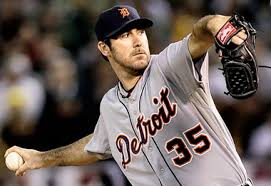
In order to get this far, both teams must have good pitching, it is far to difficult win games without above-average pitching. In general, there are three types of outs, ground balls, balls in the air, and strikeouts. Pitchers control strikeouts without the aid of their defense, which makes them quite valuable. Also, the lack of a ball being put in play leaves little room for mistakes, or freak hits like the one that hit Hunter Pence's bat three times before landing in play. The Tigers not only have the best pitcher in the series, Justin Verlander, but they have the two top starters in terms of strikeouts. Max Scherzer and Justin Verlander each had K/9 above 9.00 this season, something no other starter in this series can claim. Consequently these two starters rank 1st and 3rd in fastball usage amongst the other starters in this series, meaning they come at the hitters trying to blow them away, as well as set up their off-speed stuff.  In fact, three of the Tigers four starters have the lowest contact percentages of the pitchers in the series, while all 4 Giants pitchers get contact on 80% of pitches they throw. All 4 Giants starters had 90 or higher FIP- this season while all four Tigers hurlers had sub 90 FIP-.

Tigers pitchers don't allow many base runners, but when they do, only Justin Verlander is able to pitch well with runners on. Fister, Sanchez, and Scherzer give up wOBA's of .310 or greater with runners on base while no Giants starter has a wOBA that high with runners on. So, if the Tigers can keep men off base, they should perform well, but when the Giants pitchers run into trouble, they prove up to the task of keeping production down. So, a good strategy might be to allow Miguel Cabrera and Prince Fielder to reach base, but then shut down the rest of the Detroit offense. The same sentiment is true in high leverage situations. The Giants starters, as a group, have a lower wOBA against in more pressure filled situations than do their American League counterparts.

Overall, it seems like these two teams' starters each have their own distinct strengths and weaknesses. The one factor that truly favors the Tigers is that they begin the series with Justin Verlander, and if Jim Leyland decides it is best, he can have Justin start game 1, game 4, and game 7. The Giants counter with Barry Zito in game one, having used Matt Cain to secure the NL pennant in game 7 of the NLCS, and thus would be at a disadvantage. On the other hand, the only team to use a three man rotation in the last 3 World Series was the 2009 Yankees, so the trend is to use a four man group. In the end, this is the playoffs, and it isn't about power pitching as much as it is about smart pitching. The Giants 4 pitchers all deal well with base runners, men in scoring position, and pressure filled situations, three situations that arrise often when two evenly matched squads play. I give a slight advantage to San Francisco's staff.

Offense:

A team's offense has many parts to it. Some teams hit better for power, others have higher on base percentages, some cause opposing pitchers to work harder than usual. A team's offense is often built around the park in which the team plays. The Giants play in spacious AT&T Park, which yielded the fewest home runs in the majors this season, thus their lineup isn't filled with sluggers like Miggy Cabrera and Prince Fielder, but instead with hitters who make more contact like Marco Scutaro, Angel Pagan, and Buster Posey. The Tigers play in a spacious park as well, but they were able to hit 163 home runs this season in comparison to the Giants who managed only 103, good for last in the Majors.

Buster Posey

Giants
Tigers
MLB Avg
wOBA
0.314
0.328
0.315
HR
103
163
wRC+
99
105
96
BABIP
0.315
0.307
0.297
Runs
718
726
WPA
10.75
2.82
Clutch
5.16
-0.15
Contact %
81.40%
80.60%
79.70%
GB/FB
1.48
1.3
1.33
IFH%
7.00%
5.10%
6.50%
K%
17.70%
18.00%
19.80%
LD%
22.10%
21.70%
20.90%
This chart shows where the two offenses stood in during the season. In order to get this far, the Giants offense has used its strengths. They do a great job of making contact, not striking out, hitting line drives, and most importantly, performing well in the clutch. The Tigers offense looks to score most of its runs when Austin Jackson, Quintin Berry, and Omar Infante reach base because the two hitters that follow them produced the most runs of any two hitters in MLB this season. Cabrera and Fielder will provide the best at-bats in the World Series, but those at bats mean much less if the Giants can keep the hitters who precede them in the lineup from reaching base safely. The more games played in the series, the more it favors the Giants offense, due to their much-increased ability to put the ball in play. On the other hand, the Tigers offense is far superior to the Giants in high leverage situations, and with runners on base. So, if the Tigers can get men on base, their offense has a great chance to do some damage. Overall, offensively, the Tigers have the advantage. Even if this series only goes 5 games, it will be difficult to keep Jackson, Berry, and Infante from reaching base, which makes it more difficult to pitch to Cabrera and Fielder. The Giants pitching is very good, but I don't think it can hold the Detroit hitters from scoring runs.

Relief Pitching:

When it comes to bullpens, which are important in playoff series, let's look at the most used relievers because they are the pitchers the managers trust most, and thus will use most often. For the Tigers those pitchers are Phil Coke, Joaquin Benoit, Octavio Dotel, and despite recent performances, Jose Valverde. Bruce Bochy uses Sergio Romo, Jeremy Affeldt, George Kontos, Santiago Casilla, and Javier Lopez most often. Lopez is a situational lefty, so let's leave him out for now.

In the regular season, the advantage would have gone to the Tigers, with Coke, Valverde, and Dotel pitching very well out of the Detroit bullpen. On the other hand, the Giants pen has been outstanding this postseason, a sign of a winning team. Last year, both the Rangers and Cardinals sported great bullpens in the playoffs, but the Cardinals were able to get more out of their hard throwers than the Rangers did out of their ground ball relievers.

In the NLCS, the only two Giants relievers to let up a run were George Kontos and Guillermo Mota, while the only Tigers reliever to allow a run in the ALCS was Jose Valverde. Tigers relievers threw 11.2 innings in the ALCS and struck out 11 batters while the Giants relievers threw 16.2 innings and struck out 18 Cardinal hitters. In the regular season, Giants relievers relied on ground balls much more than strikeouts while the Tigers bullpen went the opposite way, sporting low BABIPs but also low ground ball percentages. Most importantly, when it comes to clutch situations, neither team's bullpen had the advantage in the regular season, both sported relievers with clutch numbers to the left of the number line and some relievers whose clutch numbers were positive.

Using only the eye test, I would say the Giants bullpen looks better heading into this series than does the Tiger's pen, but the statistics show more of a push. The Giants have used their bullpen more often than the Tigers in the playoffs, and often times, pitchers who don't rely on strikeouts gain an advantage from pitching more often. In the end, the slight advantage goes to the Giants, purely because they have more reliable relievers than the Tigers. Jim Leyland has little confidence in Jose Valverde, and may have too much confidence in Phil Coke, while Bruce Bochy seems confident going to his bullpen whenever he needs to.

Defense:

When it comes to defense, these two teams couldn't be further apart. The three main defensive metrics in use are FRAA, UZR, and DRS. FRAA is a metric used for individuals, but Baseball Prospectus uses a version of Defensive Efficiency called PADE, which was developed by Bill James, to calculate a teams defensive efficiency while factoring in park and league effects. Here are the results.

Angel Pagan Diving to Make a Catch

Giants
Tigers
DRS
-7
-32
UZR
8.6
-28.1
PADE
0.84
-2.36
These statistics are generally seen quite obviously on the field. Just from the eye-test everyone who has watched baseball this season can tell you that the Tigers have a horrible defense. On the other hand, the same visual test makes the Giants out to be a bit better than they are. None of the Giants team defensive numbers is that great, but in comparison to Detroit, they are stellar. A 0.84 PADE is considered above average in comparison to Detroit's -2.36, which BP considers to be horrendous, their word not mine. A positive UZR is above average, and while a negative DRS isn't good, the Giants defense is nowhere near as porous as the Tigers'. The advantage is overwhelmingly in favor of San Francisco. 

Other:

Base running, especially in a series where only 4 wins does the job, can be quite important. According to Fangraphs' base running statistic, the Giants had a 5.5 BsR while the Tigers ranked towards the bottom in the Majors with a -10 BsR. The Giants ranked in the top third in the Majors in base running, whereas the Tigers' mark puts them as the 5th worst base running team in MLB. Advantage here goes to the Giants.

Both of these managers are quite good. Both have won World Series, and have created job security for themselves by leading their team to winning seasons. I can't say there is a distinct advantage for either one, so I give this a push.

The Giants are far more tailored towards doing well at home than are the Tigers. The Giants don't hit home runs, and their pitchers don't strike people out. The Tigers rely on the top part of their order to produce most of their runs and need to get strikeouts in order to win. The Giants' style of play favors both parks in this series because both are larger than average. Advantage here goes to the Giants.

Finally, the Giants have home field advantage, which does not create as big a gap in Baseball as it does in other sports, but has been shown to have some affect. This obviously favors San Francisco.

Overall:

In the end, while three out of the four best players in the entire series reside on the American League side, Baseball is a team game, and the Giants have the better team. It will be close, as neither team has a great overall advantage, but the Giants perform better in more difficult situations and don't rely on specific aspects as much as the Tigers do. Have a well balanced team can have extreme value in a 7-game series.

Prediction: Giants in 6