Showing posts with label Chicago Cubs. Show all posts

Friday, January 11, 2013

Sweet DeJesus

As February 12th, the day that Phillies' pitchers and catchers report to spring training, approaches, many pundits, fans, and analysts continue to discuss the Phillies recent inactivity in improving the team's 2013 outfield. As their depth chart currently stands, the Phillies will play the newly acquired Ben Revere in center field, Domonic Brown in right field, and a mix of John Mayberry Jr., Darin Ruf, and Layne Nix in left field.  If we look at Fangraphs.com "fans projections" current Phillies outfielders will produce ~ 7.9 fwins combined. For comparison's sake, the same projections have the Nationals outfield of Werth, Span, and Harper putting up more than 12 combined fwins. So, from the looks of it, the Phillies have some work to do if they expect to compete for 1st place in he NL East or even a playoff spot.

Platoon: Not Just a Movie:
Platoon was a great war movie featuring Charlie Sheen, Willem Dafoe, and Tom Berenger. In Baseball the word platoon doesn't imply an Oliver Stone directed war movie, but when two or more players (usually 2) that play the same position, split time at said position instead of anointing one the starter and the other an occasional fill-in. The usual paradigm has one player named the starter for a given position, with bench players filling in for the starter once a week or even less frequently depending on the starters' age and production. The most common reason for using the platoon model instead of the starter/reserve model is when a manager is given two players who play the same position, but one player hits only lefties well while the other only hits righties well. The lefty/righty platoon difference is very real, and General Managers often exploit this idea when it is cheaper than paying/trading for one player that hits both righties and lefties well. For example, last season the Oakland A's used this system to perfection. At first base, the A's went with the duo of Chris Carter versus left-handed pitching, and Brandon Moss versus right-handed pitching. At the designated hitter spot, the A's went with lefty Seth Smith against righties and righty Johnny Gomes against lefties.
DH 1B
vs. LHP vs. RHP vs. LHP vs. RHP
Player Jonny Gomes Seth Smith Chris Carter Brandon Moss
OBP 0.413 0.352 0.311 0.363
SLG 0.561 0.454 0.526 0.643
wOBA 0.418 0.345 0.386 0.419
wRC+ 171 120 149 172
Now, if I were to show you these same players' combined statistics vs. lefties and righties, all four players' numbers would seem pedestrian. On the other hand, look at the numbers in the table above. All 4 of these players stats look equivalent or better than All-Stat caliber players. Here is the best number of all. The combined salary of these 4 players in 2012 was under $6,000,000. By using a platoon at two positions, the equivalent value of 2 star players for the price of ~ 1 fwin.

The Phillies Situation:
The Phillies find themselves in a solid platoon advantage situation. It is safe to assume that new center fielder Ben Revere will, if healthy, start the majority of the games in the outfield. On the other hand, the Phillies are then left with 4 players, 2 lefties, and 2 righties, to fill the corner outfield spots. With reports on the hot stove of the Phillies standing pat with their current depth chart as well as others reporting that Ruben Amaro continues to look for an outfielder, it is safe to assume that either option is possible. Unfortunately for Amaro, the number of available outfield options has been dwindling of late with Cody Ross signing a contract in Arizona, the Indians signing Nick Swisher, and Ichiro resigning with the Yankees. 

John Mayberry Jr.
Right now, the Phillies are projected to start Domonic Brown in right field and John Mayberry Jr. in left field. Mayberry, a right-handed batter, has little trouble dominating southpaws, but might consider closing his eyes when hitting against righties as it might produce more favorable results. 
John Maybery Jr.
vs. LHP vs. RHP
OBP 0.328 0.302
SLG 0.547 0.379
wOBA 0.371 0.301
wRC+ 133 86
Mayberry plays good enough defense to play in the outfield for 100+ games a season, but given his inability to figure out right-handed pitching, it's a good bet that we see Mayberry playing at one of the outfield positions every time the Phillies face a left-handed pitcher. 

The Phillies still have Laynce Nix on the roster. Nix can play both corner outfield positions, but projects better in left, and has distinct platoon splits.  
Laynce Nix
vs. LHP vs. RHP
OBP 0.238 0.297
SLG 0.288 0.447
wOBA 0.235 0.317
wRC+ 34 89
Nix's career numbers don't look too hot against any pitchers, but if played selectively against only right-handed pitching, Nix could provide some value. He has little ability to get on base, but against righties, Nix has shown he can smash the ball, with a slugging percentage of ~.450 and an ISO of .194. Nix isn't a very good defender, and project much better as a left-handed pinch hitter off of the bench as opposed to a left-handed platoon option in the outfield. 

Domonic Brown
In right field, the Phillies project to give Domonic Brown as many starts as possible. Brown was a top prospect only 2 years ago, and most think he is just a late MLB bloomer who needs to given playing time. Whether Brown lives up to his previous hype or becomes an official bust is uncertain, but what is fairly certain is that the Phillies want Brown to start in right field. Brown, a lefty, has shown a greater propensity for hitting right-handed pitching in comparison to southpaws. 
Domonic Brown
vs. LHP vs. RHP
OBP 0.302 0.412
SLG 0.284 0.324
wOBA 0.260 0.321
wRC+ 59 99
Brown's power has been iffy since being called up to the big show, but he continues to show improved patience at the plate, making him valuable given the Phillies struggles at getting men on base. If we assume that Brown improves in 2013, against lefties and righties, he still remains a decent candidate for a platoon. More pitchers are righties, so Brown, if platooned with another player, will still get most of the at bats. A platoon of Brown and Mayberry in right field looks something like this: 
RF
vs. LHP vs. RHP Average
Player Mayberry Brown
OBP 0.328 0.412 0.370
SLG 0.547 0.324 0.436
wOBA 0.371 0.321 0.346
wRC+ 133 99 116
Witha  platoon of Mayberry and Brown in right field, the Phillies have the ability to start a player every day who can provide above-average offensive value in right field.

In left field, the right-handed hitter the Phillies can use in a platoon is Darin Ruf. Ruf exploded on the scene last season after hitting 40+ home runs between AA and AAA, before being called up to the Major Leagues where, in limited playing time, he produced good value. Ruf is a young right-handed hitter who projects to hit left-handed pitching better than righties even though he seems to be able to put up at least average numbers against pitchers throwing from both sides of the rubber. Ruf is a big guy, and doesn't project to be an outfielder who can play 150+ games defensively without hurting his team. Combining his and Laynce Nix's numbers in left field might seem like a fit, but even if Ruf produced, Nix's numbers aren't good enough to make one solid outfielder when platooning. This leaves the Phillies with one need, a left-handed hitting corner outfielder who can hit right-handed pitching, and preferably plays above-average defense. 

The Solution:
After looking around the league for a player that fits my description above, the best player I could find is the Cubs David DeJesus. DeJesus is a veteran, having played well in Kansas City, Oakland, and most recently in Chicago. The big question is, can DeJesus + Darin Ruf combine to make an above-average left fielder like Brown and Mayberry do in right? Here are DeJesus' career splits:
David DeJesus
vs. LHP vs. RHP
OBP 0.325 0.367
SLG 0.346 0.449
wOBA 0.302 0.357
wRC+ 80 117
As you can see, DeJesus hits a bit below average vs. southpaws, but is proficient at mashing righties. Due to Ruf's limited time in MLB, I'm going to use his overall projected statistics according to Fangraphs' "Fan Projections" for both righties and lefties combined, as the projections do not show splits.
LF
vs. LHP vs. RHP Average
Player Ruf DeJesus
OBP 0.336 0.367 0.352
SLG 0.486 0.449 0.468
wOBA 0.353 0.357 0.355
wRC+ 115 117 116
Well, the two players combined would put up almost identical numbers to the combination of Mayberry and Brown in right field. Combine these two platoons with Ben Revere in centerfield, and the Phillies could legitimately muster an outfield that doesn't force a gag reflex. In addition to DeJesus' nice splits, he is under contract for 2013 at $4.25 million, with a team option for 2014 worth $6.5 million and a $1.5 million buyout. That is a very favorable contract, given that he would immediately become the most expensive outfielder on the Phillies roster if traded to Philly. DeJesus would also make up for Ruf's defensive inefficiencies. In his career playing left field, DeJesus has posted a combined 36.2 UZR and 8 DRS. Both of those numbers show an outfielder who may not be suited for center field, but can play well in left. 

Jonathan Pettibone
So, what would the Phillies have to give up to pry DeJesus from the Cubs? First, going into any negotiation with Jed Hoyer and Theo Epstein, a GM has to assume that he may not end up with the better deal. On the other hand, if the return from the Cubs first well, as DeJesus does, the cubs getting the better overall deal may not make mean as much. The Cubs don't need to trade DeJesus, and the Phillies could seriously use the upgrade, so Hoyer and Epstein do hold all the cards. But, a package of RHP Jonathan Pettibone (BP ranks him the Phillies 8th best prospect) and RHP Michael Schwimmer could give the Cubs enough of a return to justify trading DeJesus while not putting another dent into the Phillies farm system. DeJesus' departure would open up the chance for the Cubs to see more of prospect Brett Jackson in the Majors, something the Cubbies weren't considering, but could prove fruitful. Acquiring Pettibone, who Jason Parks of Baseball Prospectus consideres a solid #4 starter beginning in 2014, gives the Cubs a young, controllable option in their rotation as opposed to constantly signing pitchers like Scott Baker and Scott Feldman every offseason. Schimer is a young power right-handed bullpen pitcher with some MLB experience, something every team, especially one in repair, could use going forward. 

The Reality:
The Cubs have no need to trade David DeJesus unless the team on the other end of the trade truly gives them something valuable. While Pettibon + Schwimer doesn't seem like a star-studded package, it is more valuable to the Cubs than 1, maybe 2 years, of DeJesus. The Phillies would solve their outfield problem without raising payroll very much, and without depleting the last bit of talent left in their recently beleaguered farm system. The most important thing to remember is that trades are tricky, and that they sound far better in theory. In reality, this deal might be difficult to push, especially since the Cubs have no reason not to ask for a better return for DeJesus. To conclude, this deal would help both sides, probably make DeJesus happy as he would be playing for a winning team, and most importantly would most-likely end the offseason for the Phillies. Will it happen? I doubt it, but a fan can dream, can't he?

Sunday, December 23, 2012

The Wheels Keep Turning

While many Americans will enjoy their mandatory occupational relief on on December 25th, the hot stove of the Major League Baseball offseason continues to burn, not unlike the ever burning yule log. With a number of the big name free agents no longer claiming unemployment, many of the contracts being currently negotiated, are the glue guys, not the big bricks. Every team needs players who fill the cracks, solidifying a team's roster, at least on paper. While these players don't command the same amount of media frenzy as say Josh Hamilton or Zack Greinke, oftentimes this lesser signings prove fruitful for teams once summer comes a callin'.

Rays Sign Roberto Hernandez (formerly Fausto Carmona) to a 1-year $3.25 million contract:
This is largest free agent contract ever tendered to a pitcher by the Rays. You might be saying to yourself, "Three and a quarter million dollars is the largest free agent contract given out to a pitcher by Tampa Bay, that figure has to be close to what Josh Hamilton will pay in taxes next year." Such a sentiment wouldn't be out of line, except that the Rays have found that the formula for success in a small market is to grow talent in expensive areas like pitching, and spend the little capital they have on positions players. The Rays' robust success since 2007 shows that their formula works. Moreover, the fact that the Pirates, Mariners, Twins, and Athletics have all employed a similar strategy seals the deal on the Rays' strategy. So, why would the Rays spend the most money they ever have on a pitcher on Roberto Hernandez, a righty sinker-baller who most recently took a year sabbatical due to immigration issues. Hernandez, formerly known as Fausto Carmona, is a tall righty who throws a hard sinker that has led to a career 58.5 ground ball percentage. The Rays recently traded a pitcher with similar numbers to Hernandez, Burke Badenhop. Badenhop sports a career 55.3 GB%, doing so mostly out of a bullpen roll, as opposed to Hernandez who has pitched almost exclusively from the starting rotation. Even after trading James Shields the Rays remain well stocked in the starting pitching department, thus, I expect Hernandez to replace Badenhop in the bullpen. His splits show an ability to force ground balls against both righties and lefties, and with his drop in free passes given out, Carmona has brought his WHIP to a reasonable level for a pitcher who plays to contact (1.36 avg WHIP 2010+2011). He should be an upgrade for the Rays, but it surprises me they would hand out so much money for a bullpen pitcher, which leads me to believe that he may be a quasi-relief pitcher throwing multiple innings per outing.
My Grade: B (Knowing the Rays, they will use Hernandez in such a way to maximize his value, we just don't know how they will play out.)

Cubs sign Carlos Villanueva to a 2-year $10 million contract:
The Cubs are stocking their roster full of starting pitchers that are prime to perform better in 2013 than they did in 2012: Scott Feldman, Scott Baker and now Carlos Villanueva. For a club that doesn't project to be a winning club for another few seasons, these moves make the Cubs out to be akin to a rehab facility. Pitchers with past problems come to the Cubs and leave reinvigorated, rejuvenated, and prime candidates to be moved at the mid-season trade deadline. The Cubs sign these pitchers to contracts that are just high enough to entice them to sign in the Windy City but low enough that teams with a need for starting pitching will be willing to negotiate a trade. Glenn DuPaul of Beyond the Box Score recently published his thoughts on predictive pitching statistics, pointing towards kwERA as a solid predictor despite it's simplicity. Using DePaul's formula for kwERA, I calculated Villanueva's 2012 kwERA to be 3.65, but his ERA was higher, coming in at 4.16. Given that split, it isn't unreasonable to assume that Villanueva should see some improvement in 2013. Since any team trading for the righty would get him for 1.5 seasons, and would take on only a minimal amount of salary, Villanueva projects as a very tradeable pitcher come July 2013.
My Grade: A- (The Cubs didn't make a large monetary commitment to the Dominican native, and should be able to parlay him for a return of prospects at the trade deadline. In the meantime, Villanueva has job security, a sizeable increase in salary from the $2,770,500 million he made last season, and the possibility to moving to a winning team by the latter part of the summer.)
  
Brewers sign LHP Tom Gorzelanny to a 2-year $5.7 million contract:
Finally, the Brewers sign a free agent. Up to this point, the biggest move the Brewers front office had pushed through was trading Raul Mondesi Jr. to the Rays in exchange for righty reliever Burke Badenhop. This move also improves the Brewer bullpen, but instead of giving up a very young toolsy prospect, Brewers GM Doug Melvin has committed just under $6 million over two seasons to land Gorzelanny. Gorzelanny hasn't been anything special as far as pitchers go, but since moving to the bullpen, his production has improved. As a reliever, Gorzelanny has posted a 3.76 FIP despite a lower BABIP, which comes from an increase in strikeouts and a decrease in home runs. While Gorzelanny sports better numbers against lefties than righties, the only difference is that he gives up fewer walks to lefties. Is he more confident against lefties? Does he get more calls from umpires? Maybe it's the types of pitches he throws. Either way, in order to justify his salary, Gorzelanny needs to post ~ 0.5 fWins per season. Since moving permanently to the bullpen, Gorzelanny has posted 0.9 fWins in 2 years. Using PECOTA's as a forecasting model, Gorzelanny should play up to his contract. The Brewers haven't addressed their lack of depth in their projected 2013 starting rotation, but have improved their abysmal bullpen, which should buttress their already explosive offense well.
My Grade: B- (Gorzelanny isn't a great bullpen pitcher, but he comes cheap, and even as a league average pitcher, represents an upgrade to the Brewers bullpen. If Gorzelanny can lower his walk rate and induce some more ground balls, he could provide extra value.)

Marlins sign 3B Placido Polanco to a 1-year $2.75 million contract:
This signing defines uninteresting. The Phillies made the easy decision to decline the $5.5 million option on Polanco, allowing him to become a free agent. Polanco spent much of 2012 on the disabled list. When in the lineup, he produced little offensively, but did provide continued above average defense at third base (2 DRS, 4.1 UZR, 5.2 FRAA). Polanco is a contact hitter that rarely strikes out. The key to his success at the plate is to reach base safely, sporting a career .344 on base percentage, but in 2012, Polanco's OBP dropped to a below-average .302. While much of this may have been due to a lower back injury that sidelined him for all but 90 games in 2012, if it is purely a decline in production, Polanco's career may be nearing an abrupt end. If he can put up the .279/.332/.368 slash line that Bill James projects him to produce, than Polanco might be rewarded by a mid-season trade to a contendor, or even another 1-year deal, for more money, in 2014. For the Marlins, this allows the team to either platoon the righty Polanco with lefty prospect Zack Cox, leave Cox in triple A for the year, or some combination of the two. Polanco hails from Miami, so signing there makes a lot of sense for him, in spite of the fact that Miami may compete with the Astros for worst record in MLB in 2013.
My Grade: A (This deal is good for everyone involved.)

Cubs sign RHP Edwin Jackson to a 4-year $52 million contract:
Edwin Jackson
2013 will mark Edwin Jackson's 7th full season in Major League Baseball. In 7 seasons, Jackson has played for 6 different teams, having been traded 5 times. Last year he signed a 1-year deal with the Washington Nationals. Jackson has become a "just better than average" starting pitcher. He sports a K%, BB%, and FIP that lie just above the league average. In 2012, Jackson experienced a drop in opponents BABIP (.278), signifying a regression toward the mean (.293) in 2013, but simultaneously saw a spike in his HR/9 (1.09 in 2012 0.72 in 2011). This spike in home runs could be due to pitching half of his games in Washington D.C., which ranks 13th out of 30th in most home runs surrendered by stadium, or it could point to some bad luck. Either way, using Jackson's kwERA and xFIP from 2012 (3.73, 3.79), it would seem that Jackson should put up better numbers in 2013. PECOTA doesn't like Jackson, forecasting him to put up under 1 WARP/season over the course of his new contract. Jackson, like most pitchers, does better after going up 0-1 in an at bat rather than starting the at bat with a ball. Jackson is at the point in his career at which intelligence and adaptability become more important than talent. If E-Jax can learn how to get ahead of hitters more often, combined with the switch to Wrigley Field, he could justify his $13 million AAV (2.6 fWins/season). This contract differs from most that the Cubs have tendered to players of recent in that it is a multi-year deal for a considerable AAV. It signifies that the Cubs are looking a little further down the road, locking up a better-than-average starting pitcher for 4 years. If the price for an "Edwin Jackson" type starter increases in the next 3 years as it most likely will, than by 2015 this deal could look like a steal. In addition, it isn't unreasonable to think that that Cubs will be in contention by 2015-2016, which could make Jackson a valuable and cheapish asset to have under control.
My Grade: B+ (Jackson gets an A for finally getting some job security and the highest AAV he's ever had, while the Cubs get a B. The Cubs are taking a chance, albeit not a huge one, so I can't say this is a slam-dunk.)

Rangers sign C A.J. Pierzynski to a 1-year $7.5 million contract:
After not signing Greinke or Hamilton, and failing to trade for Justin Upton, the Rangers finally make a move. Texas has signed veteran catcher A.J. Pierzynski to a 1-year contract at $7.5 million. Pierzynski put up great numbers in 2012, headed by a major power surge. Pierzynski hit a career high 27 home runs in 2012, leading to a .223 ISO. U.S. Cellular Field in Chicago has long been a hitter park, but it took Pierzynski until 2012 to take advantage of the home-run friendly nature of his home field. According to fielding metrics for catchers, Pierzynski has always been just below average, which is another way of saying playable. Pierzynski had massive splits between lefties and righties in 2012, hitting for a .369 wOBA versus righties last year but only .293 versus lefties last year. He'll be platooning at the catcher position for the Rangers in 2013 with fellow backstop Geovany Soto, making a solid hitting duo at the plate. Pierzynski isn't the long-term solution for the Rangers behind the plate, but since they need to look to upgrade at other positions as well, nailing down the catcher position at a pretty inexpensive price tag works well for Texas. Since the Ballpark in Arlington is as hitter-friendly, if not more hitter-friendly, than U.S. Cellular Field, Pierzynski should expect some attrition in his power numbers, but not by as much as Bill James projects (.223 ISO in 2012, .153 projected 2013 ISO).
My Grade: A- (Pierzynski might have wanted a multi-year deal, but given his age this has to be the best he could do. The Rangers are set at catcher for 2012, and add a veteran presence to their team at a good price.)

Francisco Liriano
Pirates sign LHP Francisco Liriano to a 2-year $12.75 million contract:
Remember kwERA? Well, Francisco Liriano put up a 4.01 kwERA and 5.34 ERA in 2012. While neither number points towards great pitching, the 1.33 difference is one of the highest in MLB last year, pointing towards a bounce back year for Liriano. Combine that with his move from Chicago's hitter-friendly U.S. Cellular Field to pitcher-friendly PNC Park, points towards 2013 as a year of improvement for Liriano. Add in some better defense behind Liriano, and he becomes a similar pitcher to Edwin Jackson. Jackson has been more consistent than Liriano, hence the difference in AAV and number of years in this contract in comparison to the one the Cubs gave to E-Jax. This is Liriano's first free agent contract, and at the end of it, he'll still be only 30 years old, allowing him to find another multi-year deal. Pittsburgh needed to upgrade it's starting rotation, becoming the 2nd southpaw of the bunch. PECOTA projects Liriano to put up 1.7 and 1.8 WARP respectively in 2013 and 2014, which would be a significant increase from his 2011/2012 production (0.7/0.0). I also expect Liriano to improve, but the best thing he can do is lower his walk rate. If Liriano can go from a 5.00 BB/9 to a 4.00 BB/9, he might go from being a 1-2 fWin player to a 3-4 fWin player. Given the Pirates recent improvements, and the significant young talent knocking at the MLB door (Gerrit Cole, Jamison Taillon, and Starling Marte), pitchers like Francisco Liriano could help them compete for a Wild Card spot in 2013/2014.
My Grade: A (From what I've seen, the Pirates are positioning themselves perfectly to make a splash in 2013/2014. The Liriano signing is prudent, justified, and a solid pecuniary decision. For Liriano, this is great because it's for more than 1 season, and allows him to pursue more money his next go around on the open market.)

Indians sign Nick Swisher to a 4-year $56 million contract:
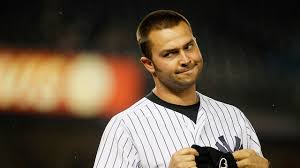
Nick Swisher
The 2012 offseason market for outfielders was vast, but has diminished in size due to a mix of signings and trades. Overall, those many moves made Nick Swisher a hot commodity. Swisher plays both the corner outfield spots as well as 1st base, provides average defensive ability, almost no speed on the bases, and strikes out at an above-average rate. On the other hand, Swisher is an on-base machine, posting the 14th best on base percentage amongst all MLB outfielders in 2012. He hits for power, posting a .201 ISO, 24 home runs, and collects an extra base hit every 2.5 games. Research has shown that players with good plate discipline tend to age better than those without it. Since Swisher's contract with the Indians will cover his age 32-35 seasons, we can expect Swisher's impressive on-base numbers to hover right around .360. Swisher has had very consistent success from a power-hitting perspective, but given players' tendency to lose some power as they age, we can't expect Swisher to hit 25 home runs per season throughout the course of his newly minted contract. Still, Swisher should remain a valuable player over the next few years, and the forecasting system PECOTA backs me up on this assumption.
Projected WARP Projected Worth in $(Million)
2013 2.2 $18.04
2014 2 $16.40
2015 1.7 $13.94
2016 1.2 $9.84
Now that we've asserted and, for the most part, confirmed that Swisher is a successful player, let's analyze his new destination. Cleveland made a splash earlier this winter when GM Chris Antonetti traded OF Shin-Soo Choo to the Reds in a 3-team trade, and received Trevor Bauer and Drew Stubbs in return. Stubbs joins Michael Brantley as options to play center field, but the Indians continued to need corner outfielders. With Swisher projecting as the Indians opening day right fielder, it allows Terry Francona to set up a a very good defensive outfield with Brantley, Stubbs, and Swisher playing in left, center, and right field respectively. Here's the problem. Swisher is a veteran who would make a good team into a potential playoff team, but the Indians are a bad team that, even with the addition of Swisher, most likely won't make the playoffs in 2013. Swisher could contribute to playoff pushes for he Indians in 2015 and 2016, but by that point he'll be older and thus less productive. Swisher won a World Series with the Yankees in 2009, but his AAV has broke $10 million for the first time in 2012. This shows he was looking for the team that would give him the highest AAV for the longest term. In addition, Swisher has roots in Ohio as he attended Ohio State University for college before becoming a professional Baseball player. Even though numerous teams were reportedly courting Swisher, Nick took the deal that fit him best.
My Grade: B+ (A+ for Swisher who looks to have gotten everything he wanted out of this deal. The Indians get a C-C+ for the move because while Swisher is an upgrade, the move makes little sense in 2013 because the Indians aren't making the playoffs in 2013 and probably not in 2014 either. It could prove fruitful in 2015 and 2016, but by then Swisher won't be the player he is now. Still, Swisher is an upgrade, plain and simple, both in 2013 and beyond.)

Monday, December 17, 2012

The Outfielders, They're Everywhere

The Los Angeles Angels of Anaheim recently made a dashing, daring, out-of-the-blue move, snatching Josh Hamilton, considered the best hitter on the free agent market this offseason, to a 5-year $125 million contract. With the signing of Hamilton, the Angels now found themselves with an abundance of outfielders, a group that includes Mike Trout, Mark Trumbo, Vernon Wells, and Peter Bourjos. Also, due to the Angels residence in the American League, we can add Kendrys Morales to that group as well. The Angels have already made it known that they are willing to hear offers for any of the players mentioned above except for Mike Trout. Especially given the fact that the Angels could still use a #3 or better starter to solidify their roster, Trumbo and Bourjos, who have the most value, look to be the most likely to be traded. The question remains, where might Bourjos, a speedy outfielder who plays great defense (think Ben Revere), or Trumbo, a right-handed masher at the plate with trouble finding a position to play in the field, end up.

Peter Bourjos Bunting
Peter Bourjos: So far this offseason, we've seen two similar players moving from one team to another via the trade. First the Twins traded Denard Span to the Washington Nationals for RHP Alex Meyer, and next the Twins traded Ben Revere to the Phillies in exchange for RHP Vance Worley and prospect Trevor May. Bourjos plays a very similar style of game to Revere and Span in that every aspect of his game that adds value comes from his speed. Over his two and a half seasons in the Majors, Bourjos has a well above-average infield hit percentage and bunt hit percentage. His defense is excellent, ranking 2nd in outfielders in Ultimate Zone Rating and 7th amongst all outfielders in Defensive Runs Saved last season. Interestingly, Bourjos had a significant drop off in his overall value from 2011 to 2012 despite becoming a much better defender, something that generally adds value, not subtracts it. So, what happened to Bourjos in 2012? My opinion is that due to a nagging wrist injury that he suffered after being hit by a pitch caused Bourjos to swing at fewer pitches, thus giving himself fewer chances to use his speed to get on base.
SB OBP IFH% O-Swing % Z-Swing % F-Strike %
2011 22 0.327 14.1% 33.2% 63.0% 62.9%
2012 3 0.291 9.7% 25.8% 60.4% 65.1%
Looking at his numbers, the 2012 version of Bourjos stopped swinging at as many pitches as he did in 2011. Both his swing percentages, at pitches in the strike zone and out of the strike zone, dropped and the percent of first-pitch strikes he saw went up. The difference in the ability for a hitter to get on base between going down 0-1 or going up 1-0 in any given at bat is staggering. Hitters that get ahead of the pitcher gain a significant advantage in getting on base, a sign that one of the worst things Bourjos could have done was to swing at fewer pitches. Swinging at fewer pitches affected Bourjos' infield hit percentage, which plummeted from 14.1% to 9.7%. 9.7% is still above the MLB average for all outfielders, but given Bourjos' lack of power, .155 career ISO and 16.1 extra-base hits per 100 games played, he needs a healthy wrist in order to achieve his full potential at the plate. Given the offseason's magical healing qualities, I see Bourjos as a +2.5 win player +/- .6 wins.

So, now that know a little more about Bourjos, where, if the Angels decide to trade him might he fit best? The Cubs could be possible suitors for the young outfielder, who is under team control for the next 4 seasons, entering his 1st year of arbitration in 2014. Currently the Cubs project to start David DeJesus, Alfonso Soriano, and Nate Schierholtz in their outfield, none of whom plays good enough defense to justify playing in centerfield. Given that the Cubs were willing to offer Anibal Sanchez a 5-year contract at $77 million, it isn't unreasonable for the Cubbies to trade a starting pitcher and replace that rotation spot with a free agent signing. So, maybe the Cubs should consider trading Peter Bourjos for righty starter Matt Garza. Garza has one year left on his contract, but he's also returning from an elbow injury, making him the perfect trade partner in a straight up 1-for-1 trade with the Angels. The Angels lost out on Zack Greinke, and still need that third 2nd tier starter in their rotation to complement Jared Weaver and C.J. Wilson.

Southpaw Jon Lester
Another possible destination for Bourjos is Boston. Given the fact that Boston already has Jacoby Ellsbury to play center field, Bourjos doesn't look like a fit. How about this trade proposal? The Red Sox send Jacoby Ellsbury to the Texas Rangers in exchange for RHP Alexi Ogando and LHP Robbie Ross, and simultaneously trade LHP Jon Lester to the Angels for Peter Bourjos. These moves make a lot of sense for every team involved. The Rangers get their replacement for Josh Hamilton in Jacoby Ellsbury without trading prized prospects Jurickson Profar, Mike Olt, and Martin Perez, while the Red Sox add serious depth and controllable years to their starting rotation. The Sox also acquire Bourjos who will camp out for cheap in center field allowing the Sox to utilize Shane Victorino in right field. The Angels get a bonafide #2 start in Jon Lester at a reasonable price for one year.

Mark Trumbo: Who is Mark Trumbo? Of every player to hit above a .220 ISO (MLB avg in 2012 was .151), Trumbo had the 3rd worst BB%. Trumbo's high swing percentage and low contact percentages on pitches both in and out of the strike zone, portray a strong free-swinger who needs to develop some plate discipline in order to become more like an Adrian Beltre type hitter rather than a Chris Davis like hitter. At only 26 years old, Trumbo isn't expected to have already developed the plate discipline he needs to succeed for the next 10 seasons, but few players at his age have. As you can see by Trumbo's numbers in different pitch counts, Trumbos fairs disproportionately well when the count is in his favor, but as the count drifts from 0-0 to 0-1, to 0-2, he becomes extremely susceptible to breaking pitches out of the zone, leading to easy outs for the defense. Since Trumbo, like Bourjos, is under team control for the next 4 seasons, the needed improvements in plate discipline and BB% have time to come. In the meantime, Trumbo will continue to crush the ball when he makes contact.

In the field, Trumbo has more issues. He's played both first base and outfield for the Angels, proving to be below average in the outfield and surprisingly above average at first base. This split brings up the comparison of the Nationals Michael Morse who has also played both outfield and 1st base, playing subpar in the outfield and above average at first. If the Angels find an American League suitor for Trumbo, a mix of first base and DH would fit him well, and might even provide positive defensive value. A trade to an NL team in which he might split time between left field and first base might make him more of an aggregate average defensive player. From a base running perspective Trumbo is above average on the bases. These good numbers derive more from smart base running rather than speed, something the 6 foot 4 inch 225 pound Trumbo doesn't possess.

Mark Trumbo
Where else, other than in LA, might Trumbo fit? 3 teams come to mind. First up is the Miami Marlins. The Marlins recently cleared house by moving all major contracts to either Toronto or Arizona, but one player remaining on the Marlins depth chart that could be moved is righty Ricky Nolasco. Nolasco projects to be a +1.5 win (WARP) player according to PECOTA for another 3-4 seasons. He's currently under contract for one more season at a reasonable salary of $11.5 million. He isn't as big time an acquisition as Jon Lester, but he is a better option than Joe Blanton or Tommy Hanson. The Marlins would get their first baseman of future, and just as importantly, a power bat to complement Giancarlo Stanton. It's possible that in order to make this acquisition a done deal the Marlins may need to either pay a portion of Nolasco's 2013 salary or add in a young prospect.

Another possible destination for Trumbo is Tampa Bay. Tampa signed James Loney to a one-year deal, but Trumbo would make a great platoon bat at first base given that he is a righty and Loney a lefty, but would also do well for the Rays at DH, a position that www.mlbdepthcharts.com currently has Ryan Roberts filling. Trumbo would be under Rays control for 4 years, and would be given a chance to contribute every day. In order to complete such a transaction, the Rays might consider trading RHP Jeff Niemann, who becomes a free agent in 2015. The Rays have options to fill Niemann's spot in the rotation including Chris Archer, Alex Torres, and the newly signed Roberto Hernandez. This might weaken the Rays rotation a bit, but they gain 2 overall years of control, solidify the middle of their lineup, and allow a young starter to gain some much needed experience.

Justin Masterson
The final possible venue for Trumbo would be in Cleveland. The Indians already made a trade this offseason in order to build for the near future, and making a deal for Trumbo would follow the same game plan. The Indians got the worst power production from the 1st base spot of any team in Major League Baseball last season at .106 and the worst slugging percentage in the league at .342. In addition, the Indians have been known to be shopping a starting pitcher like Justin Masterson with teams like the San Diego Padres and Boston Red Sox interested in the righty sinker baller. Masterson is under team control for 2013 and 2014, is a good candidate for a contract extension, and forecasts as a ~ +1.8 win player for 2013 and 2014. The Indians would receive a first baseman to help fans forget the troubles they had with Travis Hafner, becoming the exclusive option at 1st after 2013 since the Indians already signed Mark Reynolds to a one-year contract for next season. In Masterson, the Angels would be getting a pitcher who is dominant when he locates his hard sinker, but only a bit above average when he's wild. Masterson is a ground ball machine who gives up very few home runs. It means he's not liable to let walks score en masse, but he might not be counted on to go more than 6 innings due to a high WHIP (1.45 in comparison to a 1.31 league average). He's a better pitcher than both Joe Blanton and Tommy Hanson, and similar to C.J. Wilson (2012 fWAR: Wilson- 2.5 Masterson- 2.3).

The Angels have a plethora of outfielders, with numerous possible lineup combinations depending on which outfielder they trade or if they make any trades.
Position Player Proj 2013 WARP
LF Trumbo 1.3
CF Trout 2.2
RF Hamilton 3.4
Total - 6.9
LF Trout 2.2
CF Bourjos 1.7
RF Hamilton 3.4
Total - 7.3
Both combinations of outfielders are quite valuable, especially since we can expect a better WARP than 2.2 out of Mike Trout next season. Both Bourjos and Trumbo have value on the trade market; enough value to garner a decent pitcher in return. If the Angels instead find a new home for Vernon Wells or Kendrys Morales, they will have retained a better overall lineup for now and the future, but most the team most likely will not upgrade their rotation significantly enough to make a difference. If the team trades Vernon Wells, the key will be to ask for little in return other than for the acquiring team to pick up the ridiculous $42 million left on Well's current contract. If the Angels were to get rid of even 3/4 of Well's contract, it might allow them to go after the best free agent pitchers on the market next year. Overall, the Angels hold all of the cards. If they don't want to trade anyone, they have that option. On the other hand, their current depth chart shows a need in the rotation and a plethora of outfielders, pointing towards an upcoming trade.

Monday, November 26, 2012

Line by Line, Brick by Brick

Giancarlo Stanton
In order for a building to stand without wavering, it must have support from the bottom all the way to the top. Often times when a structure seems unstable, it's time to knock it down and start from scratch. Sometimes that is the most cost effective way to solve the problem. Being able to spot an issue of instability before it comes to the surface can save time, money, and aggravation. The Miami Marlins had a number of motivations behind clearing their team of almost every big contract, even though the team signed 3 of those contracts not one year ago. Sure, some of the motivation is that Marlins owner, Jeffry Loria, wants to continue to collect his revenue sharing checks without paying money to his players in order to gain the largest profit margin possible. To Loria, his team can either profit from the fans that come out to see a winning team, the motivation behind signing Reyes, Buehrle, and Bell last offseason, or through revenue sharing and a minuscule payroll.

While Loria may be stuffing his pockets, while Major League Baseball looks the other way, the Marlins have traded away their best, and most expensive, players before and become winners once again. We've seen this movie, read this script, and know the way it works. (If you want a more detailed description of this process, read this article I wrote here) The Marlins recently traded Josh Johnson, Mark Buehrle, and Jose Reyes to the Blue Jays in exchange for a solid catch of prospects. In lieu of this so-called "mega deal", numerous writers, pundits, and fans expect the Marlins to look into trading Giancarlo Stanton. Stanton is still signed to his Minor League contract, so he's fairly cheap for a player who'se put up over 13 fWAR in his first 3 seasons in the Major Leagues. Oh, and did I mention he's only 23 years old?

Stanton is a true talent. He's the prototypical power hitting, middle of the order, masher who'se mere presence in the lineup can change the entire opposing team's game plan. He is big, fast, strong, and can hit the ball a mile, but he remains a Marlin. The Marlins have no need to trade Stanton because he's inexpensive, and by far their best current Major League player. On the other hand, following the trade between the Marlins and Blue Jays, Stanton remarked that given the fire sale, he wants to leave the Marlins as soon as he can. Basically, unless the Marlins can put a winning product out on the field in the next 2-3 seasons, Stanton won't even consider signing an extension, let alone, re-signing with the team when he becomes a free agent in 2017. From Stanton's point of view, this is not only reasonable, but necessary. Stanton wants to win and make heaps of cash, but due to his current contract, he won't that kind of money for a few years.

In my opinion, since the Marlins hold all of the cards in this situation, I don't see the team trading Stanton unless GM Michael Hill is blown away by the package in return. Since the team is currently rebuilding, Hill would want to receive top level prospects, at least one of whom is close to MLB ready. Any team that could successfully trade for Stanton would receive a player under team control for the next 4 seasons, who, according to PECOTA, is expected to produce an annual output of 4.1 WARP per season. Since 1 WARP is worth about $7 million dollars, any team paying Stanton under $28 million would be getting solid value.

To get a look at just how good Giancarlo Stanton has been, consider these facts. Since 1945 only three players have hit more home runs in seasons they played in which they were 20-22 years old than Stanton. They are Frank Robinson, Eddie Matthews, and Alex Rodriguez. Only 6 players had a higher wRC+ in the same seasons, and only 16 players had a higher total fWAR than Stanton in those seasons. Most impressively, Stanton had the highest isolated power of any player since 1945 in their 20 year old, 21 year old, and 22 year old seasons combined. Isolated power is slugging percentage minus batting average, and it usually peaks around 25 to 26 years old. At 23 years old, it isn't unreasonable to conclude that Stanton's power numbers could increase, and his high strikeout rate will decrease, making him quite the formidable hitter. Overall, the only current player with whom Stanton is similar is the Braves Jason Heyward, another young bright talent.

So far, the teams that have been linked to Stanton are the New York Yankees, Boston Red Sox, Baltimore Orioles, Philadelphia Phillies, and Chicago Cubs. Each team would likely need to give up its top prospect, as well as 2 others. So, here's what I think these teams would have to give up to procure Stanton from the Marlins.

Yankees: The Yankees traded Jesus Montero to the Mariners, but retain a strong and youthful Minor League system, ripe with a number of top prospects. Mason Williams and Manny Banuelos are probably the top hitting and pitching prospects respectively in the Yankees system. Catcher Gary Sanchez might be their top position player, but Williams should be ready to play in the big leagues before the young backstop. Banuelos is coming off of arm surgery, which drops a team's desire to trade for him, but his talent and productivity this far in the minors still makes him a great pickup. Even trading Williams and Banuelos wouldn't get the Marlins to give up Stanton, the Yankees would most likely have to add in a third prospect like Adam Warren, a solid pitching talent who has already thrown a few pitched in the Majors. If the Marlins asked for Brett Gardner, I'm sure the Yankees would have to think twice, but might trade Gardner too. The acquisition of Stanton would give the Yankees incredible meat in their order, and might give them offensive firepower equivalent, if not better than the Angels, Tigers, or Rangers. I'd ballpark the chances the Yankees have of acquiring Stanton at 1:25.

Red Sox: The Red Sox, like the Marlins are rebuilding, but in a different way. The Red Sox are willing to spend money, are always looking to win, and would love to solidify the middle of their order for years to come by trading for Giancarlo Stanton. If the Red Sox were to lose some top prospects, the team could fill those spots via free agency, or look towards winning in the near future rather than the distant one. The Sox system has some talent, especially after trading away some big contracts to the Dodgers in exchange for mostly prospects. A reasonable trade for Stanton would have to include Matt Barnes, Jackie Bradley, and Ruby De La Rosa, if not more. The only reason I'm not putting Xander Bogaerts, the Red Sox top prospect, in the deal is that the Marlins just received a top middle infield prospect in Adeiny Hechavarria from the Blue Jays, which makes Bogaerts less valuable. Even a package like the one I'm proposing might not be enough to sway the Marlins, but those three players could all become above average to dynamic MLB players. I would give the Red Sox 1:30 odds of landing Stanton.

Baltimore Orioles: This situation is vastly different from the first two. The Orioles have recently become viable in the AL East, want to continue that competitiveness, but count on their young players to help, making it more difficult to part with them. For example, the O's brought up top hitting prospect Manny Machado towards the end of 2012 to fill in at third base even though many thought Machado wouldn't be ready for another year. The Orioles currently have the top-pitching prospect in all of Minor League Baseball, Dylan Bundy. His stock will probably never be higher than it is now, but the Orioles would rather bring him up to become the ace of their rotation for the future than trade him. On the other hand, the O's won more than 90 games last season with a mediocre pitching staff, and adding Stanton would give them the power bat they so desperately need in their order. A package of Dylan Bundy and Jason Espisito might coax Miami into moving Stanton, but if the Orioles aren't willing to give up Bundy, they could also offer Jon Schoop, Kevin Gausman, LJ Hoes, and Bobby Bundy, but I doubt even that package would pry Stanton from Miami. If the Orioles are willing to trade Bundy their odds are good, 1:10, but if not, I'd say 1:60 they can acquire Giancarlo.

Philadelphia Phillies: The Phillies used their top prospects a few years ago to obtain Roy Halladay, Cliff Lee (the first time), Roy Oswalt, and Hunter Pence, so their farm system is somewhat depleted. On the other hand, the Phillies have the potential to put together an enticing enough package. Stanton would give the Phillies a power right-handed bat in their small park at a small cost. Stanton plus the Phillies pitching staff could put the Phillies in a good position to win another championship. The Phillies have two ways of compiling the necessary goods to get Stanton. One possible trade would be top pitching prospects Trevor May and Jessie Biddle along with outfielder Zach Collier. Neither Biddle nor May are #1 starter material, but both have #2 potential, while Collier is a young, talented, but inexperienced outfielder who has the potential to be a 20 home run, 20 stolen base type player. Another option would be to trade Domonic Brown along with Trevor May and Austin Hyatt. The Phillies don't have the flashy, toolsy, top level prospect the Marlins would be looking for, but could fill out Miami's pitching prospects, a valuable commodity. I'd make their odds of landing Stanton 1:40.

Chicago Cubs: The Cubs are a team unlike any of those that I've already mentioned. This is a team that is also in complete rebuilding mode. Acquiring Stanton would be a nice coup, would secure sell outs at Wrigley, and might even get the Cubs closer to contending in the NL Central than the team is right now. Since many of the players the Marlins might want already play in the Majors, the Cubs do have more to lose than the O's, Yankees, Red Sox, or Phillies, but shouldn't be considered out of the running. A package deal of Brett Jackson, Jeff Samardzija, and Matt Zczur could do the trick. Jackson is ready to play right now, has shown he can hit MLB pitching, and could fill Stanton's spot in the Marlins order. Samardzija is already a very good MLB pitcher with the sky as his limit. He's also only 27 years old. The only players I could see Theo Epstein and Jed Hoyer holding onto no matter what would be recently signed Cuban outfielder Jorge Solar and first baseman Anthony Rizzo, everyone else is on the table. Chances the Cubs get Stanton: 1:30.

Overall, I don't think the Marlins are going to trade Giancarlo Stanton this offseason, but given their recent moves, nothing is impossible when it comes to the fish. A dark horse candidate for acquiring Stanton could be the Tampa Bay Rays, given their amount of young pitching, but add in the recent contract extension given to Evan Longoria with Stanton's incoming arbitration eligibility, and the Rays might not be able to afford the right fielder. Also, don't count out the Rangers or Pirates. Stanton has a legitimate reason for requesting a one-way ticket out of Miami, but he's not in a great bargaining position. On the other hand, the Marlins could complete their rebuilding process by trading Stanton and acquiring 3-4 more prospects. One thing is for sure, never say never when dealing with the Marlins.

Friday, November 2, 2012

The Trade that Wasn't

My most recent article, titled "Haren Here, Marmol There" talked about the trade made between the Chicago Cubs and Los Angeles Angels. The Trade was a swap; Dan Haren for Carlos Marmol. I examined the deal, but later, following the posting of the article, the trade was confirmed as dead. Apparently, Carlos Marmol leaked it to a dominican reporter that he had been traded to the Angels, the reporter inferred that the player going to the Cubs was Haren, and the news spread like a wildfire.

The Cubs reported no trade, and Ken Rosenthal of Fox Sports confirmed it. So, take the previous article as an interesting hypothetical. I'm not completely surprised by this. This trade felt fishy from the beginning, as the Cubs seemed to be getting too good a deal. On the other hand, I bought into it just like everyone else. Nonetheless, there was no trade today between the Cubs and the Angels, instead the Angels will have to pay Haren's $3.5 million buyout as no one is reporting they picked up his option before 11pm eastern standard time.

Overall this will save the Angels more money that if this trade had actually happened, but then again, they didn't get Carlos Marmol.

Haren Here, Marmol There

The Angels had until 11pm to make something happen. At that point the team would have to either pick up or decline the option on righty Dan Haren. Recently the team announced they would be actively shopping both Ervin Santana and Dan Haren, hoping to trade them for salary relief as well as relief pitchers. They successfully traded Santana to the Kansas City Royals in exchange for a minor league lefty specialist, but had yet to move Haren. Both Santana and Haren had particularly awful seasons in 2012, but both are bounce-back candidates, making them valuable to teams that could otherwise not afford to take a chance on a player who played so poorly last season.

Enter the Chicago Cubs. Today, the Cubs announced that they had acquired Dan Haren from the Angels in exchange for reliever Carlos Marmol. Marmol, has had his ups and downs with the Cubs. He's recently shown rises in his BB% and HR/FB%, both bad signs for a pitcher who tends to be wild. His strikeout percentage hasn't dropped off, so Marmol still shows signs of his 2010 self, when he posted a 3.0 fWAR, but overall, he may cause more headaches for Mike Scioscia rather than solve problems. The Angels are fairly transparent. They want to sign Zack Greinke to a long-term deal, and improve their bullpen. This move saves them $5.7 million ($15.5 million - $9.8 million), which doesn't seem like much, but it could make the difference between staying under the luxury tax and not. 

The Cubs come out fairing very well in this deal. They "bought low" on Haren's potential productivity. Haren is a perfect bounce-back candidate. He has averaged 4.7 fWAR since becoming an everyday starting pitcher. His dip in 2012 to a weaker 1.8 WAR makes me think that the Cubs can expect Haren to produce a WAR in 2013 somewhere between 2-3.5 WAR, which would make the $15.5 million the Cubs now owe him reasonable. The Cubs have a solid defensive infield including Starlin Castro, Darwin Barney, and Anthony Rizzo, maning that a ground ball pitcher like Haren could flourish from playing with them. The Cubs were desperate to rid themselves of Marmol, especially since he became both more expensive and less effective at the same time. 

Overall, this deal favors the Cubs. I'm not sure what other offers were on the table for Haren, but I feel for Jerry Dipoto if this was the best he could do. I hope the $6 million he's saving due to this transfer is worth it. Although Marmol can be affective, he's trending the opposite way, while Haren's 2012 may have been just a one-year drop. Both players will become free agents following the 2013 season, unless they sign a contract extension.