In every Major League Baseball season there are some surprise teams; those who play well despite expectations to the contrary, and those who play poorly when most thought the opposite. Teams consistently astound us. For example, the 2012 Baltimore Orioles have won 85 games this season and sit a half a game behind division leading New York. This from a team that won an average of 67 games over the last five seasons, and hasn't had a winning season since 1997. According to www.coolstandings.com the Orioles have a 90.2% chance of making the playoffs this year, whether it be via the wild card or by winning the AL East. The Orioles as well as the Oakland Athletics and Washington Nationals make up the positive surprise teams of 2012. For every success story there are usually for more failures. In 2012 the biggest failure in comparison to their pre-season expectations have to be the Boston Red Sox.
The Boston Red Sox in March 2012:
It's March ladies and gentlemen, the beginning of Baseball season. This year, like most in the past is one of hope, promise, and high expectations for the Boston's favorite team, the Red Sox. Oh sure, the team may have famously collapsed last season, losing on the final day of the season and thus not making the playoffs, but a new season brings new hope (like Star Wars), and the 2012 Red Sox look to reclaim the title of the "American League's best team" and win their third World Series title in 8 years. Even though this isn't news, just to get it out of the way, the Sox could finish with an awful record, which the won't, but as long as it bests the bleeping Yankees, that would be a win for Boston fans.
It's time to forget last season, especially Theo Epstein who left us for the friendlier confines of Chicago's north side, move on, and put every effort into winning this season. The Sox boast a strong, veteran line up that proves to thwart any pitcher standing 60 feet 6 inches away from home plate.
2012 Red Sox starting lineup:
|
Player | Position |
2011 WAR |
| 1 |
Jacoby Ellsbury |
CF |
9.4 |
| 2 |
Dustin Pedroia |
2B |
7.9 |
| 3 |
Adrian Gonzalez |
1B |
6.5 |
| 4 |
David Ortiz |
DH |
4.1 |
| 5 |
Kevin Youkilis |
3B |
3.7 |
| 6 |
Ryan Sweeney |
RF |
0 |
| 7 |
Cody Ross |
LF |
1.1 |
| 8 |
Jared Saltalamacchia |
C |
1.7 |
| 9 |
Mike Aviles |
SS |
0.3 |
| Total |
|
|
34.7 |
So, offensively, going into the 2012 season the Red Sox had a powerful lineup. They returned young stud center fielder Jacoby Ellsbury, who was snubbed as the Most Valuable Player in 2011 in favor of Justin Verlander. In addition, the Sox returned staples at second base, third base, and designated hitter. Pedroia, Youkilis, and Ortiz have been Red Sox favorites for years, and have rarely disappointed on the field. In addition, juggernaut 1st baseman Adrian Gonzalez was coming off of a huge year for the Sox and set to man first base at Fenway Park for the next 7 seasons after signing a contract extension. Although Ryan Sweeney and Mike Aviles don't scare the boots off of opponents, Aviles, Sweeney, newcomer Cody Ross, and Jared Saltalamacchia all provided value for the Sox going into 2012.
Now let's take a look at their starting rotation in March of 2012:
|
Player |
2011 WAR |
| 1 |
John Lester |
3.7 |
| 2 |
Josh Beckett |
4.3 |
| 3 |
Clay Buchholz |
1.1 |
| 4 |
Felix Dubront |
-0.1 |
| 5 |
Daniel Bard |
1.9 |
| Total |
|
10.9 |
The Red Sox returned three solid starters in Lester, Beckett, and Buchholz, who pending any health issues should each provide at least 190 innings pitched. Daniel Bard was the most talked about Red Sox player in the off-season due to management's decision to move the young fire baller from the bullpen, where he flourished, to the starting rotation. Dubront was a young lefty that the organization wanted to look at in spring training, and due to solid outings in the pre-season, made the rotation. This rotation compared well to the Sox rival New York Yankees, and came up not too short in comparison to the Tampa Bay Rays stacked young pitching staff.
For the Red Sox in March of 2012, the message was redemption. The team and it's fans wanted to redeem themselves after an historically tragic end to the 2011 season in which the team collapsed like a tent on which was dropped an elephant. Two players, LF Carl Crawford and RHP John Lackey looked to be on the disabled list for some time, and although Sox fans would have loved to see Crawford in the lineup, most happily waved goodbye to John Lackey who had just had his UCL reconstructed. The Sox also looked to rebound after losing their General Manager, Theo Epstein, who got out of his contract in Boston in order to sign with the Chicago Cubs. He left disciple Ben Cherington to navigate the rough and often cold waters of the Charles River by himself. With new manager Bobby Valentine at the helm, the Red Sox looked to prove to the Baseball world that 2011 was a fluke, and 2012 would be their sweet revenge.
The Boston Red Sox as of September 12th, 2012:
Unfortunately it didn't work out the way they had hoped. Here is the Red Sox lineup and starting rotation as of September 19th, 2012:
|
Player |
Position |
2012 WAR |
| 1 |
Pedro Ciriaco |
3B |
1 |
| 2 |
Jacoby Ellsbury |
CF |
1.5 |
| 3 |
Dustin Pedroia |
2B |
3.9 |
| 4 |
Cody Ross |
LF |
2.8 |
| 5 |
James Loney |
1B |
0.1 |
| 6 |
Jared Saltalamacchia |
DH |
1.9 |
| 7 |
Ryan Lavarnway |
C |
-0.8 |
| 8 |
Daniel Nava |
RF |
0.9 |
| 9 |
Jose Iglesias |
SS |
-0.4 |
| Total |
|
|
10.9 |
|
|
|
|
|
Player |
2012 WAR |
|
| 1 |
John Lester |
3.1 |
|
| 2 |
Felix Dubront |
1.7 |
|
| 3 |
Clay Buchholz |
2.1 |
|
| 4 |
Aaron Cook |
0.6 |
|
| 5 |
Daisuke Matsuzaka |
0.1 |
|
| Total |
|
7.6 |
|
Looks different doesn't it? A lot can happen in 6 months, and in the Red Sox case, a lot happened in the last 6 months. To note, the Red Sox have two injuries from their starting lineup. David Ortiz and Will Middlebrooks are both on disabled list. If you put them in the lineup given their WAR's to date, the total for the Sox lineup would go from 10.9 to 15.6, which is considerably better. The rotation hasn't faired as badly as the lineup, but it has two new names, Aaron Cook and Daisuke Matsuzaka, and lost the member with the highest WAR from 2011, Josh Beckett. John Lackey remains injured, as Red Sox fans make for a collective sigh of relief. The most important fact of all this is, the Red Sox record as of September 12th was 68-82, 18 games back of the Yankees for first place in the AL East and 17.5 games out of the second wild card spot. Teams with a better record than the Red Sox include the Seattle Mariners, Baltimore Orioles, Oakland A's, Pittsburgh Pirates, San Diego Padres, and Milwaukee Brewers. Let's just say things didn't go as planned.
Looking to the future:
Obviously, the Red Sox need to figure something out, change, adapt, or all of the above, in order to get back to their winning ways. Every team's front office, players, coaching staff, and ownership group, have goals in order to either improve, or in the case of the World Series winning team, watch the video of their parade as many times as possible in the 150 or so days between November and April.
What does the off-season mean to the Red Sox. First it means they can stop embarrassing themselves on the field, as was the case this past Wednesday night when the team lost 13-3 vs. the Rays. Second, a number of players on their roster will become free agents, thus allowing Sox management to either attempt to resign them or let them leave and obtain some salary relief. Here is a list of the Red Sox notable free agents:
| Player |
Position |
| Daisuke Matsuzaka |
RHP |
| James Loney |
1B |
| Cody Ross |
OF |
| David Ortiz |
DH |
| Bobby Jenks |
RHP |
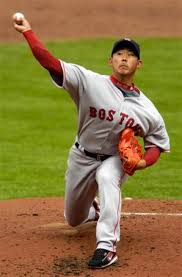
Daisuke, more commonly referred to as Dice-K, has been, plainly put, as useful as a pile of leaves this season, after either pitching badly or minding his business on the disabled list in 2011. Matsuzaka is a high-risk high-reward player, and more importantly, one to whom the Red Sox will most likely decline to offer a contract. James Loney came to the Red Sox in the mega-deal that sent Adrian Gonzalez, Carl Crawford, Josh Beckett, and Nick Punto to the Los Angeles Dodgers in return for Loney and some minor league prospects. He has little value to the Red Sox and most likely will leave Boston not having even bought a piece of homely property near Coolidge Corner. David Ortiz is the lone name on this list that has a decent chance to return to Fenway Park in 2013. Ortiz has recently been offered a number of 1-year contracts at high costs, all of which he has accepted. Ortiz was taring it up this year until he succumbed to injury. I believe the Red Sox should spend the money to resign him, as long as his contract does not exceed the $14.58 million dollars he made in 2012. Bullpen pitcher Bobby Jenks comes off the books, and I foresee the Red Sox giving him the old heave ho. That leaves outfielder Cody Ross. Ross has played well this season, and the Red Sox have been rumored to want to negotiate with him on a new contract. They have exclusive negotiating rights with Ross up to 5 days after the end of the 2012 World Series. Ross is 31 years old and will most likely looking for a contract similar to the one Twins outfielder Josh Willingham received (3 years/ $27 million), as the market this offseason for corner outfielder is slim pickings. In my opinion, the Red Sox should look to resign Ross, but shouldn't pay him a dime more than $9 million a year.
Returning players include John Lester, John Lackey, Dustin Pedroia, and Clay Buchholz. Otherwise, everyone else on the Red Sox is either a free agent, under their rookie contract, or arbitration eligible. Those notable arbitration eligible players include, Jacoby Ellsbury and Mike Aviles. The others are mostly bullpen pitchers, and due to their replaceability, we are leaving them out. First, the easy one. Mike Aviles made $1.2 million in 2012. He can play multiple positions and 2.0 WAR and 9.5 UZR/150 at shortstop this season. My guess is, even in his second season of arbitration, his contract won't increase beyond the level at which the Red Sox shouldn't resign him. Offer him $5 million for one season, he will most likely accept it. He may not start every game, but he's a good fill-in player and definitely a solid bench option.
Next we come to the biggest offseason question for the Red Sox. What to do about Jacoby Ellsbury. Ellsbury is arbitration eligible, and will become a free agent in 2014, at which time he, with the help of super agent Scott Boras, sign a monster deal in the range of the one
Jayson Werth signed with the Nationals. Ellsbury has only had one incredible season in the big leagues, but it was stellar. When he has played he has been great, roaming the large and treacherous center field of Fenway Park. The Red Sox have a few options here. One, they could let Ellsbury go to arbitration and sign him to a one-year contract. If they do that, they have the option of trading him mid-season, signing him to a contract extension mid-season, or allowing him to play out his contract and leave via free agency. I can bet that the chances of them signing him to a contract extension mid-season are 1% likely. Trading him mid-season isn't out of the question, but a better haul might be gotten in return were they to trade him this offseason. Letting him play 2013 in a Red Sox uniform and then leave would provide them with one of the best center fielders in the game for a season and then no salary requirements for the next 5-7 seasons. It isn't a bad option, but it definitely isn't the best.
Were the Red Sox to sign Ellsbury to a contract extension, they would be signing a potentially superstar player who has been oft injured in his short career. It's a risk, and one I don't think the Red Sox are willing to take, especially with Scott Boras on the other side of the negotiating table. I think the Red Sox should look to trade Ellsbury this offseason. With one year of arbitration left before he becomes an unrestricted free agent, a team that trades for Ellsbury will either sign him to an extension or use him for a year and allow him to walk. Teams that might want to trade for Ellsbury include the Texas Rangers, Tampa Bay Rays, Atlanta Braves, San Francisco Giants, and St. Louis Cardinals. The Rangers, Giants, Cardinals, and possibly the Braves would be most likely to extend Ellsbury while the Rays would probably use him for 2013 and then let him go. If I were Ben Cherington, I would love to get at least one very good prospect and possible 2 other lesser ones in a deal for Ellsbury. If he could sway an MLB ready young pitcher in the deal, that would the best-case scenario. The best bets are the Texas Rangers, St. Louis Cardinals, and Tampa Bay Rays. For a look at all of the trade possibilities for Jacoby Ellsbury, see the adjoining article to this.
Other possible offseason trade candidates for the Red Sox include John Lackey and Jon Lester. Lackey spent all of 2012 on the DL after Tommy John Surgery, and didn't pitch well at all in 2011. On the other hand he has been a 4+ WAR pitcher for most of his career, and with his divorce behind him, should be more focused on baseball. In fact, Lackey's situation is very similar to what the Yankees faced with A.J. Burnett last year. The Yankees wanted to unload Burnett's big contract, knowing full well they would have to pay a large portion of Burnett's contract to whichever team made a deal for the righty. This would prove equivalent were the Red Sox to attempt to trade Lackey. Lackey has $30.5 million left on his contract. If they Red Sox took a page from the Yankees play book and paid between $17-20 million of Lackey's deal, I think a few teams would be willing to take a chance on the right- hander. Were I the Red Sox, I would actually keep Lackey, hoping he rebounds and pitches well. If he doesn't, try and trade him mid-season, with the willingness to pay a at least 2/3 of his contract, something they would have to have done this offseason, in order to unload him.
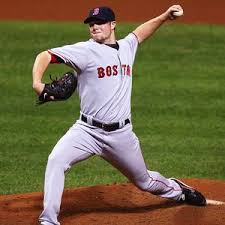
Jon Lester provides better potential. Lester has $11.625 million left on his deal with a $13 million team option for 2014. If Lester wins or comes in 2nd in the Cy Young voting in 2013 he would qualify to void the team option (worth $13 million) for 2014. Lester will make a large sum of money on the open market, whenever that comes. The Red Sox wouldn't mind having him back, but he would most likely have to give them some sort of hometown discount, similar to the one Jared Weaver gave the Los Angeles Angels. Any team that trades for him will want to sign him to an extension, other than small market teams like the Pirates, Padres, Royals, Rays, or A's. Lester would be a hot commodity since he is owed less than $12 million in 2013 and under team control for $13 million in 2014 at which time he will be 30 years old. In the end, I think the Red Sox should deal Lester. They could get a corner outfielder in return, which would compliment Cody Ross very well on the other side. Offense is vital in the AL East and getting a solid corner outfield prospect and possibly a high risk high reward pitching prospect in return for Lester would well worth it.
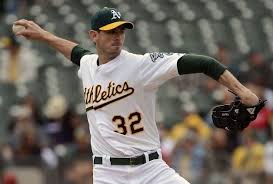
Okay, trades are nice, and the Red Sox have the ability to do a lot in that regard, but how about trading money for players. Wait, isn't that called free agency? Why yes it is. So, what could the Sox do in the 2012-2013 offseason in the free agent market? Unfortunately, other than center fielders, there isn't much to look for on the market in 2013. The Red Sox should pass on big names like Zack Geinke, Josh Hamilton, B.J. Upton, and Michael Bourn. They have no need for flipping a huge bill and not getting what they are looking for. That "feeding the beast" mentality is what got them into trouble in the first place. My advice for the Red Sox would be to go after one of he solid mid-level starting pitchers on the market like Edwin Jackson or Brandon McCathy Jackson has been getting 1-year deals recently, and has said he would like to sign a longer deal with his current team, the Washington Nationals. If the Nationals would rather not sign Jackson to his desired deal, the Red Sox could swoop in and offer Jackson a 3 year/$35 million deal. He would immediately become a big part of the Red Sox rotation, and Jackson would have the security of a 3-year deal. I like this deal for them, but if they can, the Red Sox should make an offer to A's righty Brandon McCarthy. Due to injury probability, which is somewhat high due to McCarthy's past, the Red Sox should offer him a 2 year contract worth between $19-23 million and refuse to take "no" for an answer. McCarthy gets strikeouts and ground balls, while not giving up home runs (0.81 HR/9) or walks (1.95 BB/9). He has pitched in pitcher friendly Oakland, but they wouldn't be expending too much for McCarthy while hoping to reap extreme benefits.
If I were GM and everything were to go the way I have said, this would be my 2013 Red Sox lineup and starting rotation in 2013:
|
Player |
Position |
2012 WAR |
| 1 |
Anthony Gose |
CF |
0.1 |
| 2 |
Dusin Pedroia |
2B |
3.9 |
| 3 |
David Ortiz |
DH |
2.9 |
| 4 | Will Middlebrooks |
3B |
2.8 |
| 5 |
Cody Ross |
LF |
2 |
| 6 |
Ryan Lavarnway |
1B |
-0.8 |
| 7 |
Jared Saltalamacchia |
C |
1.9 |
| 8 |
Jerry Sands |
RF |
0 |
| 9 |
Pedro Ciriaco |
SS |
1 |
| Total |
|
|
13.8 |
|
|
|
|
|
Player |
2012 WAR |
|
| 1 |
Brandon McCarthy |
1.8 |
|
| 2 |
Felix Dubront |
1.7 |
|
| 3 |
Clay Buchholz |
2.1 |
|
| 4 |
Shelby Miller |
0.2 |
|
| 5 |
John Lackey |
DL |
|
| Total |
|
4 |
|

For your information I'm assuming that the Red Sox will make a trade with the Blue Jays, sending them Jon Lester and in return getting at least Anthony Gose, who they can put in centerfield to replace Jacoby Ellsbury. I have had it so that they traded Ellsbury to the St. Louis Cardinals for starting pitcher Shelby Miller. Jerry Sands is playing in right field. He is a prospect the Sox got from the Dodgers in the mega-deal. This implies that they signed Brandon McCarthy and did not deal John Lackey. Playing Ciraco at shortstop isn't a great option, but he's a stopgap until top prospect Xander Bogaerts is ready to come to the Majors. In fact, due to the youth already on the field for the Sox, bringing up Bogaerts earlier than expected might not be the worst idea. Overall, this isn't going to make the Sox amazing. They have a bunch of young guys, Ryan Lavarnway playing 1st base, and John Lackey back in the rotation, but this team isn't built to win in 2013. They are however built to compete well in the offseason of 2013-2014 and to return to the playoffs in 2014. Some Red Sox fans may not find this solution satisfying, but often times the best way to calm the beast isn't to feed it, but to let it salivate over a big meal before devouring it.
