The Los Angeles Angels of Anaheim recently made a dashing, daring, out-of-the-blue move, snatching Josh Hamilton, considered the best hitter on the free agent market this offseason, to a 5-year $125 million contract. With the signing of Hamilton, the Angels now found themselves with an abundance of outfielders, a group that includes Mike Trout, Mark Trumbo, Vernon Wells, and Peter Bourjos. Also, due to the Angels residence in the American League, we can add Kendrys Morales to that group as well. The Angels have already made it known that they are willing to hear offers for any of the players mentioned above except for Mike Trout. Especially given the fact that the Angels could still use a #3 or better starter to solidify their roster, Trumbo and Bourjos, who have the most value, look to be the most likely to be traded. The question remains, where might Bourjos, a speedy outfielder who plays great defense (think Ben Revere), or Trumbo, a right-handed masher at the plate with trouble finding a position to play in the field, end up.
 |
| Peter Bourjos Bunting |
Peter Bourjos: So far this offseason, we've seen two similar players moving from one team to another via the trade. First the Twins traded
Denard Span to the Washington Nationals for RHP
Alex Meyer, and next the Twins traded
Ben Revere to the Phillies in exchange for RHP
Vance Worley and prospect
Trevor May. Bourjos plays a very similar style of game to Revere and Span in that every aspect of his game that adds value comes from his speed. Over his two and a half seasons in the Majors, Bourjos has a well above-average infield hit percentage and bunt hit percentage. His defense is excellent, ranking 2nd in outfielders in
Ultimate Zone Rating and 7th amongst all outfielders in
Defensive Runs Saved last season. Interestingly, Bourjos had a significant drop off in his overall value from 2011 to 2012 despite becoming a much better defender, something that generally adds value, not subtracts it. So, what happened to Bourjos in 2012? My opinion is that due to a nagging wrist injury that he suffered after being hit by a pitch caused Bourjos to swing at fewer pitches, thus giving himself fewer chances to use his speed to get on base.
|
SB |
OBP |
IFH% |
O-Swing % |
Z-Swing % |
F-Strike % |
| 2011 |
22 |
0.327 |
14.1% |
33.2% |
63.0% |
62.9% |
| 2012 |
3 |
0.291 |
9.7% |
25.8% |
60.4% |
65.1% |
Looking at his numbers, the 2012 version of Bourjos stopped swinging at as many pitches as he did in 2011. Both his swing percentages, at pitches in the strike zone and out of the strike zone, dropped and the percent of first-pitch strikes he saw went up. The difference in the ability for a hitter to get on base between going down 0-1 or going up 1-0 in any given at bat is staggering. Hitters that get ahead of the pitcher gain a significant advantage in getting on base, a sign that one of the worst things Bourjos could have done was to swing at fewer pitches. Swinging at fewer pitches affected Bourjos' infield hit percentage, which plummeted from 14.1% to 9.7%. 9.7% is still above the MLB average for all outfielders, but given Bourjos' lack of power, .155 career ISO and 16.1 extra-base hits per 100 games played, he needs a healthy wrist in order to achieve his full potential at the plate. Given the offseason's magical healing qualities, I see Bourjos as a +2.5 win player +/- .6 wins.
So, now that know a little more about Bourjos, where, if the Angels decide to trade him might he fit best? The Cubs could be possible suitors for the young outfielder, who is under team control for the next 4 seasons, entering his 1st year of arbitration in 2014. Currently the Cubs project to start David DeJesus, Alfonso Soriano, and Nate Schierholtz in their outfield, none of whom plays good enough defense to justify playing in centerfield. Given that the Cubs were willing to offer Anibal Sanchez a 5-year contract at $77 million, it isn't unreasonable for the Cubbies to trade a starting pitcher and replace that rotation spot with a free agent signing. So, maybe the Cubs should consider trading Peter Bourjos for righty starter Matt Garza. Garza has one year left on his contract, but he's also returning from an elbow injury, making him the perfect trade partner in a straight up 1-for-1 trade with the Angels. The Angels lost out on Zack Greinke, and still need that third 2nd tier starter in their rotation to complement Jared Weaver and C.J. Wilson.
 |
| Southpaw Jon Lester |
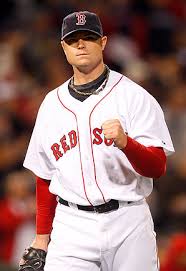
Another possible destination for Bourjos is Boston. Given the fact that Boston already has Jacoby Ellsbury to play center field, Bourjos doesn't look like a fit. How about this trade proposal? The Red Sox send Jacoby Ellsbury to the Texas Rangers in exchange for RHP Alexi Ogando and LHP Robbie Ross, and simultaneously trade LHP Jon Lester to the Angels for Peter Bourjos. These moves make a lot of sense for every team involved. The Rangers get their replacement for Josh Hamilton in Jacoby Ellsbury without trading prized prospects Jurickson Profar, Mike Olt, and Martin Perez, while the Red Sox add serious depth and controllable years to their starting rotation. The Sox also acquire Bourjos who will camp out for cheap in center field allowing the Sox to utilize Shane Victorino in right field. The Angels get a bonafide #2 start in Jon Lester at a reasonable price for one year.
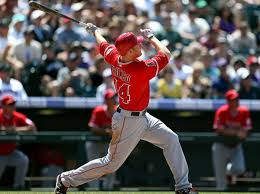
Mark Trumbo: Who is Mark Trumbo? Of every player to hit above a .220 ISO (MLB avg in 2012 was .151), Trumbo had the 3rd worst BB%. Trumbo's high swing percentage and low contact percentages on pitches both in and out of the strike zone, portray a strong free-swinger who needs to develop some plate discipline in order to become more like an
Adrian Beltre type hitter rather than a
Chris Davis like hitter. At only 26 years old, Trumbo isn't expected to have already developed the plate discipline he needs to succeed for the next 10 seasons, but few players at his age have. As you can see by Trumbo's numbers in
different pitch counts, Trumbos fairs disproportionately well when the count is in his favor, but as the count drifts from 0-0 to 0-1, to 0-2, he becomes extremely susceptible to breaking pitches out of the zone, leading to easy outs for the defense. Since Trumbo, like Bourjos, is under team control for the next 4 seasons, the needed improvements in plate discipline and BB% have time to come. In the meantime, Trumbo will continue to crush the ball when he makes contact.
In the field, Trumbo has more issues. He's played both first base and outfield for the Angels, proving to be below average in the outfield and surprisingly above average at first base. This split brings up the comparison of the Nationals Michael Morse who has also played both outfield and 1st base, playing subpar in the outfield and above average at first. If the Angels find an American League suitor for Trumbo, a mix of first base and DH would fit him well, and might even provide positive defensive value. A trade to an NL team in which he might split time between left field and first base might make him more of an aggregate average defensive player. From a base running perspective Trumbo is above average on the bases. These good numbers derive more from smart base running rather than speed, something the 6 foot 4 inch 225 pound Trumbo doesn't possess.
 |
| Mark Trumbo |
Where else, other than in LA, might Trumbo fit? 3 teams come to mind. First up is the
Miami Marlins. The Marlins recently cleared house by moving all major contracts to either Toronto or Arizona, but one player remaining on the Marlins depth chart that could be moved is righty Ricky Nolasco. Nolasco projects to be a +1.5 win (WARP) player according to PECOTA for another 3-4 seasons. He's currently under contract for one more season at a reasonable salary of $11.5 million. He isn't as big time an acquisition as Jon Lester, but he is a better option than Joe Blanton or Tommy Hanson. The Marlins would get their first baseman of future, and just as importantly, a power bat to complement Giancarlo Stanton. It's possible that in order to make this acquisition a done deal the Marlins may need to either pay a portion of Nolasco's 2013 salary or add in a young prospect.
Another possible destination for Trumbo is Tampa Bay. Tampa signed James Loney to a one-year deal, but Trumbo would make a great platoon bat at first base given that he is a righty and Loney a lefty, but would also do well for the Rays at DH, a position that www.mlbdepthcharts.com currently has Ryan Roberts filling. Trumbo would be under Rays control for 4 years, and would be given a chance to contribute every day. In order to complete such a transaction, the Rays might consider trading RHP Jeff Niemann, who becomes a free agent in 2015. The Rays have options to fill Niemann's spot in the rotation including Chris Archer, Alex Torres, and the
newly signed Roberto Hernandez. This might weaken the Rays rotation a bit, but they gain 2 overall years of control, solidify the middle of their lineup, and allow a young starter to gain some much needed experience.
 |
| Justin Masterson |
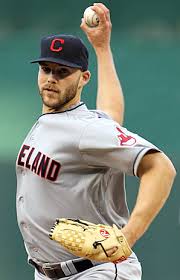
The final possible venue for Trumbo would be in Cleveland. The Indians already made a trade this offseason in order to build for the near future, and making a deal for Trumbo would follow the same game plan. The Indians got the worst power production from the 1st base spot of any team in Major League Baseball last season at .106 and the worst slugging percentage in the league at .342. In addition, the Indians have been known to be shopping a starting pitcher like Justin Masterson with teams like the San Diego Padres and Boston Red Sox interested in the righty sinker baller. Masterson is under team control for 2013 and 2014, is a good candidate for a contract extension, and forecasts as a ~ +1.8 win player for 2013 and 2014. The Indians would receive a first baseman to help fans forget the troubles they had with Travis Hafner, becoming the exclusive option at 1st after 2013 since the Indians already signed Mark Reynolds to a one-year contract for next season. In Masterson, the Angels would be getting a pitcher who is dominant when he locates his hard sinker, but only a bit above average when he's wild. Masterson is a ground ball machine who gives up very few home runs. It means he's not liable to let walks score en masse, but he might not be counted on to go more than 6 innings due to a high
WHIP (1.45 in comparison to a 1.31 league average). He's a better pitcher than both Joe Blanton and Tommy Hanson, and similar to C.J. Wilson (2012 fWAR: Wilson- 2.5 Masterson- 2.3).
The Angels have a plethora of outfielders, with numerous possible lineup combinations depending on which outfielder they trade or if they make any trades.
| Position |
Player |
Proj 2013 WARP |
| LF |
Trumbo |
1.3 |
| CF |
Trout |
2.2 |
| RF |
Hamilton |
3.4 |
| Total |
- |
6.9 |
|
|
|
| LF |
Trout |
2.2 |
| CF |
Bourjos |
1.7 |
| RF |
Hamilton |
3.4 |
| Total |
- |
7.3 |
Both combinations of outfielders are quite valuable, especially since we can expect a better WARP than 2.2 out of Mike Trout next season. Both Bourjos and Trumbo have value on the trade market; enough value to garner a decent pitcher in return. If the Angels instead find a new home for Vernon Wells or Kendrys Morales, they will have retained a better overall lineup for now and the future, but most the team most likely will not upgrade their rotation significantly enough to make a difference. If the team trades Vernon Wells, the key will be to ask for little in return other than for the acquiring team to pick up the ridiculous $42 million left on Well's current contract. If the Angels were to get rid of even 3/4 of Well's contract, it might allow them to go after the best free agent pitchers on the market next year. Overall, the Angels hold all of the cards. If they don't want to trade anyone, they have that option. On the other hand, their current depth chart shows a need in the rotation and a plethora of outfielders, pointing towards an upcoming trade.
