Showing posts with label Braun. Show all posts

Tuesday, October 2, 2012

Murderer's Row

Fear comes from a lack confidence that results from impending circumstances out of your control. A person or group of people feel fear when an opponent has the opportunity, nay likelihood, of causing them harm, pain, or suffering. In baseball, match ups, constitute the crux of every part of the game. Do I bring in the lefty from the bullpen, or stick with the starter to face the pinch hitter? Wait, what if the other team pinch runs for the man on first, do I tell the pitcher to throw over, worry about a possible hit-and-run, or let the pitcher focus on the hitter? Baseball is a game of situations, match ups, one-on-one battles that incur difficult decisions influenced by dozens of factors. When fear clouds the judgment, we tend to make bad decisions, overlook objective data, and panic.

When putting together a team, General Managers want to compile an imposing lineup. How they decide what imposing means generally lies within their philosophy. Billy Beane's A's teams of the early 2000's, got on base from top to bottom. Some GM's look for hitters who all have power, or speed, or some other quality that makes it difficult for pitchers as they work there way through the batting order. If a pitchers sees a group of hitters who consistently get on base, it means throwing lots of pitches, and needing to be precise where the strike zone is concerned. If a pitcher sees a lineup full of home run hitters it invites the pitcher to be careful about leaving pitches in the middle of the strike zone, or to throw fewer fastballs early in the count.

Fielder and Cabrera
Every so often, one of the best teams in baseball can put out a lineup with 8 or 9, depending on the league, hitters that all strike fear in some way in the opposing pitcher. More often, pecuniary constraints force GMs to concentrate some fear-inspiring hitter in the middle or towards the top of the team's batting order. For example, Dave Dombrowski, the Detroit Tigers GM, signed Prince Fielder this past offseason to compliment his other great hitter Miguel Cabrera in the middle of the Tigers order. Those two have combined for an 11.6 fWAR, 244 runs batted in, 73 home runs, and 190 runs scored. These two embody the term run producers. Nonetheless, they make up only 2/9 of the Tigers daily lineup.

While 3/9 does not constitute that much more than 2/9, but it is 1/3 of a team's lineup. So, I took a look at who has the best set of three-in-a-row hitters in the Major Leagues. 6 teams stuck out more than the others.

Atlanta Braves: I begin with Atlanta, for no other reason than they are only one of two teams on this list to have their threesome include the leadoff hitter. Michael Bourn, Martin Prado, and Jason Heyward have individually put together outstanding seasons. They have the highest combined fWAR of any of the trios I have yet to mention at 18.7. The three bat 1-2-3 in the lineup, combining for 508 hits and 265 runs scored. These three get on base, OBP's of .335 or higher, steal bases, 76 combined steals, and make up 38% of the runs scored for the entire Braves team this season.

Los Angeles Angels of Anaheim: The Angels made big splashes in the offseason signing big fish free-agent Albert Pujols, as well as lefty C.J. Wilson. On the other hand, two of the three boppers in their lineup came from elsewhere. Mike Trout, the should be AL MVP, does his damage from the leadoff position, while Torri Hunter, who has spent half of his career in Anaheim, sits for the most part in the second spot. Pujols, who has had a somewhat lesser year in comparison to his MVP-like seasons in St. Louis, has still put up good enough numbers to make this threesome quite formidable. They combined for 18.5 fWAR, 75 home runs, 286 runs scored, and 499 hits. They average a .366 on base percentage, .507 slugging percentage, and all three had at least a 126 wRC+. Much of the production is weighted towards Trout, but Pujols and Hunter make it very difficult for opposing pitchers to find comfort after dealing with Trout. It is obvious that Trout gets on base, and Hunter and Pujols knock him in, as the two have 120 extra-base hits so far this season.

Washington Nationals: The Nationals represent one of the few teams that can post a lineup card, minus the pitcher, full of very good hitters. Especially since Jayson Werth returned to the lineup, this group of batters has proven a pitcher's nightmare. On the other hand, for our purposes in this discussion, let's focus on three specific Nats. Bryce Harper, Ryan Zimmerman, and Adam LaRoche. These three wouldn't strike fear just by name, but they do a great job of wearing out opposing pitchers. They do so to the tune of a 12.6 combined fWAR, but more importantly, 454 hits, 77 home runs, and at least a .338 OBP from each. Harper has the 3rd highest OPS and 3rd most extra base hits among National League center fielders this season. Most importantly, all three hitters make the opposing pitchers throw more pitches. The three have an average pitches seen per plate appearance of 3.96, which ranks in the top quarter of the National League.

Aaron Hill
Arizona Diamondbacks: This trio of hitters surprised me more than any other on the list. The Diamondbacks are not in playoff contention, nor do they have any MVP candidates, but Aaron Hill, Justin Upton, and Miguel Montero have proven to be dangerous. Much of the three's success is supplied from Hill and Montero, who are both having great seasons. On the other hand, while Justin Upton hasn't lived up to his 2011 campaign, he remains dangerous due to his combination of power, speed, and ability to hit to the opposite field. These three combined to score 260 runs, and compiled 466 hits on their way to a combined fWAR of 13.6. This threesome had a higher average wOBA than the Braves best three hitters (according to WAR the best three in a row hitters on the list), doing so despite an fWAR difference of 4.9. The category these three lack that stops them from being one of the top 2 trios is their power. With only 56 combined home runs and only one player's ISO above .200, Aaron Hill, it seems clear that had Justin Upton played up to his potential this might have been the three best hitters in a row in the entire league.

St. Louis Cardinals: The Cardinals have been one of the highest ranked offenses in the Major Leagues all season, so it is only fitting that they appear on this list. Matt Holliday, Yadier Molina, and Allen Craig have been huge for the Cardinals. Add in Carlos Beltran and David Freese on either end and you have a string of imposing hitters without any relief. Holliday, Molina, and Craig combined for a 15.0 fWAR and all three have at least a 6.50 RC/27 or higher, putting them all in the top 15 in the NL. These three are all right-handed, all have power, and 172 extra base hits. If we lop off Craig and add in Carlos Beltran, the trio of Beltran, Holliday, and Molina does a great job at getting on base with wOBAs of .348 or above, and an average walk percentage of 9.73%. Whether you use Beltran or Craig (both with 3.3 fWAR) the Cardinals provide a great combination of efficiency and power at the plate.

Ramirez and Hart
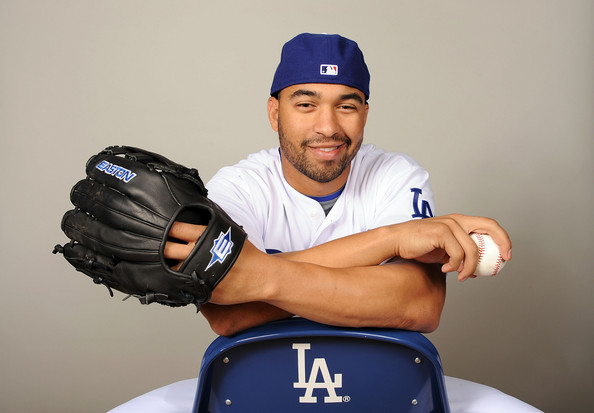
Milwaukee Brewers: This is the trio that sparked my interest in this piece. No trio makes pitchers as miserable as Ryan Braun, Aramis Ramirez, and Corey Hart. These three define murderer's row. A 17.7 combined fWAR does not do them justice for their offensive output. 507 combined hits, 98 home runs, 288 runs scored, and an average wRC+ of 146 put them in high esteem. When Braun, Ramirez, and Hart come to the plate, they use their best features, their muscles. Each brings to the plate an ISO of .239 or higher, and slugging percentages of .513 or higher. Braun carries a lot of the load here, but Ramirez and Hart aren't far behind.

It takes an entire team to win a ball game, but offensively, just a few players can often carry the load. If three hitters each have plate appearances, and they do so all in a row, it changes the way a pitcher has to prepare, and can often lead to compromising situations for managers. Baseball-Reference denotes low-leverage, medium-leverage, and high-leverage situations, and when three hitters like Trout, Hunter, and Pujols, or Braun, Ramirez, and Hart step to the plate, they will almost always provide more stress and pressure for a pitcher. Anything that can disrupt, even the best pitchers gives the hitting side, which is always at a disadvantage, more of a chance to succeed.

One important thing to note is that of the trios on this list with the highest combined WARs, neither the Angels nor the Brewers will likely be heading to October. What is most impressive about all of this, is that the Tigers' Miguel Cabrera and Prince Fielder, despite not having a third player to back them up, have put together some of the best numbers for two hitters in a row in the Majors. These two mashers make it extremely difficult for opposing pitchers, especially since one is left-handed and other is a righty, and they have Austin Jackson at the top of the lineup, getting on base. While three fearsome hitter in a row definitely bests two, Prince and Miggy have made the best of their situation, and have seriously helped a defensively inept squad like the Tigers win the AL Central and make the playoffs.

Sunday, September 23, 2012

Senior Circuit Circus

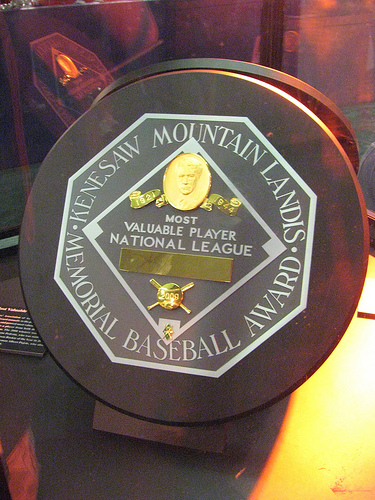
We were all duped. That may sound dramatic, but we were fooled. In fact, we were fooled twice. And i think you know the saying. "Fool me once shame on you, fool me twice shame on me." Well, Ryan Braun fooled us once. He dazzled the Majors last season on rout to the National League's Most Valuable Player. He made conventional voters excited with a slash line of 332/.397/.597. He produced runs, hitting 33 home runs and knocking in 111 runs. He scored 109 runs, batting in the 3rd spot in the batting order, and even stole 33 bases. For those more inclined towards advanced metrics, Braun compiled a 7.7 fWAR, 178 wRC+, and wRAA of 58.6. Both Matt Kemp and Ryan Braun deserved the award, and even if you disagree with the selection (like I do), both players deserved the award, so neither choice was wrong. The deception came just after the season ended, when Major League Baseball suspended Braun for 50 games for a positive test showing that Braun took a banned substance. Immediately fans became puritanical, taking out their dusty copies of The Crucible, and calling for Braun's MVP award to be revoked, the MLB equivalent of death by stoning. Some called for an asterisk to reside next to his name in the record books to denote Braun's guilt, which is the MLB equivalent of wearing a big red A on your jersey, or am I mixing up my puritans?

Either way, Braun fought the case and through a technicality, MLB reversed their decision to suspend Braun. Most assumed, no matter what the conclusion, that Braun took PED's and it helped him win the MVP. So, the sneaky Braun got away, and fooled us for the second time. Now he's back, trying to fool us again. This season Braun has been better than ever before. Take a look:

Slash line

    0.315/.390/.599
HR 40
RBI 107
Runs 98
Hits 175
SB 29
UZR/150 4.6
FRAA 3.6
DRS 10
fWAR 7.8
rWAR 6.8
WARP 5.9

So, Braun seems like a lock again for MVP. The Brewers lost cleanup hitter Prince Fielder to free agency, and while Aramis Ramirez, Fielder's replacement, has had a great season, he doesn't impose the same fear factor as Fielder did. Even more so, Braun has improved defensively, playing one of the better left fields in the National League. He's done all this, for a Brewers team that will not win as many games as they did last season. The team traded ace pitcher Zack Greinke at the trade deadline and has had some of the worst bullpen issues in the Majors, just ask the Phillies if you don't believe me.

So, making good use of the old adage to which I previously referred, I plan to make the case for someone other than the esteemed Mr. Braun to win the National League's 2012 MVP award.

The last catcher to win the National League Most Valuable Player Award was Johnny Bench in 1972. Catchers have historically not been the best players on their respective squads. They don't put up the flashiest numbers, spending more time working with pitchers and calling the game. Mike Piazza, arguably the best offensive catcher of all-time, never won an MVP. On the other hand, the American League has seen a catcher or two win the MVP with Joe Mauer winning the award in 2010, and Ivan Rodriguez accomplishing the feat in 1999, but it has been 40 years since an NL catcher won the award.  This streak could, and I argue, should be broken this season. Two candidates have broken away from the pack to distinguish themselves as catchers who also serve as very valuable players.

Yadier Molina has put together a great career thus far. As the younger brother of both Bengie and Jose Molina, who both play(ed) catcher in the Majors, Yadier has proven to be the best of the bunch. Fellow backstop (nickname for a catcher) Buster Posey is having an outstanding season. Posey, who plays for the NL West champion San Francisco Giants, has put together one of the best offensive seasons for a National League catcher since Mike Piazza. Oh, and he's doing all of this at the ripe young age of 25.

Offensively, both these catchers have excelled, but the edge has to go to Posey. While Molina, once thought to be just a defensive player with some offensive liabilities, has hit extremely well, Posey bests him in most categories. Let's take a look:
Molina
Games 129
Hitting 2012 NL Rank
wRC+  144 7th
wOBA 0.379 8th
Avg 0.321 4th
OBP 0.379 10th
SLG% 0.506 17th
ISO 0.186 27th
K% 9.9% 7th
BB% 7.8% 43rd
Contact % 85.7% 15th
Hits 152 21st
HR 20 Tied for 14th
RBI 64 36th
Runs 60 55th
BABIP 0.327 25th
Tav 0.317 20th
LD% 25.2% 5th
Clutch 1.16 6th
OppOPS 0.717 143rd
Posey
Games 139
Hitting 2012 NL Rank
wRC+  160 3rd
wOBA 0.404 3rd
Avg 0.335 3rd
OBP 0.409 1st
SLG% 0.545 4th
ISO 0.21 19th
K% 1.6% 42nd
BB% 11.4% 7th
Contact % 85.2% 17th
Hits 167 11th
HR 23 Tied for 10th
RBI 96 6th
Runs 74 Tied for 31st
BABIP 0.365 5th
Tav 0.349 1st
LD% 24.5% 6th
Clutch -0.6 37th
OppOPS 0.717 28th

So, as you can see, while both players are having fantastic offensive seasons, Posey definitely has an edge. Where I think Molina makes a statement is in his K%. Batters want this number to be as low as possible, and Molina had shown can keep it his strikeouts down. Molina has consistently kept his K% down throughout his career. The other stat leaning towards Molina is his Clutch. This is a statistic calculated by www.fangraphs.com that determines how a player performs in high leverage situations. For those of you who care, the formula is:Clutch = (WPA / pLI) – WPA/LI 
Molina does extremely well in high leverage situations as 1.16 is considered great while Posey's -0.6 is designated between poor and below average. How a player performs in clutch situations is important, and more so valuable. The last three NL MVP's have posted a Clutch of 0.26, 0.20, and 0.60 respectively. Nonetheless, Buster Posey shows more power than Molina, hits for a better average, walks more, hits just as many line drives, and has done it all against better opposing pitching (OppOPS). Offensively, he gets the nod.

Offense is important, so much so, that it makes up most of what goes into the statistic Wins Above Replacement. Without runs, no one would ever win a baseball game, so by proving to be the better offensive catcher, Buster Posey has taken a solid lead in the MVP race. In the last few years, defense has become quite important as well. Now that we have metrics that can evaluate a players defense far better than fielding percentage, it is important to utilize them when discussing the Most Valuable Player Award. The catcher position is usually known as a premium defensive position due to the enormous responsibility placed upon the catcher during the course of a game. They must manage the pitching staff, oftentimes call the game, make sure no pitch gets by them for a passed ball or wild pitch, and crouch the entire time. Remember, catchers, unlike other position players, don't need great range when playing the field, so no one calculates UZR (ultimate zone rating) for them. On the other hand, DRS (defensive runs saved) and FRAA (fielding runs above average) are good ways of quantifying a catcher's defensive abilities. In addition, www.baseball-reference.com records a catcher's caught stealing percentage. Molina comes in 4th in the NL in that category while Posey does not.
Molina
Defensive 2012 NL Catcher Rank
DRS 17 1st
FRAA 2.1 3rd


Posey
Defensive2012 NL Catcher Rank
DRS -2 Tied Last
FRAA -2.1 Last

So, defensively Yadier Molina makes Buster Posey look like a designated hitter. In fact, Posey is a defensive liability, and that includes throwing base runners out as well as fielding bunts and blocking pitches. Molina has always been known as a terrific defender, but with Posey ranking among NL catchers in the dumps, Molina gets a major advantage here. Catcher is one of the most demanding defensive positions on the field and Molina does it better than almost everyone. 

Most catchers are large, and if not large, they are ubiquitously slow. Base running is not a facet of the game most catchers have in their arsenal. This is true of both Molina and Posey, but base running is still an important part of the game. All other MVP candidates should be judged based upon the same categories, and base running is one of them. 

Molina                                                  Posey

2012 NL Catcher Rank
SB 12 1st SB 1 Tied 4th
BsR -5.8 Last BsR -4.1 2nd to Last

Surprisingly, Yadier Molina has 12 stolen bases, but when considering all base running, he ranks lower than Posey. Neither player, even in comparison to other catchers, run the bases well, but since Molina has 12 times the number of stolen bases than Posey, I have to give a slight edge to Molina. 

Finally, let's look at these two players through the lens of the many metrics that determine overall value.  Fangraphs, Baseballprospectus, and Baseball-reference all calculate WAR slightly differently. The calculations are different enough for each of their top 5 lists in WAR to be somewhat different. 

Molina                                                  Posey


Value 2012 NL Rank Value 2012 NL Rank
fWAR 5.6 6th fWAR 5.6 3rd
rWAR 6.7 Tied 2nd rWAR 6.3 Tied 3rd
WARP 5.6 6th WARP 5.6 1st
Value in $$ $28 Million Value in $$ $31.5 Million
By all accounts, Buster Posey seems to have the advantage in overall value. Fangraphs and Baseballprospectus consider him better than Molina, and Fangraphs consideres Posey to be worth $3.5 million more than Molina. Interestingly, Buster Posey is making $615,000 this season, which is due mostly to the fact that he is still under his rookie contract. Molina recently signed a contract extension with the Cardinals, but it hasn't kicked in yet, so his 2012 salary is $7 million. Now, according to rWAR, Yadier Molina has been worth more wins than Buster Posey. 

One aspect of a catcher's responsibilities that I haven't referred to yet is their ability to handle a pitching staff. Catchers must learn about each pitcher, how to handle them from the physical side, how many pitches they throw, and the mental side, keeping them calm and focused. The catcher is the manager's aid on the field, which is probably why so many catchers become managers. Yadier Molina has caught 7 different starting pitchers and 19 different relievers. The Cardinals starters combined for 15.8 fWAR, and while Molina has less to do with that than the pitchers do, as a receiver, Molina impacts pitchers' performances to some degree. One Cardinals starter, Adam Wainwright, throws a curveball with lots of downward movement, making it a difficult pitch to handle for a catcher (-9.6 y-movement). Molina handles 3 starters whose fastballs reach or exceed 93 mph and 6 or more relievers whose fastballs exceed 95 mph. By all standards, Molina does a great job handling the Cardinals staff and bullpen. Also, Molina has played 128 games at catcher this season, catching 80% of the 

In comparison, Buster Posey has caught 6 different starting pitchers. Those starters throw only 5 different types of pitches between them, and none of them throw their fastballs faster than 92 mph. The total fWAR of the Giants starting staff is 12.0. On the other hand, Posey caught Matt Cain's perfect game, which by all standards is a great achievement. Posey has dealt with 17 different relief pitchers throwing 7 different types of pitches, with none of those 17 pitchers acheiving a velocity higher than 95 mph. Giants pitchers have thrown 51 wild pitches this season, many during Posey's time behind the plate in comparison to St. Louis pitchers who have thrown only 42. This shows us that Posey has to deal with pitchers who can be more wild than does Molina. On the other hand Molina may keep his pictures calm enough, and catch pitches in the dirt better than Posey, thus leading to fewer potential wild pitches. 

Overall, both these players have been great this year. Posey is one of the best hitters in the entire game. Posey is most comfortable when standing in the batter's box, not the catcher's box, and due to the greater importance placed on offense, Posey has the advantage in both fWAR and WARP. In contrast, Yadier Molina's defense is unparalleled in today's game. He forces base runners to change their travel plans, getting them to remain at 1st base instead of attempting to swipe second. Also, Posey has only started 109 games at catcher, which is good enough for 72% of the Giants games this season. Posey has been the rock for the Giants, especially since they lost Melky Cabrera due to a positive test for PED's. 

Ryan Braun will probably win the National League MVP award this season, but if I had a vote, I'd give it to either Posey or Molina. If you are someone who thinks that an MVP winner's team should make the playoffs in order to consider said player for the award, than you will be happy to know that the Cardinals have a 74.4% chance of making the playoffs, the Giants have already made the playoffs, and Braun's Brewers have only a 24.6% chance of making the playoffs. Catchers are often overlooked, but one thing is certain, some if not much of what catcher's do cannot be quantified by statistics. Outfielders are important, but catchers are far more valuable to a team. So, Baseball Writers Association of America voters, take a chance and vote for Posey or Molina, one of them deserves to win. 

Thursday, September 1, 2011

The Case for Victorino

The NL MVP Award
The National League MVP race has recently spurred much discussion amongst Baseball's talking heads.  The 2011 NL MVP may be decided after the season, but speculation now is allowed and even welcomed.  Commonly known names in contention for the award include Matt Kemp of the Dodgers, Ryan Braun of the Brewers, Prince Fielder of the Brewers, and Justin Upton of the Diamondbacks.  Interestingly, none of these four players hail from the NL east, the division that boasts the two best winning percentages in the national league.

Matt Kemp would have a lock on the award, but his Dodgers find themselves amongst mediocrity in the middle of the the NL West at 5 games below .500.  Just like a combination lock, Kemp has all of the right numbers to be considered and chosen the NL MVP, but his team's lack of contention cuts his chances by a significant amount.  Kemp has the best WAR in the NL at 8.1.  He sports a .320 batting average, 102 rbi, 31 home runs, 35 stolen bases, and a .965 OPS.  If the dodgers were vying for the playoffs, or at least had a winning record, Kemp would receive enough votes to claim the award, but because the award is most "valuable" and not "best" player, he will most likely not win the award this year. 

Ryan Braun and Prince Fielder should each buy Matt Kemp a drink because, most likely, one of these Brewers will take home the MVP award instead of the Dodger's center-fielder.  Braun has the second best WAR in the NL at 6.7 to go along with a .333 batting average, 25 home runs, 89 rbi, 31 stolen bases, and a .995 OPS.  Braun's numbers alone easily put him in contention to win the MVP, and due to the Brewers success this season,we could see the first Jewish NL MVP since Sandy Koufax in 1963.  Braun makes a convincing case for the MVP award, but so does his teammate, Prince Fielder.  Fielder is the power in the Brewers potent lineup.  This season Fielder has compiled a .293 batting average, 29 home runs, 102 rbi, a 4.0 WAR, and a .947 OPS.  Braun's numbers dwarf his teammates', but they do not overshadow them enough to exclude Fielder from the MVP conversation.  If Fielder turns on the power in September, he could snatch this award away from Braun. 

The only other name being consistently mentioned is Justin Upton.  Upton, the right fielder for the Diamondbacks, is the Dbacks best player.  The Arizona Diamondbacks have unexpectedly made their way past the World Series champion Giants into first place in the west.  Upton's application for the MVP award does not muster up to the likes of Kemp of Braun, except that he is the best player on the best team in the NL west.  He has a 3.9 WAR, .294 batting average, 26 home runs, 80 rbi, 20 stolen bases, and a .909 OPS.  These numbers are far below those of Braun, Fielder, and Kemp, but combined with the Diamondbacks place in the standings, they do put him in contention for the MVP award.  Upton would need to have a jaw dropping September to win the award. 

One name that is rarely spoken of in the MVP conversation is Shane Victorino.  Victorino, the Phillies Center-fielder, is a dark horse candidate for the NL MVP, but should receive more consideration.  Victorino, like Kemp, plays Center-field, the captain of the outfield and the player with the most ground to cover.  He has proven to be the spark plug in the Phillies lineup whether he bats in the lead-off position, or any other place in the order.  At 30 years old, Victorino is having the best season of his career.  He has a .307 batting average, 15 home runs, 54 rbi, a .919 OPS, a 5.1 WAR, 14 triples, and he has struck out only 46 times while being walked 44 times.  Victorino has grounded into only 2 double plays all season, the same number as Reds pitcher Mike Leake who has 1/5 the number of at bats as Victorino.  It is obvious from these numbers that Victorino does not detract from his squad, he is a player without leaks.  With Jimmy Rollins' contributions becoming less and less, Ryan Howard's inability to hit for average, and Chase Utley missing the first two months of the season, Victorino has proven to be the the Phillies most valuable hitter.  Braun may have better numbers across the board, but it is difficult to make the argument that he is more valuable to his team than Victorino is to the Phillies.  The Phillies sport the best record in baseball at 87-46, 41 games above .500.  Although their dynamic pitching staff has contributed greatly to their success, it is Victorino who contributes every day instead of every 5th day.  He has batted in 5 different spots in the Phillies lineup this season, contributing where ever Charlie Manuel puts him.  When Victroino plays well, the Phillies win.  He has a .348 batting average, 1.059 OPS, 95 hits, and 66 runs scored in Phillies wins this year in comparison to a .218 batting average, .629 OPS, 29 hits, and 15 runs scored in Phillies losses.  Although Victorino's statistics are not as flashy or sexy as Braun, Fielder, and Kemp, they show a most valuable contribution to the best team in baseball.  Most likely, this award will end up in Milwaukee, but no voter should cast his or her ballot before seriously considering Shane Victorino, the most valuable choice in the National League.