Showing posts with label A's. Show all posts

Thursday, July 5, 2012

What a Relief

The Background

The Book...Enough Said
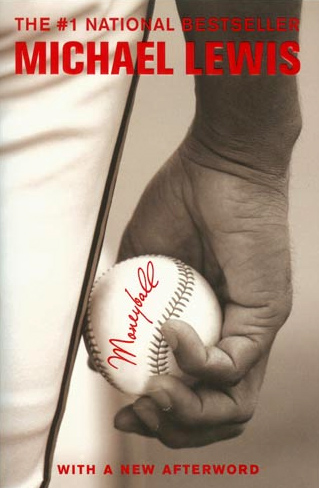
In Michael Lewis' famed book, Moneyball, he hammers home the point that the A's did not stumble upon the idea, that in order to build a winning team with very little money, a General Manager must find market inefficiencies to exploit.  The idea comes from economics.  Market inefficiencies arise when one agent within the market uses their power to block mutual gains from trade, leading to imperfect competition.  Essentially, if one entity within the market abuses their stature by obstructing the natural flow of a certain good, it can cause monopolies to arise.  To quote the book that opened so many people's minds to the statistical revolution that is still occurring in baseball, "The chief social consequence was to hammer into the minds of a generation of extremely ambitious people a new connection between "inefficiency" and "opportunity," and to reinforce an older one, between "brains" and "money."

Moneyball was written in 2003; a movie based on the book was released in 2011, and because of the book almost every major sports news channel on television includes statistics like on base percentage in its usual stat line.  This begs the question, why am I digging up an argument that most sports fans have heard of? The reason I mentioned market inefficiencies and more importantly Moneyball is that Billy Beane, the General Manager of the Oakland Athletics, continues to find market inefficiencies to exploit in order to keep his team relevant amidst a sea of fat cats, copycats, and monopolies (thought I had a third cat phrase didn't you?).

Back to our brief economics lesson, let's talk about externalities.  An externality is a transaction that does not occur through prices, and affects a party that had no say in the transaction that caused the issue.  Externalities can range from global climate change to taking too much time in the checkout line at your local grocery store.  How do externalities and market inefficiencies affect Billy Beane and the Oakland Athletics? Beane's small-market team has little money to throw around in order to, simply put, win.  In order to combat this lackluster position, Beane and his front office team, scourer the baseball landscape for the numerous market inefficiencies that have occurred, most often due to externalities, to exploit in order to bring success and prosperity to the "other" city by the bay.

Beane's most recent revelation concerns relief pitching.  Starting pitchers usually pitch anywhere between 5-9 innings per game.  Starting pitchers who average more an 7 innings pitched per game are usually aces, while pitchers who average fewer than than 6 innings pitched per game rank closer to average/below average in performance.  No statistic is without outliers, and Stephen Strasburg represents a great outlier.  The Nationals purposefully limit his innings pitched despite his stellar ability, in order to protect his arm in the long-term.  Nonetheless, starting pitchers rarely throw complete games, which causes managers to utilize their bullpens often.

Combine the effect of fewer innings pitched by starting pitchers, with the new model of the modern bullpen and you change the market for pitchers.  Tony La Rusa, the soon-to-be Hall of Fame manager of the Oakland A's and St. Louis Cardinals, started the current bullpen paradigm of lefty specialists, set up men, and the worst of the bunch, the rigidly limited closer.  This shift in bullpen dynamics, combined with the invention and overvaluing of the "save" statistic, has led to a market inefficiency.  When specialization occurs, oftentimes the salaries of those filling these specialty roles rise.

Let's examine the most lucrative specialty, the closer.  The average salary for a closer in 2012, excluding closers still signed to a minor league deal, and including injured closers and their replacements, is about $6 million.  These are pitchers who generally pitch for an inning in which their team is ahead by no more than 3 runs.  Sometimes closers are put in in tie games, and when they haven't pitched in a while, the manager may choose them to pitch in order to stay sharp.  Supposedly these "rules" are placed on a closer's usage because the 9th inning involves so much added pressure, that only certain players can successfully get the last three outs of a game.  My argument here is not that closers are useless, (sort of) or that the system in which they are employed is inherently flawed (it is).  The point I'm trying to make is that Billy Beane and his cadre in Oakland discovered that because of system in which closers pitch, the market has overvalued them, and will most likely continue to do so.

Bailey, Street, and Cook

Heading into the 2011-2012 off-season, the Oakland A's were coming off of a losing season, but one on which the team could build.  The Athletics finished the 2011 season with a 74-88 win-loss record, a .457 winning percentage that left them 3rd out of 4 teams in the American League West.  Despite this record, the A's held a number of solid young players that, with some experience and help from veteran talent, might produce winning seasons in 2012 and beyond.

All of this seems reasonable but the Oakland A's are not your average MLB team.  With so little money to utilize, the A's must constantly use a strategy employed by the Tampa Bay Rays as well as the financial sector.  The strategy is called arbitrage.  Arbitrage is the act of taking advantage of price differences between markets by making one or many deals in order to capitalize on the imbalance.  In his book The Extra 2%, Jonah Keri talks about how the Rays utilize the idea of arbitrage when making player based decisions.  Mr. Keri explains it simply as "acquiring an asset for less than it's worth, especially when coupled with selling an asset for more than it's worth."  The Athletics have recently used this approach to exploit the overvaluation of closers and other relief pitching slots in order to improve their team.

At first glance, Huston Street seems more like then name of a road rather than the name of a Major League Baseball player.  Street attended the University of Texas, and was drafted by the Oakland Athletics in the 1st round of the 2004 MLB draft.  Street came out of the bullpen in college and the A's had no desire to change that approach.  He pitched for the A's from 2005-2008 at an average of $1,083,906.25 per season.  He was paid $3.3 million in his final season with the A's, one in which they traded him elsewhere.  Street came out of the bullpen as the Athletics closer.  His stats from his bay area years are depicted below.

Team
ERA
SV
IP
K/9
H/9
Athletics
2.88
94
269
9.07
7.03
HR/9
WHIP
LOB%
WAR
xFIP
BB/9
0.6
1.07
74.30%
6.9
3.51
2.61
After producing these fine numbers for the A's, they traded him, Carlos Gonzalez, and Greg Smith to the Colorado Rockies for Matt Holiday.  Holiday played for the A's and was then traded to the St. Louis Cardinals for prospects Clayton Mortensen, Shane Peterson, and Brett Wallace.  Wallace was then traded to the Blue Jays for outfield prospect Michael Taylor.  Confused yet?  Well if you aren't, let's move on.

Street was first, but Bailey came next.  The Athletics drafted pitcher Andrew Bailey in the 6th round of the 2006 MLB draft.  After spending a few years in the minor leagues, Bailey was brought up to the team to fill the vacant closer's spot left by Huston Street.  He immediately won rookie of the year and was selected to the All-star team, 
thus boosting his profile in Major League Baseball.  In addition, he compiled these statistics:

Team
ERA
SV
IP
K/9
H/9
Athletics
2.07
75
174
9.0
6.05
HR/9
WHIP
LOB%
WAR
xFIP
BB/9
0.57
0.95
81.70%
4.4
3.4
2.53
In 2012 Bailey was once again selected as the Athletics representative to the American League All-Star team.  Seeing that Bailey was a competent closer who, like Street before him, would be overvalued on the free agent and trade markets, Billy Beane traded his young commodity.  In this case he traded him to the Boston Red Sox for outfielder Josh Reddick, prospect Miles Head, and prospect Raul Alcantara.

Now that we have discussed Street and Bailey, let's move on to Ryan Cook.  Who is Ryan Cook?  If you guessed that he is an Oakland Athletics relief pitcher, you would be right.  Cook has recently been placed in the closer's role in the A's bullpen.  His statistics thus far can be seen below.

Team
ERA
SV
IP
K/9
H/9
Athletics
1.50
8
?
9.25
3.0
HR/9
WHIP
LOB%
WAR
xFIP
BB/9
0
0.92
82.90%
0.8
4.39
5.25


Okay, you got me; I may be throwing a whole bunch of statistics your way, but I neglected to tell you the sample size.  Cook has only thrown 36 innings out of the pen thus far this season.  The numbers Cook is putting up could easily normalize and become only average, but I don't think that will happen.  Oh, I think he may give up a home run eventually, but I have faith that by the end of the year, Ryan Cook will look like a solid choice as a closer.  He may be utilized in that role for the A's for the rest of this season as well as next season.  Interestingly, Cook was one piece the A's received when they traded SP Trevor Cahill to the Diamondbacks and the A's currently pay him $480,000 a year.
Ryan Cook

The Athletics play in a great pitcher's park, thus inflating their pitcher's stats and deflating those compiled by their offense.  With recent closer's being signed to deals like 4 years for $50 million (Jonathan Papelbon to the Phillies) and 3 years for $27 million (Heath Bell to the Marlins), many teams may jump on the chance to trade for Ryan Cook and utilize his arbitration years (the first of which is in 2015) or even sign him to a more moderate contract.  The A's may not garner an incredible package of players for Cook, but with the advanced metrics they deploy, the scouts they trust, and the replaceability of Cook, anything the A's get in return may make such a deal true arbitrage.

Finally...

In the end, I am predicting a situation based on lots of facts, a pattern, and some assumptions.  Teams devise new ways to improve themselves everyday, but Billy Beane has definitely found a market inefficiency to exploit in the production and selling of bullpen pitchers.  He uses them for his own team only while he pays them less than $1 million, then sells them for other players to teams who can, and will pay them more money.  The Athletics need all of the help they can get when it comes to winning, and Billy Beane is the man to keep them ahead of the curve.  Whether he uses simple economic principles like market inefficiencies, arbitrage, and positive gains from externalities, Beane continues to succeed.  Maybe, that's why he has been the Athletics General Manager for 15 seasons, the longest current streak in Major League Baseball.  

Wednesday, June 15, 2011

The Injury Bug

In sports vernacular, the "disabled list" (“DL”) or "injured reserve" are commonly used terms thrown around as if the average inhabitant of the earth understands its meaning without the need for further explanation. For those unfamiliar with these terms, they describe a special status given to athletes with injuries in order to allow substitute players to temporarily replace them for the duration of their injury. If I sprain my ankle running, I still come into work or go to class, but professional athletes do not have that luxury. Recently Derek Jeter, who is in pursuit of 3,000 hits, attempted to leg out a slowly hit ground ball and strained his calf muscle. From the moment Jeter left Monday's game due to injury, the media has offered conjecture as to the severity of his injury. Will he will be placed on the disabled list? And, of course, how this will affect his quest to accomplish a goal that only 27 other Major League Baseball player have reached in the sports 230+ years of existence?

Jeter's injury probably won't adversely affect his team's play or their chances to be competitive, especially if his stint on the DL is short. Unfortunately, for many teams, most of the time that is not the case. Many times, an injury, depending on the type, length of recovery time, and who is injured, can dramatically affect a team and its chances of winning. The Minnesota Twins finished first in the AL central last season making the playoffs for the second consecutive season. This season they find themselves in last place mostly due to injuries. The 2011 Twins roster looks fairly similar to the 2010 roster, which begs the question, "Why have they been so bad this season after such a successful 2010 campaign?" The Twins' star players are without a doubt Joe Mauer, Justin Mourneau, and Delmon Young. Mauer has played in only 11 out of 65 games this season, Mourneau has missed 10 games, and Young has missed 20. Three key players on the DL has been the leading contributor to the Twins' struggles. Injuries, especially when afflicted upon smaller market teams with one or two key players, can plummet a first place team to the cellar.

Bigger market teams may avoid this plight. For An example bigger market teams affected but not debilitated by injuries are the Philadelphia Phillies and San Francisco Giants. Recently, the Phillies, for the first time all season, put out their original starting lineup. Chase Utley, Shane Victorino, Roy Oswalt, Joe Blanton, Carlos Ruiz, Dominic Brown, and at least three bullpen pitchers have all visited the disabled list this season. Only recently have the Phillies had a starting 9 with no bench players. Because the team did not lose key players like Roy Halladay, Cliff Lee, Cole Hamels, Ryan Howard, and Placido Polanco to injury, the team has sustained its winning ways. But only a team with talent like the Phillies, Yankees, or Red Sox can sustain a high winning percentage while suffering numerous injuries to crucial players.


The San Francisco Giants lost star catcher Buster Posey for the rest of the season, second baseman Freddie Sanchez for an indeterminate amount of time, and will only now get third baseman Pablo Sandoval back in the lineup after a long DL stint. The Giants, like the Phillies, haven't lost all of their key assets and thus remain afloat and competitive despite injuries to 3/5 of their starting infield. Pitchers Tim Lincecum, Matt Cain, Jonathan Sanchez, Brian Wilson, and Sergio Romo have all remained healthy, thus allowing the Giants to retain their lead in the NL west. Not all teams are so lucky. The Twins are only one example of a smaller market team where 2-3 injured stars have lead to a drop in the standings. The A's and Angels have suffered similar fates. The 2011 Oakland A's were destined to win because of their young but formidable pitching staff. Regrettably, key pitchers Andrew Bailey, Brett Anderson, Dallas Braden, and Josh Outman have all succumbed to the DL for short periods of time. Anderson recently received good news regarding his elbow pain. At first Anderson's meeting with "Tommy John" expert Dr. James Andrews raised alarm bells, but ultimately his injury only required 6 weeks of rehab instead of major surgery followed by 18 months of rehab.

Not all teams are blessed with a prognosis like the A's pitcher Anderson. Last season, Stephen Strasburg burst onto the scene throwing 100 mph and winning baseball games, something few Washington Nationals pitchers have been able to accomplish. He left a game a few months after his debut with tightness in his elbow and received a diagnoses requiring Tommy John surgery. He remains injured, and most likely will not pitch again in the majors until August. In his case, the Nationals not only lose his stellar pitching, but they also miss the thousands more fans that would have attend games in D.C to see Strasburg.

Injuries are not always an awful scenario for a team. Sometimes injuries allow teams to call up highly touted prospects who otherwise wouldn't be called up. Other times injuries cause a general manager to make a trade that leads to better results than expected. Although these situations occur, injuries, especially to starters, always have negative aspects to them. In Derek Jeter's case, his team may barley miss his play, but his pursuit of 3,000 hits will be put on hold. Jimmy Rollins, the Phillies shortstop, suffered a similar injury to Jeter's current calf strain, and when asked about it, said,
"The best advice I can give Derek is, you’re going to get healed in the offseason."
He also mentioned that despite returning to play last season, his calf injury never fully healed until December."When you think your good, you’re not even close," remarked Rollins.
Essentially Rollins is telling Jeter, "Just because you’re about to become the first Yankee to reach 3,000 hits, the 27th major leaguer of all time to accomplish the feat, and secure your eventual induction into the Baseball hall of Fame, don't rush coming back because that may just worsen the injury." This seems to be good advice from someone who plays the same position with similar energy and competitiveness, and suffered a similar injury.

Jimmy Rollins is right. Players should make sure they are healthy before returning to the lineup, no matter how much their team needs them to play because other factors are stake. At the same time, baseball players are commonly referred to as wimpy athletes because they go to the disabled list with injuries like a mild calf strains, blisters, and elbow tightness. In hockey and football players regularly play with injuries more serious than those just mentioned, and such behavior is seen as gallant by fans who see such players as putting their team and teammates ahead of their own personal health. However, such behavior is foolish, especially for injuries like concussions, which can be sustained at any time and have few physical symptoms. I do not have a problem with a player playing injured as long as it is determined that the injury will not affect their play and will not have lasting affects on their health. But when players play through serious injuries, they need to rethink their decision. These injuries may not just affect the rest of their sports career—they may affect them for the rest of their lives.

I seriously injured my elbow pitching in high school. The injury was bad enough that my Orthopedist told me that I needed Tommy John surgery if I was to return to the mound. Instead of going through the surgery and extensive rehab, however, I opted out of the surgery and never pitched ever again. Although I still think about whether I made the right choice, overall I know that not pitching again is probably the best and healthiest choice. Although these decisions are never easy, especially when they affect one's livelihood (in professional sports), players need to consider all of their options and do what is best for their health, which sometimes means sitting out for long periods of time. So, I say to Derek Jeter, 3,000 hits will happen, and despite the media hoopla it does not matter when. So sit out, rehab and return healthy, strong, and ready to join the 3,000 hit club.