Showing posts with label Shane Victorino. Show all posts

Tuesday, December 4, 2012

Winter Meetings: Day 2

Baseball's Winter Meetings in Nashville, Tennessee got off to a quick start yesterday with a number of free agent signings including Mike Napoli, Joakim Soria, Angel Pagan, and James Loney. No contract was signed that totaled more than $40 million, but each contract signing improved the club involved, and made the players involved all rich men with secure jobs, something the average American cannot claim. So, what happend in day 2?

Dan Haren
Washington Nationals sign Dan Haren to 1-year $13 million contract: The Nationals are always making headlines with their pitching. Most recently, the club traded young fireballer Alex Meyer to the Twins in exchange for center fielder Denard Span. That move opened up a lot of moves for the Nats involving position players, but while tons of rumors have been flying concerning Adam LaRoche and Michael Morse, it was the Nats rotation that got a boost on day 2. Haren, most recently rumored to have been traded from the Angels to the Cubs, should be happy about this deal. He has a chance to bounce back and prove he deserves a longer term deal going into 2014, while simultaneously making $13 million for one year's work. Haren's numbers last year were not good, and combined with a hip injury, he didn't look like a player who could garner more than $10 million for one season going into 2013. Haren projects well according to PECOTA due in large part to his recent history, which has been very good. Harne's drop in fastball velocity isn't a good sign, but the better pitcher learn to get around drops in velocity by throwing more strikes on the corners, and outsmarting hitters using pitch selection and movement. Here's the best part of this deal, Haren doesn't have the pressure on him that he could have had elsewhere. The Nationals may be a playoff contendor, but Haren isn't the 1st, 2nd, or even 3rd starter for D.C.'s team, he's 4th at best. If Haren can post the 3.51 FIP Bill James expects him to, he'll provide plenty of value to the Nats. The Nationals are paying a steep price here for someone trending the wrong way, but it's only for one year, and the Nationals, while built to win now, are also built to win in 2 years.
My Grade: B
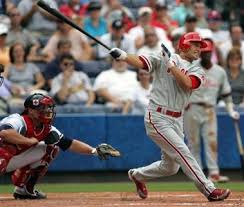
Shane Victorino
Red Sox sign Shane Victorino to a 3-year $39 million contract: First of all, congrats to Shane on this contract. Victorino will receive 30% more money per season over the course of his deal with the Red Sox than Angel Pagan will receive in his deal with the Giants. So did the Red Sox overpay? The first reaction on Twitter was that this deal won't work out well for the Red Sox. Much of this reaction is based on Victorino's 2012 performance. After 4 straight seasons over 100 wRC+, Victorino managed only a 94 in that category. In addition, Vicctorino's .310 wOBA, .128 ISO, and 8.0% BB rate were all 5 year lows for the Flyin' Hawaiian. On the other hand, Vic stole 39 bases last season, and hit left-handed pitchers to the tune of a .391 wOBA. Shane's defense and base running remained fixtures of his overall value last season posting a 2.3 UBR, 2 DRS, and 4.4 UZR last season splitting time between the Phillies and the Dodgers. The reason this deal works well for the Red Sox isn't necessarily clear on the surface, so let's look deeper. Victorino hits better from the right side than the left, and what sits so obtrusively in left field at Fenway Park? If you guess the Green Monster, you would be correct. In order to get on base at Fenway, all a hitter needs to do is hit a ball off of the Green Monster, which is located only 320 or so feet away from home plate. Once Shane gets on base he is a threat to steal, allowing bigger bats like Johnny Gomes, David Ortiz, and Mike Napoli to knock him in. Defensively Victorino can play right field, and if the Red Sox decide to move Ellsbury at the trade deadline, Shane can move from right to center field. The Red Sox signed Mike Napoli and Shane Victorino for 3 years at a combined total of $78 million. B.J. Upton recently signed a 5-year $75.25 million contract. So the Sox get two older players for about the same amount of money as the Braves got Upton. Looks bad, but Victorino and Napoli are more projectable, whereas Upton was signed based a lot on unproven talent. Seems like the Red Sox are making smart signings, not flashy ones.
My Grade: B+ (Sure, this might not turn out the way the Red Sox want it to, but it gives them enough options to make me think it will work out well for both sides.)

As usual, hundreds of rumors for all sorts of players were thrown around today. Some included Diamondbacks young studs Tyler Skaggs and Trevor Bauer, while others concerned R.A. Dickey and Justin Upton. From what I can tell, the second that Zack Greinke works out a deal with either the Dodgers or the Rangers (currently the two likeliest candidates), we will see a lot more signings. The other interesting factoid is that Michael Bourn remains unsigned. A Scott Boras client, Bourn, like Prince Fielder last season could go another month without signing a contract, but my guess is that he ends up with a contract in the next 2 weeks. For more on the Winter Meetings, check out the Summerpastime Facebook page at www.facebook.com/SummerPastime or check out the Summerpastime Twitter feed at @summerpastime.

Friday, June 8, 2012

Wins and Losses

Losing isn't easy.  From heartbreak losses to nail biters to blowouts, one fact remains: losing is hard.  Ask anyone. The 12-year-old Little Leaguer, the multiple-time Super Bowl champion quarterback, and everyone in between will say the same thing.  Thirty-six-year-old Celtics center Kevin Garnett said it best after game 5 of the Eastern Conference Finals against the Heat.  Sideline reporter Doris Burke asked the former MVP, "What fuels you?" to which Garnett responded, "Competition."

When I first began playing truly competitive baseball I was 11 years old.  Up until this point my playing career consisted of having a daily catch with my father in the cul-de-sac outside of our house, and the bi-weekly games played in the local Jewish Community Center league.  Hubris and arrogance aside, most would say that for me, playing in the JCC league was unfair.  An early growth spurt allowed me to tower over most other players, most of whom did not care about winning or losing but wanted more than anything for their parents to take them out for ice cream after the game.  My perspective remained extremely different.  As the best pitcher in the league I loved racking up the strikeouts, forcing my Dad to record the number of pitches I threw and to analyze the stats in order to fix my mistakes during the cul-de-sac sessions.  Many say that competition is a natural instinct, a statement I agree with, but competition is like an unlit match, dormant until a quick strike causes the match to burn itself into extinction.

In JCC baseball my competitive attitude surfaced.  After only a few seasons, my parents and I realized that I needed better competition. After all, it is difficult to keep the competitive fire stoked when half of the batters I faced stood barely above 4 feet and wore long skirts that disguised the bottom of the strike zone.  I immediately moved from the JCC league to the Lower Merion Little League.  Here I was matched up against 10-12 year olds from all over the township, a much greater source of talent that hopefully would feed this recently cultivated competitive nature.  Finally, to play in a league in which my teammates and the coaches all took the games seriously and wanted to win, as opposed to merely "have fun" and yearn for the post game ice cream.  This experience began with "fall ball," which obviously occurs in the fall and not the spring.  Only the truly dedicated play baseball in the fall, right? This led me to believe that the other players would be committed to winning.  To my dismay, few of the  players and coaches interested in winning in the fall resided on my team. My coach viewed fall ball as a counterbalance to the competitive spring Little League season. Instead of playing the best players at their most effective positions, he played everyone where they wanted to play, so everyone pitched, in rotation.

I distinctly remember driving home with my Dad after one game, complaining to the point of anger about playing center field.  Another player on our team with little athletic talent but a strong desire to pitch gave up the lead and lost us the game.  For some reason I exclaimed, "no one else wants to win but me."  Now Dad has never been a sports playing type of person. Despite not being a great ballplayer, he has experienced loss and gave me some good advice.  He said, "Be patient, in the spring you will play for a different team, one where you'll feel more comfortable."  As an 11 year old I didn't truly understand patience, so I continued to complain, lamenting my team's lack of desire to compete and win.  Obviously, losing did not sit well with me.

Skip forward to next spring.  A whole winter of growth and practice behind me, I was ready for baseball to start again.  This time I intended to play for a team with a coach and teammates who shared my competitive desire to win.  Due to the high volume of players in the spring in comparison to the fall, the league holds tryouts to determine at what level everyone should play, the majors or the minors.  I felt confident in my abilities to make a team in the majors, but even still I hoped that the team on which I was placed would be a better fit for my competitive nature.  Luckily, I was drafted to a team coached by a father my parents and I both knew.  Let's call him coach "K," but not because his coaching skills measured up to the famous Coach K at Duke.  He and his son both wanted to win very badly; he had thus strategically constructed a team with experience, talent, and most importantly, a will to win. 

Our team performed well, winning most of our games, and making it to the playoffs.  I was named to the township All-star team along with three of my teammates.  In the first game of the playoffs, we faced a team that had won fewer games than us and against whom we felt very confident.  Most likely due to our over-confident demeanors, and probably a little bad luck, we lost the game, thus moving into the losers bracket.  This meant that another loss would end our hopes of capturing 1st place.  Following that first playoff game I remember feeling frustrated.  I blamed others, my teammates, my coach, and even the weather.  Losing isn't easy.  True competitors, the ones spoken of in stories, never blame their teammates; they look within themselves for answers and push themselves to be better.  This was a lesson I had not yet learned.  After 3 more games we found ourselves playing in the championship game against the second best team in the league.  I was charged with pitching and I promised myself that no matter what happened I would put forth everything I had.  I pitched well for 5 innings.  In the 6th and final inning, with the game tied the other team's best hitter came up.  Instead of using my best pitch, my fastball, I decided that with 2 strikes on the batter I would fool him by throwing a changeup, something I almost never did.  I hoped that the batter would swing through and strike out, thus giving us a good chance to win the game in the bottom of the inning.  Instead, he hit the first and only home run I ever surrendered in Little League.  We lost the game.  

A sign from the Phillies 10,000th loss

Losing isn't easy, no matter level competition.  When a franchise has compiled 10,000 losses at the professional level, losing becomes the default culture of the fans and the organization.  Just ask the Phillies, still the only professional sports team to compile at least 10,000 losses.  I attended the Phillies 10,000th loss, a Sunday night against the St. Louis Cardinals.  That loss felt similar to the hundreds of other losses I had witnessed as a fan.  Each loss stung, but every successive loss brought less frustration and more acceptance.  Fortunately, the Phillies forsook their losing ways, made the playoffs in 2007, and then won the World Series in 2008.  Since 2007, the Phillies have not missed the post-season, a testament to the change not only in the product on the field, but in the attitudes of the players, coaches, front office staff, and even the fans.  For as much as losing is difficult, winning is easy.   Why do Yankees fans bemoan every Yankee loss, thus making a name for themselves as the crankiest and some would say most annoying fans in baseball? Perhaps, to a large extent, because they are used to winning.


Jimmy Rollins and the Phillies are last in the NL East

Losing isn't easy, no matter level competition.  When a franchise has compiled 10,000 losses at the professional level, losing becomes the default culture of the fans and the organization.  Just ask the Phillies, still the only professional sports team to compile at least 10,000 losses.  I attended the Phillies 10,000th loss, a Sunday night against the St. Louis Cardinals.  That loss felt similar to the hundreds of other losses I had witnessed as a fan.  Each loss stung, but every successive loss brought less frustration and more acceptance.  Fortunately, the Phillies forsook their losing ways, made the playoffs in 2007, and then won the World Series in 2008.  Since 2007, the Phillies have not missed the post-season, a testament to the change not only in the product on the field, but in the attitudes of the players, coaches, front office staff, and even the fans.  For as much as losing is difficult, winning is easy.   Why do Yankees fans bemoan every Yankee loss, thus making a name for themselves as the crankiest and some would say most annoying fans in baseball? Perhaps, to a large extent, because they are used to winning.


Recently, Phillies fans have had to deal with the difficulty of losing (28-31 record to this point).  The other day, I read an on-line article on the Philadelphia Daily News sport page.  It concerned the no-trade clauses in Chase Utley and Cliff Lee's contracts.  In the comments section, an obviously frustrated fan claimed that General Manager Ruben Amaro is awful and that his "
raj" needed to end in order for the Phillies to regain their winning ways.  Can this fan write off all of the Phillies recent success, calling for a man to be fired due to one bad third of a season?  I too disagree with many of the Phillies recent moves, but instead of complaining about the past, I hope the Phillies rebuild their underwhelming farm system by trading big names like Cole Hamels, Hunter Pence, and Shane Victorino. 

As my father taught me back in Little League, "patience is key."  Sometimes you have to experience the frustration of losing to properly value the joy of victory.  Winning is difficult to sustain, and often times teams need to prepare to win in the future by accepting failure in the short term.  Little League taught me that losing is grueling, exhausting, and above all else, disappointing.  Competition and the will to win fuels all of us, from Kevin Garnett, to the young Little Leaguer, to every Phillies fan out there.  So with all this in mind, let's take a lesson from our Little League selves: while losing may be difficult, we must respond with patience and discipline.  Instead of bitching and moaning about the Phillies recent losses, including a current 6-game losing streak, let us think critically about the team's issues and how best to resolve them in order to bring back the winning spirit that has fueled Citizens Bank Park and the entire city for the last 5 seasons.  Complaining gets us nowhere; just as Kevin Garnett uses his desire to compete to get himself ready to play every game, Phillies fans should channel their competitive spirit in constructive ways, instead of complaining like petulant children.