Showing posts with label Mets. Show all posts

Thursday, September 27, 2012

Knuckle Sandwich

R.A. Dickey should win the National League Cy Young award. That's what I thought about a week ago. Nothing since then should have changed my mind. All Dickey has done in the last two weeks was throw 15.2 innings of 5-run ball against the Miami Marlins and Pittsburgh Pirates, giving up 14 hits, 4 walks, 1 home run, and striking out 17. Essentially, he did what he's done all season. Here lies the problem: In the words of Jed Bartlett (A character on The West Wing), "Show me numbers." I can look at the Mets knucklballer and say "Wow, he has been dominant this entire season, he should win the Cy Young." I needed to prove it, and not just with any old evidence, I needed to prove it with numbers.

So, here are some numbers for you. Dickey is 20-6 with an NL leading 2.69 earned run average, 222 strikeouts, and 1.041 WHIP. These are standard statistics that baseball folk have used for years in order to evaluate pitchers. Due to the recent statistical revolution in baseball, I've learned to discount some of these statistics, substituting more accurate and descriptive ones in their place. For example, wins and losses mean very little when evaluating a pitcher alone because a lot of what determines whether a pitcher gets a win or a loss has little to do with the pitcher. Earned run average, can still tell us something about a pitcher in a grand sense, but such a statistics combines the play of a pitcher and his defense, instead of the isolating solely the contributions of the pitcher.

Alright, all of this is interesting, but sabermetricians have found a way to show how many wins a given player has contributed above a replacement level (similar to league average) player. These statistics combine most to all of a player's contributions and uses some math in order to normalize other variables like league, environment, etc... The problem is that different websites calculate WAR in different ways. The two main types are rWAR and fWAR. According to rWAR, calculated and used by Baseball-Reference, R.A. Dickey is the 3rd highest WAR amongst pitcher in the National League, trailing only the Cincinnati Reds Johnny Cueto and Los Angeles Dodgers Clayton Kershaw. On the other hand, fWAR, created by Fangraphs, has Dickey as the pitcher with the 6th highest WAR in the NL. Why the discrepancy?

I've read a number of articles about WAR, and they have told me that the major difference in the calculations of WAR is the specific defensive metric used. fWAR uses UZR, rWAR uses DRS, and WARP uses FRAA. Well that is for position players, not pitchers. So, I delved into how WAR is calculated for pitchers. Although rWAR and fWAR have some differences they are relatively minor, including the manner in which park factors are adjusted for, and whether the metric is adjusted for interleague play. Overall, the main difference is simple. The statistic each used to begin the calculation is different. Fangraphs uses FIP and Baseball-Reference uses Runs Allowed.

Let's begin with the easier of the two. Runs allowed is as simple as it sounds, it calculates the number of runs allowed by a pitcher, earned and unearned. FIP, fielding independent pitching, attempts to calculate everything a pitcher does during a game that he can control. They include, strikeouts, walks, hit-by-pitches, and home runs. Fangraphs assumes that any ball put in play that isn't a home run is not the pitchers fault. While this is not always true, as we should assume that every MLB pitcher is subject to at least reasonable defense, when attempting to calculate how much a pitcher contributes to his team in order to compare him to other pitchers, using only those statistics that are solely attributed to a pitcher is reasonable. FIP is scaled to look and act just like ERA. So, in the end, rWAR includes a pitcher's team to some extent, while fWAR looks only at what a pitcher contribues while possibly leaving out some minor contributions.

So, why then does rWAR rank R.A. Dickey higher than fWAR, to the point at which we might not consider Dickey for the Cy Young award through Fangraph's goggles, but might do so when considering the confines of Baseball-Reference's rWAR? If rWAR might consider a pitcher's team too much, than it would make sense for Baseball-Reference to consider the Mets as an above average defense, right? Interestingly, the Mets have a -33 DRS, ranking them 6th from the bottom in that category.  So, what explains the disparity between Dickey's fWAR and rWAR?

We said that fWAR uses FIP, which focuses on a pitchers strikeouts, walks, hit-by-pitches, and home runs.
Name           IP            K/9              BB/9             HR/9
Gio Gonzalez 193.1 9.36 3.4 0.42
Clayton Kershaw 211.2 8.97 2.47 0.68
Cliff Lee 198 8.86 1.27 1.05
Johnny Cueto 210 7.03 2.06 0.6
Wade Miley 187 6.45 1.78 0.63
R.A. Dickey 220 8.55 2.13 0.86


         HR/FB               FIP             WAR
Gio Gonzalez 6.10% 2.84 5.2
Clayton Kershaw 8.70% 2.99 4.8
Cliff Lee 11.40% 3.07 4.8
Johnny Cueto 7.70% 3.27 4.7
Wade Miley 6.70% 3.2 4.5
R.A. Dickey 10.60% 3.28 4.5

When a ball is put in play in the air vs. Dickey, it is a home run 10.6% of the time. This ranks second to worst amongst these top pitchers. This makes sense due to Dickey being a knuckleball pitcher. When a pitch that averages between 75mph and 85mph floats into the strike zone with little movement, as a bad knuckle ball does, MLB hitters will generally crush the ball. In addition, despite Dickey's high number of strikeouts, his BB/9 are not very good either. Gio Gonzalez overcomes a higher walk rate by allowing almost zero home runs and striking out hitters more often than Dickey, while Clayton Kershaw's more innings combined with his low HR/9 gives him the edge over R.A.

Here is something to consider. As a former pitcher, I can vouch for the fact that it is easier to pitch with a lead. Certainly, all pitchers should be able to perform just as well with or without a lead. On the other hand, the more a pitcher pitches with the lead, oftentimes the more chances he can take in order to get hitters out. The pitcher/batter battle is a chess game, with each player attempting to outthink his opponent. The pitcher, who pitches with the lead, can do more that a batter cannot predict, than the pitcher who pitches with a deficit. So, R.A. Dickey gets the 15th best run support from his team in the National League at 4.61 runs/game while Clayton Kershaw, who ranks second in fWAR and rWAR, has had the NL's 8th worst run support at 3.77 runs/game. Maybe, Dickey has it easier because the Mets give him a lead more often than the pitchers ahead of him. Whether this is true or not, it does not mean he is necessarily a worse pitcher than Kershaw.

So, should R.A. Dickey win the NL Cy Young award. Looking only at the statistics, I have to say I think Gio Gonzalez deserves the Cy Young award. Walks can get a pitcher into trouble quickly, and while Gonzalez has a 3.4 BB/9, his inability to give up homeruns means that those walks do not come back to bite him as much as other pitchers'. In addition, Gonzalez strikes hitters out. He does so to the tune of 9.36 K/9, second only to his teammate Steven Strasburg. Gonzalez even satisfies old school voters with 20 wins, 2.84 ERA, and 201 strikeouts.

Okay, Gio is good. In fact, he's been incredibly good, but what about my man R.A.? Well, Dickey has statistics fairly comparable to Gonzalez's and one thing that Gio doesn't. Dickey does it all throwing essentially one pitch. Everyone praises Yankees Closer Mariano Rivera for getting out three batters a game with one pitch, but R.A. performs a similar feat but multiplied by 7. Now, the knuckleball is different from the cutter. The cutter is merely a variation of a fastball, whereas the knuckleball is as similar to a fastball as a rocket ship. It is almost impossible to prepare for a knuckleball because event he pitcher doesn't know how the pitch will move and where it might go. While the knuckleball is difficult to hit, it is even more difficult to throw properly. When thrown improperly, a knuckleball is as straight as an arrow and looks as big as a beach ball to opposing hitters. This fact is seen by Dickey's homerun percentage.

Dickey throws the most difficult pitch known to man and does so incredibly well. Gio Gonzalez does the job a hair better than Dickey, but uses the typical pitcher's arsenal. Were Gonzalez above and beyond the better pitcher, I would award him the Cy Young without question, but due to the difficulty it takes to control a knuckleball, and the even greater difficulty it takes to dominate opposing hitter with said pitch, I think Dickey deserves the award. Phil Niekro is known as one of the best pitchers to ever throw a knuckleball, yet he never attained the success that Dickey has. The same is true of Tim Wakefield, the most recent pitcher to throw a knuckleball. Dickey's numbers show he is one of the best pitchers in the National League this year, and the way in which he has dominated NL hitters warrants him the Cy Young Award. So, here are my top 3 in the NL as of today:
1. R.A. Dickey
2. Gio Gonzalez
3. Cliff Lee

Monday, August 13, 2012

From Cy Young to Mariano Rivera

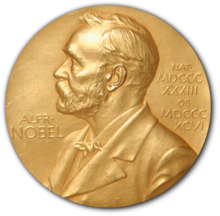
The Nobel Prize

Awards are, in their simplest forms, acknowledgments of an achievement.  Meritocratic societies judge members of the collective on certain skills that are deemed important to the group.  As a global society, we have decided that the areas of Physics, Chemistry, Literature, Peace, Economics, and Medicine to be of highest importance.  Thus, those who demonstrate incredible skill, talent, dedication, and proven results in these categories receive illustrious awards known as Nobel Prizes, distinguishing them from all others who participate in the marketplace of ideas and more specifically, in the fields mentioned above. 

Sports, like Physics, Chemistry, Medicine, Literature, and the rest, cannot be described as anything other than meritocratic. In every game a winner emerges and a loser lives to play another day, but no matter what the results, one team or player always rises above the rest, claiming the title, “the best.”  Because sports often involve both team and individual activities, we recognize the feats of both groups.  Team awards are commonly seen as more glorious, thus these awards are the pinnacles of team sports.  In Baseball the team that wins the World Series remains champions for a full season, an honor in itself.  The team wins the most prestigious trophy, and of course, the recognition from everyone associated with the sport.

The Cy Young Award
Although team awards constitute the greatest of all accomplishments, individual awards also matter a great deal.  These awards consist of the Most Valuable Player Award, the Cy Young Award, Golden Gloves, Silver Sluggers, and All-Star game appearances.  Each accolade comes with it’s own set of idiosyncrasies, but I want to focus on the Cy Young Award.

First given out in in 1956, one year after the death of the award’s namesake, Cy Young.  Originally the award was given to the best pitcher in the Major Leagues, but after 1967, Major League Baseball decided to choose a winner in each league, one for the National League and one in the American League.  The Baseball Writers Association of America votes on the winner of the award.  The winner is dubbed the “Baseball’s best regular season pitcher.”  Obviously, this implies that any pitching performed in the playoffs is not considered when choosing the Cy Young Award winners. 

 Recently, I have heard and read speculation that this years National League recipient of this illustrious award should be one of two relief pitchers.  Aroldis Chapman of the Cincinnati Reds and Craig Kimbrel of the Atlanta Braves.  Both pitchers are relief pitchers, specifically known as closers.  Their job is to come in the game in the 9th inning when their team has a lead, but no more than a 4-run lead, and get the final three outs to ensure a win.  Although my opinion of the whole structure of the modern bullpen is biased towards getting rid of the entire construct, I still believe that considering bullpen pitchers for the Cy Young Award to be ludicrous.

Closers compile a statistic that no other player does, due to the situation in the game in which they play, known as the save.  The full definition of what constitutes a save can be found here: “The Save” Saves do not mean very much when appraising a pitcher, due to the variability with which a pitcher can attain a save.  Oftentimes closers will pitch in the most high-pressure situations.  Imagine this.  Your team clings to a modest 2-run lead against your arch nemesis.  The game has been grueling, with both teams putting forth great amounts of effort.  The 9th and final inning comes about and with your team in the lead you bring in your best relief pitcher to get the final three outs.  He comes into the game and must face the opposing team’s three most ferocious hitters, batters who strike fear in the average pitcher, and players who have already displayed their hitting prowess by belting numerous hits throughout the game.

I don’t know about you, but that seems like a pressured-filled situation to me.  I would want a pitcher in the game who could get three outs without allowing a batter to reach first base safely, let alone put the ball in play.  Pitchers who can rack up the strikeouts are often closers, and thus pitch in these situations. 

Kimbrel
Chapman
Now, here is a different situation.  Your team is playing the last place team in the league.  You have a 3-run lead going into the 9th inning, and scheduled to hit are the 7-8-9 hitters for the opposing team.  These three batters barely produce any positive results no matter who stands opposite them on the pitching mound.  This situation lacks the depth and tension that coursed throughout the 1st scenario.  A pitcher who ends the game in this situation receives a save equivalent to the one received if he finishes the first game. 

Saves are not good evaluators of value or even effectiveness.  They show that a pitcher is able to thrive given very specific conditions, but does not distinguish between the numerous other variables that can have a great effect on the impressiveness of the situation. 

So, Saves aren’t as amazing as pundits and coaches often think.  Surely other statistics exist that can prove that relief pitchers are worthy of the Cy Young Award.  The issue with every other statistic is that the Baseball Writer’s Association evaluates starting pitchers on the same statistics.  The major difference between starters and relievers is innings pitched.  I think that we, as fans and observers, can agree that given a larger sample size we can draw more definitive conclusions.  Innings pitched constitute the sample size for a pitcher.  If starters have more innings pitched, than we have a clearer picture into their true value and thus can better determine who is the “best pitcher in baseball.” 

Here are some statistics of crucial statistical categories used to analyze a pitcher’s performance: 
Saves
ERA
WHIP
K/9
Chapman
28
1.26
0.68
16.74
Kimbrel
31
1.26
0.65
15.7
SO/BB
FIP
fWAR
Innings Pitched
Chapman
7.57
1.01
3.2
57
Kimbrel
6.82
0.98
2.3
43

Wins
ERA
WHIP
K/9
Cueto
15
2.72
1.16
9.2
Dickey
15
2.45
1
7.07
Gonzalez
14
3.32
1.14
9.83
SO/BB
FIP
fWAR
Innings Pitched
Cueto
3.43
2.88
4.1
162.1
Dickey
4.61
3.04
4.1
161.2
Gonzalez
2.85
2.7
4.1
141

In the second of the two charts I utilized the statistics of the three top starting pitchers in the National League, Johnny Cueto of the Reds, R.A. Dickey of the Mets, and Gio Gonzalez of the Nationals.  I highlighted some particularly important statistics in red.  As you can see, all three starting pitchers’ innings pitched (our sample size) dwarf those of their relief counterparts.  Chapman and Kimbrel obviously thrive at their jobs.  With K/9 rates both higher than 15.00, these two relievers barely allow the ball to be put in play. Even more so, they do not allow many base runners, as their WHIPS perfectly indicate. 

When calculating the statistic Wins Above Replacement, innings pitched plays a vital role.  The stat is a value statistic, thus it encompasses many of the crucial aspects of, in this case, pitching.  On www.fangraphs.com, the site from which I took this data, Chapman and Kimbrel do not even qualify for the category of WAR unless you remove the restriction of a specific number of innings pitched.  Even so, all three starting pitchers mentioned, have higher WARs than Chapman and Kimbrel.

The idea of considering these two closers for the Cy Young award should be discarded as soon as possible.  The two major reasons given when considering these two pitchers for the award are that no other starting pitcher is having an outstanding enough year to distance themselves from other pitchers, and that both Chapman and Kimbrel are having historic seasons.  I can’t deny these are not true, but I can tell you that they do not and should not matter when discussing who should win the award for best pitcher. 

Just because the decision on who wins this award will be difficult, does not imply that we need to start looking outside of the box for an answer.  Trust me, this is way outside of the box.  Oh, relievers have won the Cy Young in the past, but very few of them actually deserved it.  If you read the article I linked concerning the rules governing a save, you might have noticed that a pitcher can attain a save by pitching the last three innings of a game in which their team is winning.  The number of runs separating the teams plays almost no significance other than that the pitcher’s team in question must be winning the whole time.  Find me a relief pitcher who has accrued as many saves as Kimbrel and Chapman, but did so by throwing three innings at least most of the time, and I would consider them for the Cy Young Award. 

www.baseball-reference.com, calculates a pitcher’s performance in difference situations in a game.  They dub a specific type of situation a high leverage situation.  In my opinion, even a closer who pitches only in these high leverage situations but still throws a third of the number of innings that a starting pitcher does remains undeserving of the Cy Young Award.  This has yet to happen, and might make me think twice about just giving the award to a starter, but in the end, it would not sway my opinion.  Innings pitched, a true sample size, constitutes too much importance. 

The Great Mariano Rivera
My attitude in this situation seems quite closed minded.  Under no circumstance, even a clearly hypothetical one, will I consider a relief pitcher for the Cy Young.  That seems a bit unfair.  Given that the modern bullpen schematic seems fairly permanent, I think we should create a separate award for the best relief pitcher in baseball.  We can call it the Mariano Rivera Award, named after the hands-down best relief pitcher ever to take the mound.  Rivera has never won a Cy Young Award.   

This season I would give the Mariano Rivera Award to either Aroldis Chapman or Craig Kimbrel.  They demonstrate incredible relief statistics and both deserve to be considered for this hypothetical accolade.  I don’t know exactly who should win the Cy Young Award, but it should be a starting pitcher, not a relief pitcher.  Should we change the award to mean the best starting pitcher in baseball? Yes, we should, and simultaneously we should respect the specialization of the game and create the Mariano Rivera Award. 

In a true meritocracy, we shine a light on the best.  In this case, we do not need to reconsider who qualifies for a specific award as much as we should consider expanding the entire awards process to include another prize.   

Wednesday, June 13, 2012

Back to You, in the Booth

Tom McCarthy
Gary Matthews Sr.

Last night, on the Phillies television broadcast, Tom McCarthy, the Phillies play-by-play commentator mentioned that the Phillies had reached agreements with their the team's top draft picks.  In response, Gary Matthews, one of McCarthy's co-commentator, mentioned that Major League Baseball had recently changed the rules regarding the signing of players from the first year draft.  The two went on to acknowledge that the changes made to the collective bargaining agreement, altering teams' ability to sign players from the draft, would help teams in signing these players.

MLB's new collective bargaining agreement gives teams a maximum amount of money they are allowed to spend on a given draft pick.  This new rule severely limits a team's ability to sign a given player.  Prior to this year's draft, teams were allowed to offer a player any amount of money, in signing bonus form, in order to convince said player to join their club.  Now, teams will be penalized if they exceed the maximum amount that MLB has decided upon.  This significantly affects which players are drafted in which spots.  In addition, the new CBA, creates serious roadblocks for teams attempting to acquire and sign international players, who are not subjected to the first-year player draft.  Recently, many teams have spent large sums of money in scouting international talent, but due to the new CBA, their ventures in Latin American will be curtailed.

Overall, one thing is certain.  No one actually knows how the new collective bargaining agreement will shape the draft, "signability" of players, or the game as a whole.  On the other hand, most pundits agree that, for the time being, the CBA seems to constrict teams, giving them less choice and freedom to exploit the system in order to gain an advantage.  Major League Baseball wants to create as much parity as possible, but, as long as MLB goes without a salary cap, some teams will always have more money than others.  This truism means that smaller market teams like the Kansas City Royals and Tampa Bay Rays will always look for holes in the system, in order to compete with the larger market teams.  As long as Major League Baseball remains salary capless, complete equality amongst teams will never exist.

So, back to the statements made by McCarthy and Matthews.  Without even touching on any of the more important details concerning the new CBA, the draft, or MLB's decision behind changing the rules, Tom McCarthy and Gary Matthews gave millions of viewers misinformation.  The new CBA will not make it easier for teams to sign players, it only restricts their ability to choose a fitting contract for draft picks.  In the far off distant land of economics, we learn first that choice is better than no choice.  MLB is taking away the freedom of teams in negotiating with draft picks.  So, while players may sign contracts quickly, the new CBA does not guarantee that signing players will be easier.

Darling, Cohen, and Hernandez from left to right
McCarthy and Matthews have the bully pulpit at their disposal.  Most fans do not know what the collective bargaining agreement is let alone read about its affects on the game.  Although, based on the views of both McCarthy and Matthews, I'm unsure if either broadcaster read the document themselves. These two men are supposed to represent the knowledgeable baseball elite, but instead they fall very short.  Often, Gary Matthews will give an explanation as follows: "The reason that ball went so far is because he put a good swing on the ball."  I think we can all agree that this comment offers absolutely nothing towards the analysis of the game.  These types of comments are ubiquitous throughout the Phillies broadcasts as well as many others around the country.  Although I think teams could and should find better announcers, such as Ron Darling, Gary Cohen, and Keith Hernandez for the NY Mets, these asinine comments are the norm.  The Mets television announcers provide such eloquence and in depth analysis that the New York Times often publishes transcripts of their broadcasts.

The issue remains that announcers cannot be allowed to say things that are incorrect.  If McCarthy and Matthews do not completely understand new CBA and how it might affect the draft, then the Phillies should have a guest, with knowledge on the subject, come and explain it to viewers.  In addition to speaking without knowing, the Phillies announcing crew will almost never question Major League Baseball's decisions.  I understand that the Phillies are part of MLB and in turn that the commentators work for the Phillies, but to never dispute or doubt anything handed down from Major League Baseball is a travesty to the system.  Instead of actually commenting and analyzing, announcers, at least in the Phillies' case, have lost the ability to share original thoughts.  These supposed experts should use their time on the air to speak intelligently about the issues facing Major League Baseball and explain how it affects their respective team.  Instead announcers like Matthews and McCarthy shy away from criticizing or even questioning the validity of Major League Baseball, thus showing their viewers no perspective, and providing all Phillies fans with banality.

Vin Scully, Dodgers Hall of Fame Announcer
Recently I found myself watching the LA Dodgers broadcast.  Through the TV came the unmistakable voice of Dodgers play-by-play announcer Vin Scully.  Scully not only announces the game with a great voice, he knows everything about the players,  keeping track of the day-to-day business of the Dodgers and Major League Baseball.  He admits when he does not know an answer, and speaks intelligently when calling the game.  Younger commentators should take note of the hall-of-fame announcer and attempt to emulate his conduct.

Often times I will mute the television during Phillies broadcasts because I become so frustrated with the level of broadcasting, but rarely do I actually yell at the TV.  Last night, when Gary Matthews and Tom McCarthy attempted to pass themselves off as experts of the new CBA and its affects on the draft, I lost it.  These men possess a lot of power given their visibility in the Phillies organization, but they choose to spoil it by making incorrect statements and not providing factual evidence to back up their claims.  Even Fangraphs.com ranked the Phillies TV broadcasters near the bottom in their broadcaster rankings.

Lao Tzu famously said, "Those who know do not speak. Those who speak do not know."  I don't profess to know about the business of announcing and commentating on games, but from a baseball fan's perspective, announcers like Gary Matthews and Tom McCarthy need to be replaced.  Misinformation, ignorance, and stupidity should never be tolerated, especially from those with so much power.  I challenge the Phillies to realize this problem, and do something to fix it because my frustration level towards the Phillies announcers has reached its limit.

Monday, June 4, 2012

No Hits, No Runs, No Problem

Santana Celebrates with Catcher Josh Thole

On Friday night the Mets played the Cardinals in the beginning of a four game series.  This seemingly innocuous inter-divisional series turned into an historic one very quickly.  Johan Santana made sure that Mets fans, and baseball fans everywhere, would remember June 1st, 2012.  Santana threw the first no-hitter in New York Mets history.  For some perspective, think about this: The Mets franchise began in 1962, replacing those of the Brooklyn Dodgers and New York Giants, who departed New York for Los Angeles and San Francisco respectively.  Half a century later, the 2012 Mets are an interesting team.   The Mets have stormed the 2012 season, thought to be a rebuilding year, with ferocity.  Now midway through the season, they find themselves tied atop the tightly packed NL East, a place which no analyst, pundit, or fan thought they would occupy.  They have won 31 games, doing so with mostly home grown players whom few thought would contribute sun flower seed shells to the dugout floor let alone 239 runs to the scoreboard (4th in the NL).  At one point this season, the Mets, starting lineup contained players all from their farm system, and daring feat.

Despite the 2012 Mets doing their best job to imitate the “Amazin's” of the past, nothing can overshadow Johan Santana's recent no-hitter.  Santana faced the Cardinals, the National League's best offense, making them look like a Little league team playing at PETCO Park.  Despite the no-hitte result, Santana wasn't at his best Friday night,  his control shaky at times, especially when throwing his fastball.  He walked 5, struck out 8, and threw a career high 134 pitches in the momentous effort.  Nonetheless, he was effectively wild to the point that hitters could not pick up his dynamic changeup, which he used early, often, and on any count.  Santana did a fantastic job keeping the St. Louis hitters <consider “sluggers” instead for alliterative effect> off balance, forcing them to swing at pitches out of the zone and keeping them guessing whether they would next encounter his incredibly deceptive changeup.

Santana's no-hitter did not occur without some controversy.  Former Met Carlos Beltran hit a line drive down the third base line that on instant replay clearly hit the line, making it a fair ball and thus a hit (video footage of the play can be seen here).  Not so fast, said third base umpire Adrian Johnson,who called the screamer a foul ball, thus continuing Beltran's at bat and keeping the no-hitter intact.  The Saturday morning St. Louis Post-Dispatch sports section prominently placed an asterisk next to "no-hitter", making an obvious reference to the hit that wasn't. <St. Louis is a town well accustomed to asterisks, eh?> While Cardinals fans may not be happy with the result Friday night, is this missed call such a big deal?  Certainly, Adrian Johnson made the wrong call, and it may anger some to see that call stand. However, until MLB incorporates instant replay into game decisions, fans must expect the human element to come into play.    In no way did Adrian Johnson's blunder fall in the same category as the missed call that cost Armando Galarraga a perfect game, but it does rekindle the on going argument in baseball concerning the a role for instant replay.   

Mets General Manager Sandy Alderson


In the end, the call on the field was foul ball, giving Johan Santana the first no-hitter of his career and in Mets history.  This leaves the San Diego Padres as the lone franchise in MLB history with no pitcher having thrown a no-hitter.  For comparison's sake, the Dodgers franchise has had 20 no-hitters, the most in MLB history.  As someone pointed out to me, the Padres also have never had a hitter hit for the cycle, but the latter event seems more of an aesthetic accomplishment than does a no-hitter.  Now that the Mets have the no-hitter monkey off from their backs, perhaps fans will take notice of their team's overall success.  The 2012 Mets have a bright future with minds like Sandy Alderson, Paul DePodesta, and J.P. Riccardi in the front office and a solid manager, Terry Collins, at the helm.  Watch out for the Mets: they exude a great attitude on the field, and in a tight and competitive NL East, anything can happen between midseason and the playoffs.